Blues with a story to tell
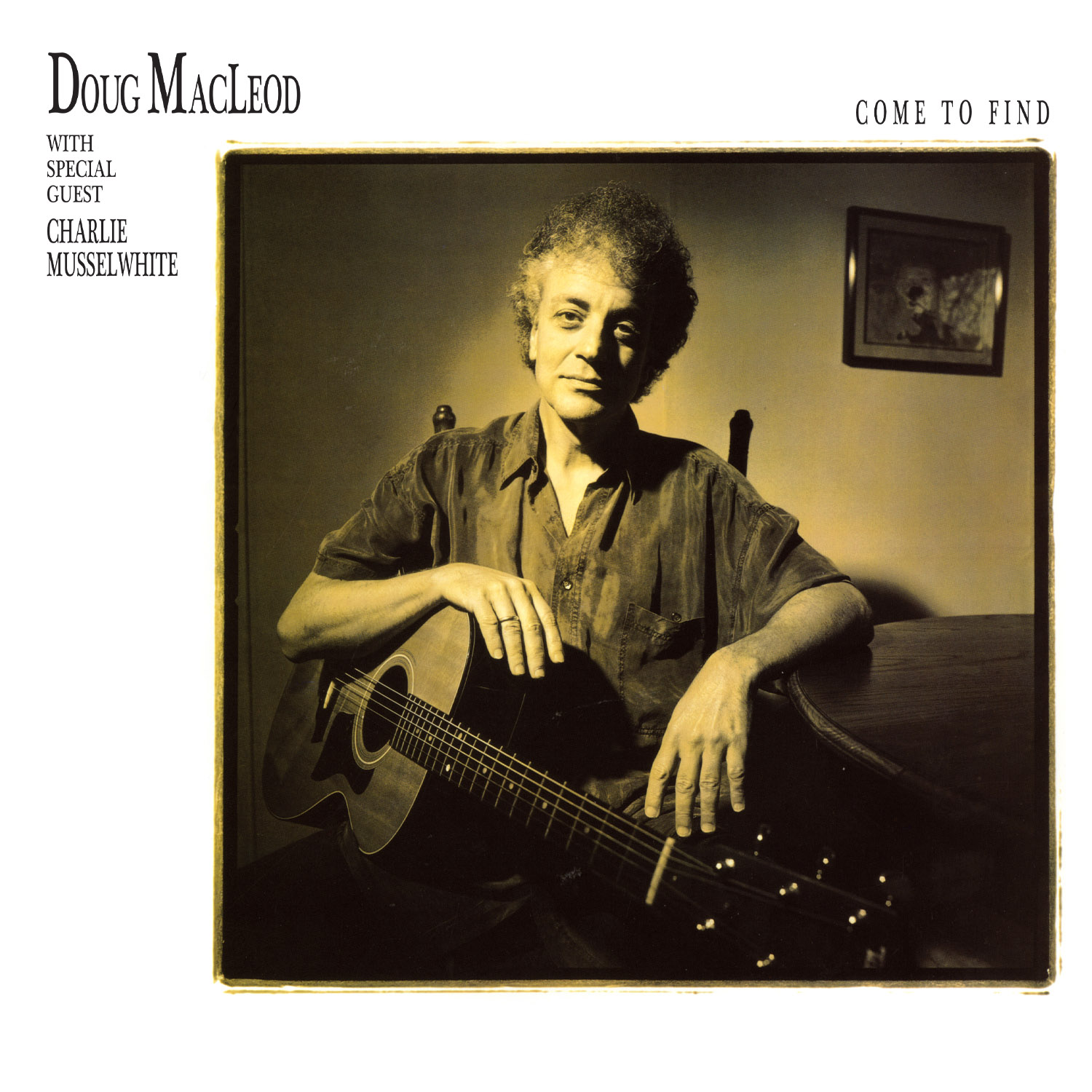
Come To Find begins where tradition meets an individual voice. Doug MacLeod opens with Willie Dixon’s Bring It On Home, then moves mainly through songs of his own. It is an apt introduction: the repertoire retains a clear connection to blues history while its storyteller follows his own path. Titles such as Since I Left St. Louis and When I Left Missouri frame the album with places, departures and backward glances.
The sessions took place on 15 and 16 January 1994 at Ocean Way Recording. Joe Harley produced, Michael C. Ross engineered and Dave Shiffman assisted. The approach was deliberately direct: the performances were recorded to analogue two-track tape. That does not mean a record was cut live during the performance. Its immediacy begins with the musical decisions brought together onto two tracks during the session, before the later work of making this vinyl edition.
MacLeod is the singer and guitarist at the centre of all eleven tracks. His role as a writer matters equally. Alongside the Dixon song, the programme includes Rollin’ & Tumblin’, credited to McKinley Morganfield, better known as Muddy Waters. The remaining nine tracks carry MacLeod’s name, two jointly with Danny Jesser. The result draws on familiar reference points without relying on a succession of established blues standards to carry the album.
Its acoustic emphasis provides a fitting setting. One guitar can establish rhythm, supply harmonic grounding and answer the vocal line. When those functions are not absorbed into a large band arrangement, small decisions acquire weight: a pause before the next sentence, the duration of a note, or a figure continuing beneath the voice. Come To Find directs attention towards those relationships and towards a musician treating songs as sustained acts of storytelling.

Accompanists with distinct functions
Four further credits stand beside MacLeod: Charlie Musselwhite on harmonica, Bill Stuve on double bass, Jimi Bott on drums and Black Cherry on backing vocals. They do not form an unchanged backing group on every track. Musselwhite is documented on two pieces, Stuve on six, Bott on seven and Black Cherry on one. That distribution already shows an album making selective use of additional colours rather than applying one arrangement throughout.
The harmonica has a particular affinity with the human voice in blues. It can bend a note, work with breath and roughness, and make a brief response as distinctive as an extended line. Musselwhite’s participation offers another narrative voice beside the singing without requiring the album to abandon its basic character. Because the guest is not continuously present, his instrumental colour has its own place within the changing scale of the programme.
Double bass and drums introduce different forms of movement. The bass can give a guitar figure weight and clarify its harmonic direction. Drums do more than mark time: they help determine whether an accompaniment feels open or densely occupied. Voice, strings and rhythm consequently allow a range of relationships. A blues album need not derive its unity from keeping the same personnel active throughout; a recognisable central storyteller can provide that continuity.
Listening for those changing functions is a useful way into the record. At one point the guitar may carry several responsibilities, while elsewhere movement can be shared with additional players. Backing vocals introduce another human presence. The supporting credits therefore do more than add names beside the featured artist. They help explain how eleven songs within a common musical language can suggest different dimensions and different degrees of intimacy without losing their connection.

Eleven pieces between departure and return
The four sides of this 45 RPM edition give the programme a clear outline. Side A contains Bring It On Home and Since I Left St. Louis, placing a familiar writer beside MacLeod’s own perspective at the first encounter. The titles already move between coming home and leaving. There is no need to impose a fixed narrative on them, but the recurring idea of travelling and looking back gives the sequence an appealing frame.
Side B moves through Mystery Woman and the title track to Old Virginia Stomp. At just under two minutes, the last of these is the shortest piece on the album. The relationship between compact forms and more extended songs contributes to the programme’s shape. Not every idea requires the same duration or the same kind of development. Those changes keep attention on the individual piece rather than making a uniform running time the governing principle.
Side C brings Master’s Plan, Ain’t No Grave and the six-minute Lost Something This Morning. MacLeod’s shared writing credit with Danny Jesser on Master’s Plan adds another aspect to the repertoire. Meanwhile, the familiar wording of Ain’t No Grave should not automatically identify this song with every other recording bearing that title: MacLeod is the credited writer here. The album has a specific sequence of compositions and authorship, not simply a set of interchangeable blues titles.
The final side joins Rollin’ & Tumblin’ to Any Port In A Storm, the second Jesser collaboration, and When I Left Missouri. Its ending thus returns to the geographical imagination introduced near the beginning. Across the album, more extended narrative spaces alternate with shorter statements. Listeners interested in blues as storytelling as well as a musical style have a clear reason to play the complete programme and follow its sequence beyond individual demonstration tracks.
Two 45 RPM records and a defined production route
Analogue Productions’ AAPB 1027-45 spreads the eleven tracks across two 180-gram LPs at 45 RPM. Kevin Gray at Cohearent Audio cut from the original analogue master; Gary Salstrom handled plating and Quality Record Pressings manufactured the records. A Stoughton gatefold jacket completes the package. Both the original sessions and this reissue therefore have identifiable responsibilities behind them, rather than resting on an unspecified claim to audiophile quality.
Four record sides require more frequent turning, while also dividing the programme into clear stages. Side A has two songs and each remaining side has three. The speed belongs to this edition’s manufacturing format. It neither changes the number of songs nor turns the original tape recording into a direct-to-disc session. With an album built around such a direct approach, that distinction helps keep the recording method and subsequent vinyl production clearly understood.
The 1994 two-track sessions place importance on decisions made during the performance. Balance and interaction had to come together at that point. The later recut carries the resulting recording into this particular physical edition. That connection will interest listeners who want to understand how an album was made and what work went into its reissue. The technical story provides context, while the songs give that work its purpose and lasting interest.
For anyone discovering Doug MacLeod as singer, guitarist and writer, or collecting this album in its 45 RPM form, the edition presents a coherent programme with changing accompaniment and an unmistakably individual centre. You order from Michael 45 in Germany. We arrange the US import and dispatch from Hilden.
Customer question: Buying Analogue Productions records in Europe
Musicians
Participants and documented credit status. Track references correspond to the tracklist.
- Doug MacLeodLater portrait reference: 2011guitar, vocalsParticipation: All eleven tracks
- Charlie MusselwhitePortrait reference: 1971harmonicaParticipation: Two tracks; allocation to the 45 RPM sequence unconfirmed
- Bill Stuvedouble bassParticipation: Six tracks; allocation to the 45 RPM sequence unconfirmed
- Jimi BottdrumsParticipation: Seven tracks; allocation to the 45 RPM sequence unconfirmed
- Black Cherrybacking vocalsParticipation: One track; allocation to the 45 RPM sequence unconfirmed


15–16 January 1994, Ocean Way Recording. Joe Harley: producer; Michael C. Ross: engineer; Dave Shiffman: assistant; Mary Katherine Aldin: notes. Recorded directly to analogue two-track tape, not direct to disc. Kevin Gray / Cohearent Audio: cutting; Gary Salstrom: plating; QRP: pressing. Guest credits use positions from a two-sided sequence; these have not been transferred unverified to this four-sided edition.

Reviews
There are no reviews yet.