Lightnin’ Hopkins: a blues needs a voice of its own
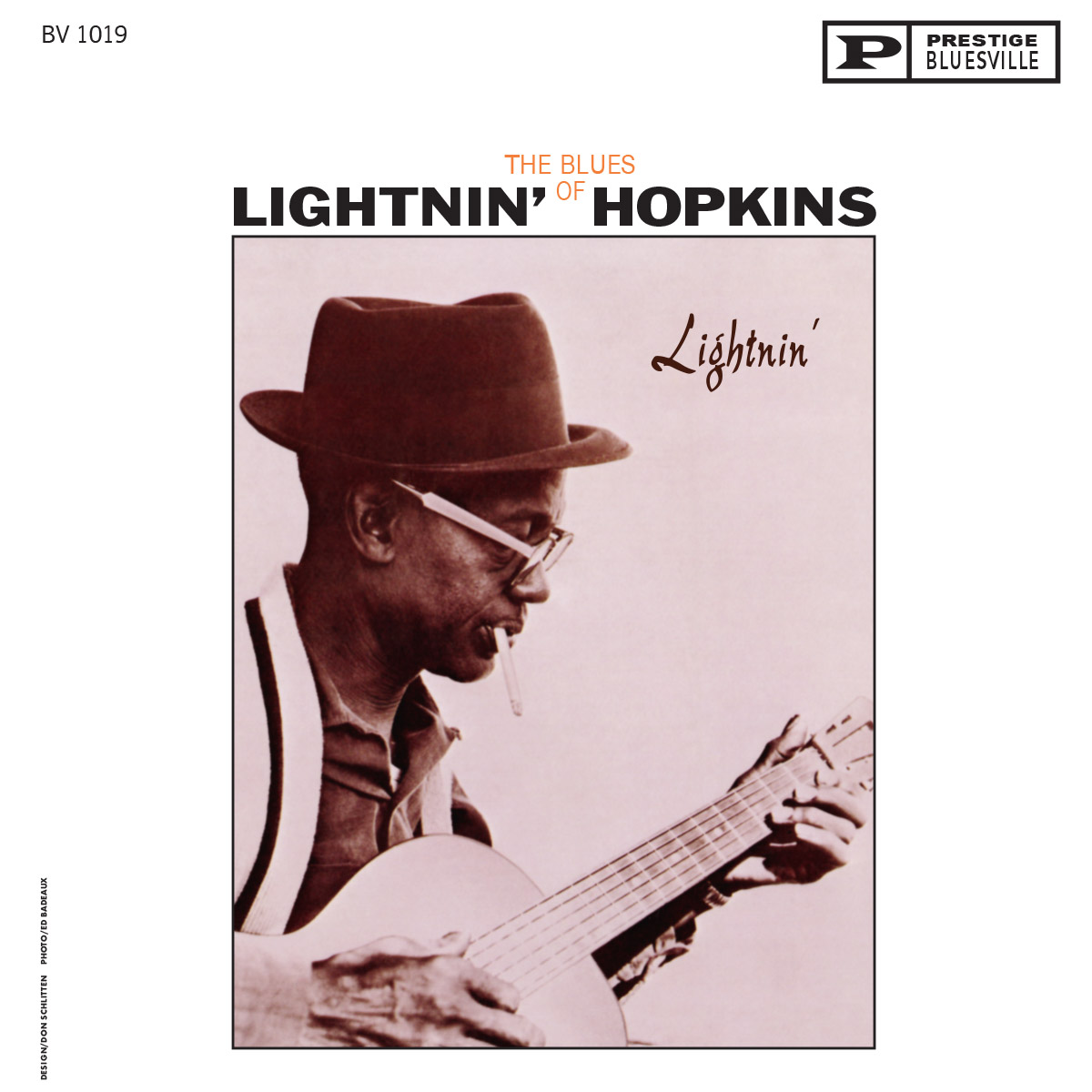
Lightnin’ is an appealingly direct title for a record built around a distinctive personality rather than an idea of modernity. Sam “Lightnin’” Hopkins sings and plays guitar, with Leonard Gaskin on double bass and Belton Evans on drums. The combination needs little else. Its modest size leaves room for the relationship between a spoken-sounding line, a guitar response and a sense of time that does not feel imposed by a ready-made template. Listeners who primarily associate the blues with spectacular solos can discover another kind of richness here: the ability to fill a familiar form with an unmistakably individual way of speaking.
The session took place on November 9, 1960, at Rudy Van Gelder’s studio in Englewood Cliffs, New Jersey, and the album appeared in 1961 on Prestige’s Bluesville imprint. Its subtitle, The Blues of Lightnin’ Hopkins, is more helpful than any grand claim about a whole genre. These are his blues: his way of approaching a repertoire that combines personal material with songs that have already travelled between musicians. The Texas artist’s journey to this studio belongs to the renewed attention given to acoustic blues around 1960. That attention did not create the music’s value; it offered another setting in which the music could be carefully preserved.
Van Gelder’s name is often associated first with jazz. This date reminds us that his recording room could also serve a voice and an acoustic guitar. Hopkins is not placed inside an elaborate arrangement, and his two accompanists do not turn the programme into a display of band technique. The restricted resources open several listening paths: follow the words, attend to the guitar’s replies or trace the bass movement beneath the vocal. Each route leads back to the same personality. The record becomes a portrait through music without needing spoken biographical explanations between the songs. Its scale encourages attention without making any special demands before you begin.

Travelling from Automobile Blues to Katie Mae
Side one begins with Automobile Blues, a title from a world in which vehicles, journeys and ordinary wishes can become musical stories. You Better Watch Yourself places a warning beside it. That change suggests the variety available within the blues: a related formal framework can carry a different attitude as soon as emphasis, rhythmic feeling and words come together. Rather than treating these performances simply as an opening pair, listen for the way Hopkins establishes proximity. He does not need an extended introduction. The voice places the speaker in the room, and the guitar helps shape the space around what he has to say.
Mean Old Frisco brings a composition by Arthur “Big Boy” Crudup into the programme. Shinin’ Moon and Come Back Baby, associated with Walter Davis, complete the first side. These connections show why a blues record cannot be explained merely by separating original songs from borrowed ones. What matters is what the performer makes of the material. An already familiar melody or lyrical idea can acquire a new emphasis through phrasing, silence and its relationship with the guitar. Hopkins’ name on the sleeve promises an individual musical handwriting, rather than a collection of words that no other musician has ever encountered.
On side two, Thinkin’ ’Bout an Old Friend turns towards memory before The Walkin’ Blues restores movement to the title. Back to New Orleans connects the programme to its writers Sonny Terry and Brownie McGhee; it does not mean that either musician participates in this session. Keeping that distinction clear allows the actual trio to remain in view. Katie Mae, a familiar part of Hopkins’ repertoire, and Down There Baby follow. The ten selections do not form an artificially plotted concept album. Their unity comes from a storyteller able to move between longing, caution, recollection and a dry awareness of everyday life without abandoning his own language.

Leonard Gaskin and Belton Evans: accompaniment as attention
A small blues group is not necessarily an easy assignment. When a singer shapes a line according to his own breath, the accompanists must listen and respond. Gaskin’s double bass and Evans’ drums provide the setting for Hopkins’ voice and acoustic guitar. The sources document this trio as the album personnel; they do not supply a different, complete distribution of players that would justify adding further musicians. Sonny Terry, for example, does not join the ensemble simply because of his writing connection to Back to New Orleans. Distinguishing a name’s historical relevance from its actual participation helps the music itself become clearer.
One rewarding approach is to focus first on Hopkins’ picking hand. The guitar must sustain movement, answer spaces in the vocal and help hold the form together. Then deliberately shift your attention to Gaskin. What does a bass note contribute when the guitar already carries so much rhythmic information? How does Evans complement that relationship without occupying every available space? These questions do not require technical analysis while listening. They simply underline how much skill can reside in a restrained accompaniment. A player need not step forward for a solo to make an essential contribution to the character of a performance.
For collectors, Lightnin’ brings together two worlds sometimes considered separately: acoustic blues and the carefully attended recording culture around Prestige. It need not be heard as a preliminary stage on the way to electric blues, or as a nostalgic alternative to later rock music. It stands on its own. Those familiar with Hopkins through other records receive a clearly defined studio date with two named partners. New listeners have ten different entry points and a consistent group to guide them. That combination makes the album particularly approachable on repeated visits. Orientation comes easily, while the small shifts between language and accompaniment continue to reward attention. The interest lies in personality working within a form, not in the largest possible number of musical ingredients.
Analogue Productions: the Bluesville album on stereo vinyl
The edition offered here, APRJ 1019, belongs to Analogue Productions’ Prestige stereo series. The publisher credits Kevin Gray with mastering from the original analogue tapes, Quality Record Pressings with manufacture and Gary Salstrom with plating. A substantial tip-on jacket completes the presentation. Weight information differs between pressings: the current publisher listing specifies 180 grams, while a documented earlier edition is described as 200 grams. Those details should not be combined into a claim that a particular warehouse copy has been physically inspected. The musical programme and its identification as the stereo edition remain distinct from that pressing variation.
The single LP plays at 33⅓ RPM, with five selections on each side. That format has a straightforward musical appeal for this programme. Hopkins has five songs in which to develop his narrative world before a side change interrupts it. Each side provides enough time to settle into the trio’s language while remaining easy to revisit in detail. A carefully prepared 33⅓ RPM record is a coherent choice for music like this; a higher rotational speed in another edition would not, by itself, guarantee a more satisfying encounter with the performance. Mastering decisions and the suitability of the programme to its format deserve at least as much attention.
The series was also offered on hybrid SACD, but the technical description here concerns this vinyl LP. Nor does the listing automatically promise one of the originally numbered subscription copies. The focus is the particular reissue of a concentrated blues album: ten selections, three musicians and a voice capable of suggesting an entire world of relationships with a few carefully placed resources. You order from Michael 45 in Germany. We arrange the US import and dispatch from Hilden.
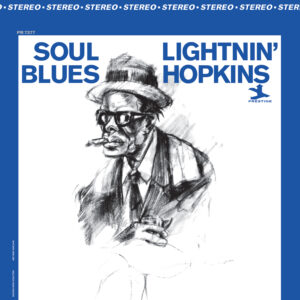
More by Lightnin’ Hopkins: Soul Blues · Lightnin’ Strikes
Customer question: Buying Analogue Productions records in Europe
Series: Analogue Productions Prestige – all 50 records, musicians and session paths
Musicians
Participants and documented credit status. Track references correspond to the tracklist.
- Lightnin’ HopkinsExisting individual portrait; not a session depictionvocals, acoustic guitarParticipation: Album personnel; no further track breakdown documented
- Leonard GaskinExisting individual portrait; not a session depictiondouble bassParticipation: Album personnel; no further track breakdown documented
- Belton EvansdrumsParticipation: Album personnel; no further track breakdown documented


Recorded November 9, 1960, Van Gelder Studio, Englewood Cliffs; released 1961. Supervision: Ozzie Cadena; engineer: Rudy Van Gelder. Complete documented trio; songwriters are not automatically performers. Timings follow the documented AP LP.

Reviews
There are no reviews yet.