


The songwriter steps into the foreground
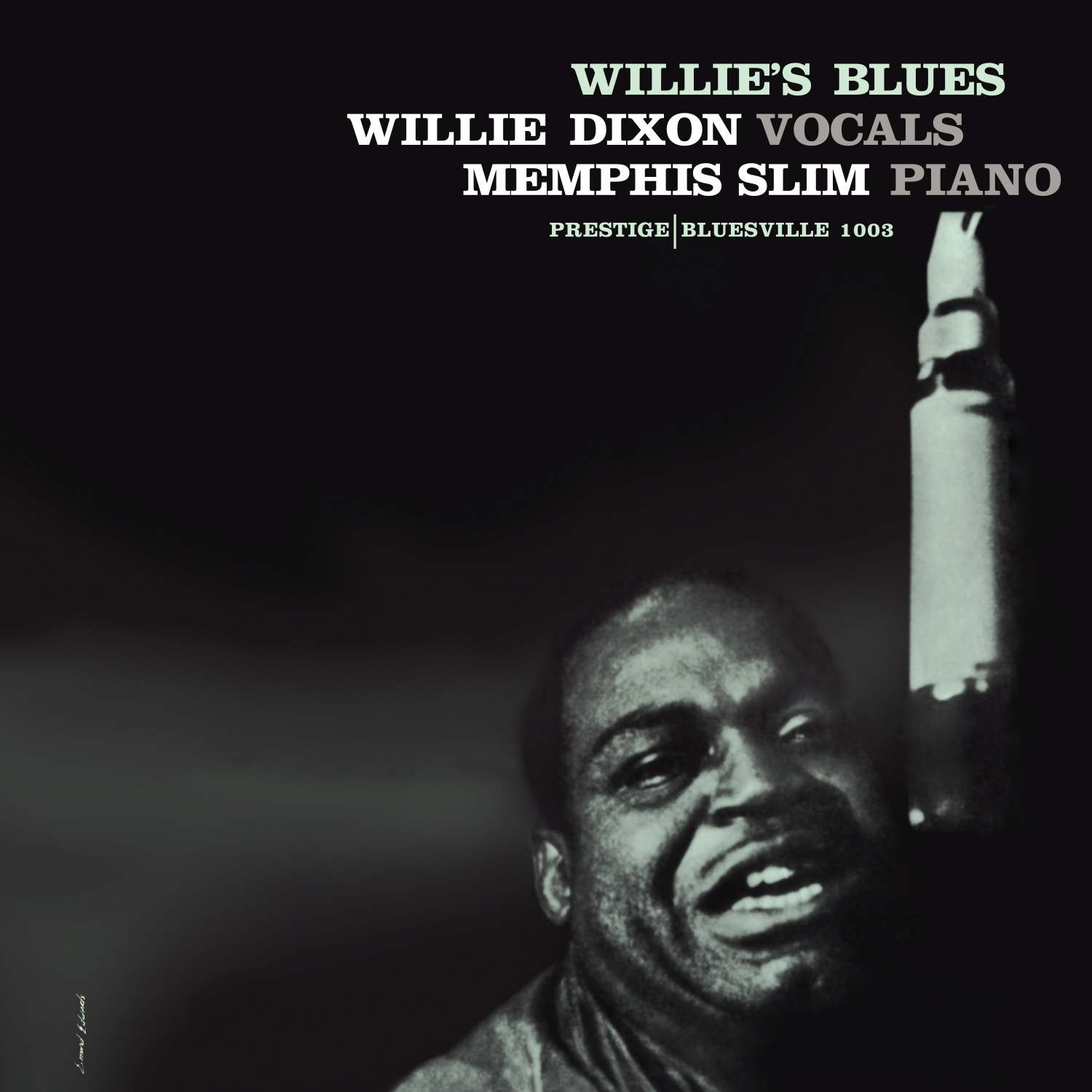
Willie Dixon’s name stands behind some of the best-known songs in Chicago blues. Hoochie Coochie Man, Spoonful and Little Red Rooster belong to the history of compositions that became famous through other singers. Willie’s Blues opens a different door: Dixon stands at the microphone himself and also plays double bass. This is not a retrospective parade of his most celebrated successes. It presents the writer as a performing musician in a small band, bringing forward a personality many listeners first encountered through somebody else’s voice.
The session took place on 3 December 1959 at Rudy Van Gelder’s studio in Englewood Cliffs. For Dixon, closely associated with Chess since the early 1950s, it meant working within a different recording framework. The album appeared as BVLP 1003 on Bluesville, Prestige’s blues imprint, and is recognised as his first album under his own name. Esmond Edwards supervised the production, and Dale Wright supplied the liner notes. The Prestige connection also explains the intriguing setting: a central architect of Chicago blues entering a recording world that many collectors initially associate with jazz.
Memphis Slim is beside him at the piano. Their shared history reached back well before this date; the two had already worked together during the 1940s. That background matters more to the character of the record than the idea of a singer supported by a group assembled at short notice. Here are two musicians with a common vocabulary and different responsibilities. Dixon supplies most of the songs, the voice and the bass foundation; Slim provides the pianistic countervoice and two compositions of his own. Their relationship forms the album’s centre without reducing the other players to decoration.

Memphis Slim and the five-piece band
Memphis Slim’s birth name was John Len Chatman. His professional name carries his Tennessee origins, although a substantial part of his career developed in Chicago. On Willie’s Blues he participates as pianist. That distinction matters when comparing this record with albums on which he also takes the vocal spotlight. Here the focus can fall on the ways a blues pianist accompanies another voice: rhythmic figures, harmonic responses, brief interjections and the balance between active playing and space. A meaningful dialogue does not require a formally announced vocal duet.
Dixon plays the double bass himself. His responsibility is therefore twofold: he delivers the words while helping establish the pulse on which the band depends. This makes the session different from a vocal record in which the singer stands above an entirely separate accompanying group. One rewarding listening route leads from the voice down to the bass and then across to the piano. It brings out the close relationship between the melodic story, its accompaniment and its rhythmic continuity. The music’s flexibility emerges from the interaction of these layers rather than from any one part in isolation.
Wally Richardson on guitar and Gus Johnson on drums complete the rhythm section. The tenor saxophonist is identified in the session and record documentation as Al Ashby. These five musicians constitute the documented personnel. Saxophone and guitar offer two quite different kinds of response between vocal lines: a sustained, breathing horn sound and the more sharply defined attack of a plucked string. Slim’s piano can engage with either. The group consequently has enough colours to give twelve selections variety without calling on a large horn section or elaborate orchestration.
For listeners who mainly know Dixon as a producer and songwriter, this attention to the personnel is particularly worthwhile. His work involves more than a collection of words and tunes that can be handed to any performer. It also reflects an understanding of voices, instruments and their place inside a song. Willie’s Blues makes that relationship accessible within an ensemble whose individual parts can readily be followed. The record invites a fresh view of a familiar name: Dixon as singer, bassist and musical partner, as well as the signature beneath a classic composition.

Twelve songs, several points of view
Nervous opens the first side, followed by Good Understanding and That’s My Baby. The titles lead into the everyday territory of uncertainty, relationships and self-assertion from which so many blues stories emerge. Dixon wrote ten of the twelve selections. His authorship gives the programme a consistent centre, but it does not require every song to adopt the same attitude. A line can be sung as a complaint or a declaration, with emphasis or a suggestion of humour. Paying attention to the shifting relationship between language and delivery can be more revealing than reducing the blues to its harmonic framework alone.
Slim’s Thing introduces a composition by the pianist. That’s All I Want Baby, Don’t You Tell Nobody and Youth to You follow, bringing the first side to seven selections. A sequence of relatively compact pieces places different situations alongside one another. That helps direct attention to the band: the beginning of a new song, the singer’s entrance and the way the instruments assume a different role all become useful points of comparison. Recurring musical forms do not prevent individual songs from possessing distinct characters, and this programme provides ample room to notice the differences.
Side two begins with Sittin’ and Cryin’ the Blues. It continues with Built for Comfort and I Got a Razor before Slim contributes his second composition, Go Easy. Move Me closes the album. Built for Comfort is an especially expressive title in Dixon’s own interpretation: self-description and humour belong to the emotional world of the blues as surely as longing and loss. The album allows those attitudes to coexist. It does not need a single dramatic plot to function as a coherent portrait of its principal writer and performer.
The two Memphis Slim compositions are consequently more than a courteous guest contribution. They give musical substance to the shared billing of this edition and remind us that a partnership also depends on the other player’s independent ideas. Dixon remains the central voice, while the record makes room for a second compositional perspective. That quality is valuable for collectors interested in more than the largest possible number of familiar song titles. The session provides a tangible example of a relationship between musicians, expressed through authorship as well as performance.
Bluesville in stereo, with room for a complete side
Analogue Productions identifies this stereo edition as APRJ 1003. Kevin Gray is credited with mastering from the original analogue tapes, and Quality Record Pressings manufactures the record. The current label description specifies 180-gram vinyl and a tip-on jacket; earlier editions were offered on 200-gram vinyl. The release belongs to the carefully presented Prestige and Bluesville reissue programme, preserving a complete historical album in its musical context. Its appeal is not confined to making a famous title available again. It also maintains the shape of the encounter that produced the music.
The single LP plays at 33⅓ rpm. With twelve mostly compact selections, that is a fitting arrangement: a succession of songs can unfold before the record needs turning. The two sides contain different numbers of tracks, yet the sequence remains a natural part of the listening experience. Each new piece supplies a modest change of perspective within the familiar movement of an album. The format keeps Dixon, Slim and their partners together across a sustained programme, making the session accessible as a whole rather than dividing it into a series of shorter listening intervals.
Willie’s Blues has a distinct place in a blues collection alongside the great Chess recordings. It offers one of the music’s most important writers performing as singer and bassist, in close partnership with Memphis Slim and a clearly defined band. Its Prestige surroundings do not take the session away from the blues. They show how naturally this musical language can inhabit that setting: personal, collaborative and full of small distinctions between a line, the response it receives and the next entrance. Those relationships give the album a lasting interest beyond the familiarity of Dixon’s name.
You order from Michael 45 in Germany. We arrange the US import and dispatch from Hilden.
Customer question: Buying Analogue Productions records in Europe
Series: Analogue Productions Prestige – all 50 records, musicians and session paths
Musicians
Participants and documented credit status. Track references correspond to the tracklist.
- Willie Dixonvocals, double bassParticipation: Album personnel
- Memphis SlimpianoParticipation: Album personnel
- Al Ashbytenor saxophoneParticipation: Album personnel
- Wally RichardsonguitarParticipation: Album personnel
- Gus JohnsondrumsParticipation: Album personnel


Recorded by Rudy Van Gelder, Englewood Cliffs, 3 December 1959. Supervision: Esmond Edwards. Liner notes: Dale Wright. AP mastering: Kevin Gray. Al Ashby follows the documented session credit; identification as Harold Ashby is not confirmed.

Reviews
There are no reviews yet.