
Chicago blues in an acoustic setting
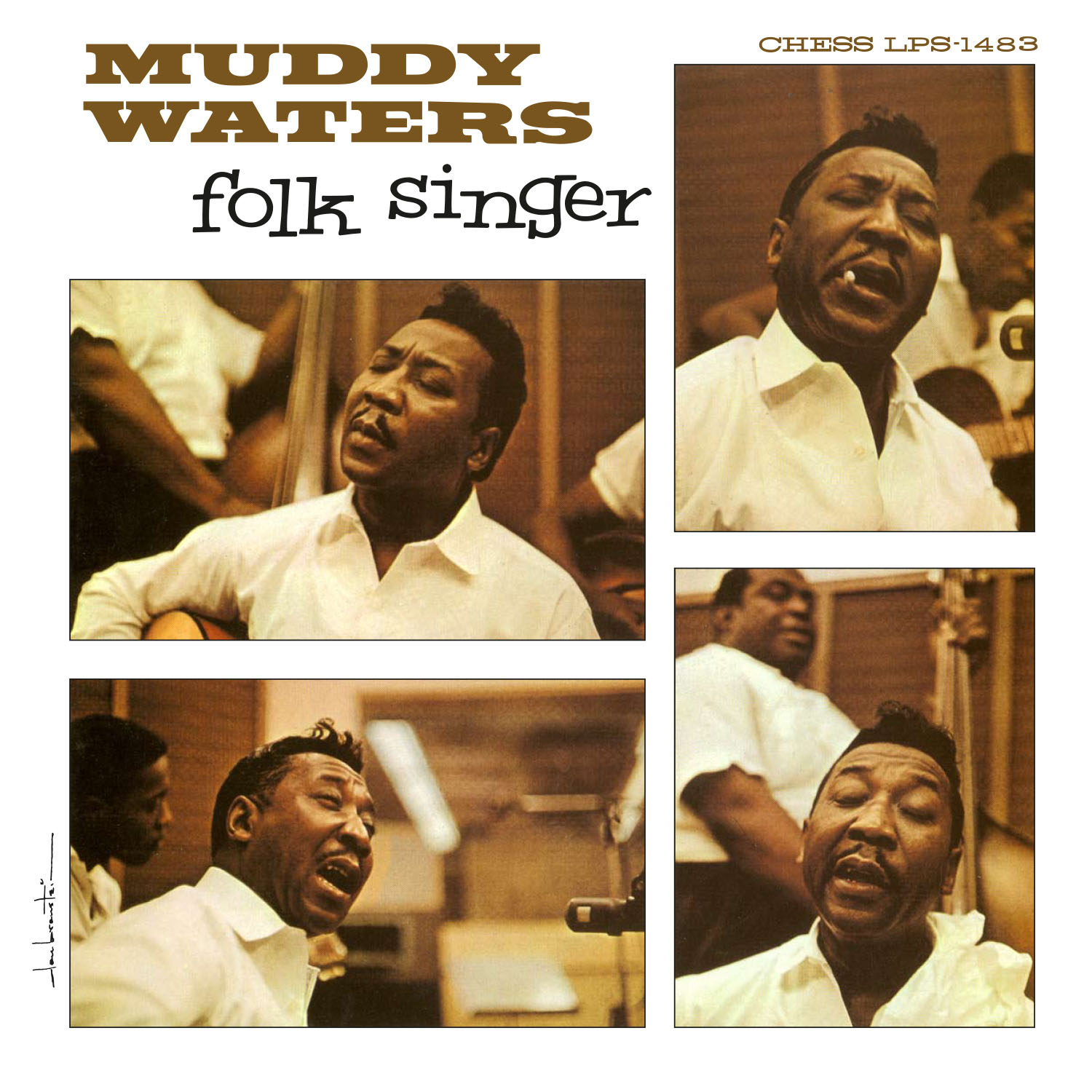
Muddy Waters is one of the defining voices of electric Chicago blues. That makes Folk Singer especially intriguing: the album places his singing and acoustic guitar within a small, clearly defined ensemble. It was recorded at the Chess studio in Chicago in September 1963 and released on Chess in January 1964. The original stereo catalogue number is LPS-1483. Ralph Bass and Willie Dixon produced, with Ron Malo engineering. Behind the apparently simple setting were musicians and studio colleagues with a working knowledge of the musical world being recorded.
The title belongs to the period of the folk revival, but the central personality remains unmistakably Waters’s own. An acoustic accompaniment does not turn him into a different singer. His grounding in the blues, the relationship between voice and guitar, and the ability to carry a story through economical means remain fundamental. A reduced ensemble directs particular attention towards those qualities. An entry, a pause or a guitar response can carry considerable weight when only a few musicians are involved.
Folk Singer can therefore be approached both as a distinctive point in Waters’s discography and as a self-contained album. It brings an established Chicago musician’s experience into a form with space between its participants. Listeners who associate him mainly with electric amplification have an opportunity to consider the continuity of his musical language. The means of accompaniment change, while the expression of a song remains a matter of voice, timing and personality. That relationship gives the record an appeal extending well beyond its place in audiophile collections.

Two guitars and a small rhythm section
Four musicians make up the original LP’s ensemble. Muddy Waters sings and plays acoustic guitar, joined by Buddy Guy on a second acoustic guitar, Willie Dixon on double bass and Clifton James on drums. These credits apply to the nine-track original album. Bonus selections added to later CDs introduce further names into some combined personnel listings; those musicians should not automatically be assigned to this LP. Maintaining the distinction preserves the identity of a session whose many reissues can otherwise make the details less clear.
Guy is an important musical partner here. Two guitarists need not compete continuously for the foreground. The more interesting relationship may be between a sung phrase and what precedes or follows it. A guitar figure can answer, continue a movement or leave space for the next vocal entry. Acoustic instruments also invite attention to the physical character of playing: the attack of a string, its resonance and the length of a note as it fades. Those details belong to the musicians’ expression as much as to the recording technique.
Dixon combines his role as bassist with production work. He also contributes as a songwriter through “My Captain,” on the first side. His double bass supplies part of the ensemble’s foundation, with James completing the rhythm section. The modest number of participants makes it possible to follow their separate functions while still hearing the performance as a shared activity. Accompaniment is an active part of shaping the space around the singer, rather than a neutral background placed behind a featured voice.
The focus on four musicians also brings their different responsibilities into close contact. Waters stands at the centre as singer and songwriter, Guy responds as a second guitarist, and Dixon contributes as bassist, composer and producer. James adds another perspective through the drums. Because each name now carries a separate history, it is worth considering them again as partners in one particular session. The result belongs to their shared work, and its character cannot be explained solely by the reputation of the leader.

Nine songs with their own sense of place
“My Home Is in the Delta” opens the record, establishing a connection with place in its very title. “Long Distance” follows before Dixon’s “My Captain” supplies the longest performance on the first side. “Good Morning School Girl” introduces a familiar song associated with Sonny Boy Williamson’s repertoire. “You Gonna Need My Help” then closes the side with another Waters composition. His legal name, McKinley Morganfield, appears in the writing credits. Original material and carefully chosen songs by others give the programme a personal coherence.
The second side begins with “Cold Weather Blues,” followed by Johnny Temple’s “Big Leg Woman,” “Country Boy” and finally “Feel Like Going Home.” Their titles suggest different situations and perspectives. One possible way of approaching the sequence is through its movement between memory, direct address and thoughts of home. That is a reading of the programme rather than an additional claim about how the songs were written. Each piece retains its independence while gaining another context through its place on an album side.
With such a celebrated recording, discussion can quickly turn towards its reputation as a demonstration record. There is equal value in beginning with the songs themselves. How does Waters start a line? Which words acquire weight even before every detail of the lyric has been considered? When does a guitar answer, and when is a space left open? These questions lead directly towards the musical work. They do not depend on technical superlatives or on an assumed response from a particular playback system.
The nine selections form the complete original programme. Additional recordings on other releases may be worthwhile in their own right, but they change both the running time and the personnel context. This LP retains the original concentration. For a collector, that has an appeal of its own: the album remains a defined succession of songs, with a beginning, two distinct sides and a closing title that returns to the idea of home. It can be experienced as a whole rather than simply as a source of individual blues favourites.
Bernie Grundman’s cut for Analogue Productions
The edition offered here is AAPB 1483, a single stereo LP playing at 33⅓ RPM. Bernie Grundman worked from the original analogue Chess masters for the cut. Pressing is at Quality Record Pressings, with the record specified at 180 grams. A gatefold jacket with additional photographs and an insert complete the presentation. These details identify this particular single-LP edition; the separately available 45 RPM version distributes the music differently and should be considered as a distinct release.
For Folk Singer, the 33⅓ RPM format has a practical attraction. Five songs occupy the first side and four the second, preserving the original division and allowing longer uninterrupted sections of listening. Anyone who enjoys following the album’s sequence can stay with its movement without additional side changes. The choice of speed is therefore also a choice about how a familiar programme becomes part of a listening session, and how its songs remain connected within each half.
The stages in the record’s history can be identified clearly: Chicago in September 1963, Chess as the original label, Grundman’s later cut and QRP as the pressing plant for this edition. Those details help establish the release for a collector. The musical centre remains the small ensemble itself. Waters, Guy, Dixon and James demonstrate the possibilities of voice, two guitars, bass and drums. With relatively few elements in play, the individual decisions of the musicians become especially significant, giving the record ample reason to return to it as music as well as a celebrated recording.
You order from Michael 45 in Germany. We arrange the US import and dispatch from Hilden.
Customer questions: 45 or 33⅓ RPM: which edition is worth it? · Buying Analogue Productions records in Europe
Musicians
Participants and documented credit status. Track references correspond to the tracklist.
- Muddy WatersPortrait: 1955vocals, acoustic guitarParticipation: All tracks
- Buddy GuyPortrait: 2008 · later portrait referenceacoustic guitarParticipation: All tracks
- Willie DixonPortrait: 1960double bassParticipation: All tracks
- Clifton JamesdrumsParticipation: All tracks


Credits refer to the original LP programme listed here. Other formats and bonus tracks are not included.

Reviews
There are no reviews yet.