
A bluesman builds a heaven of his own
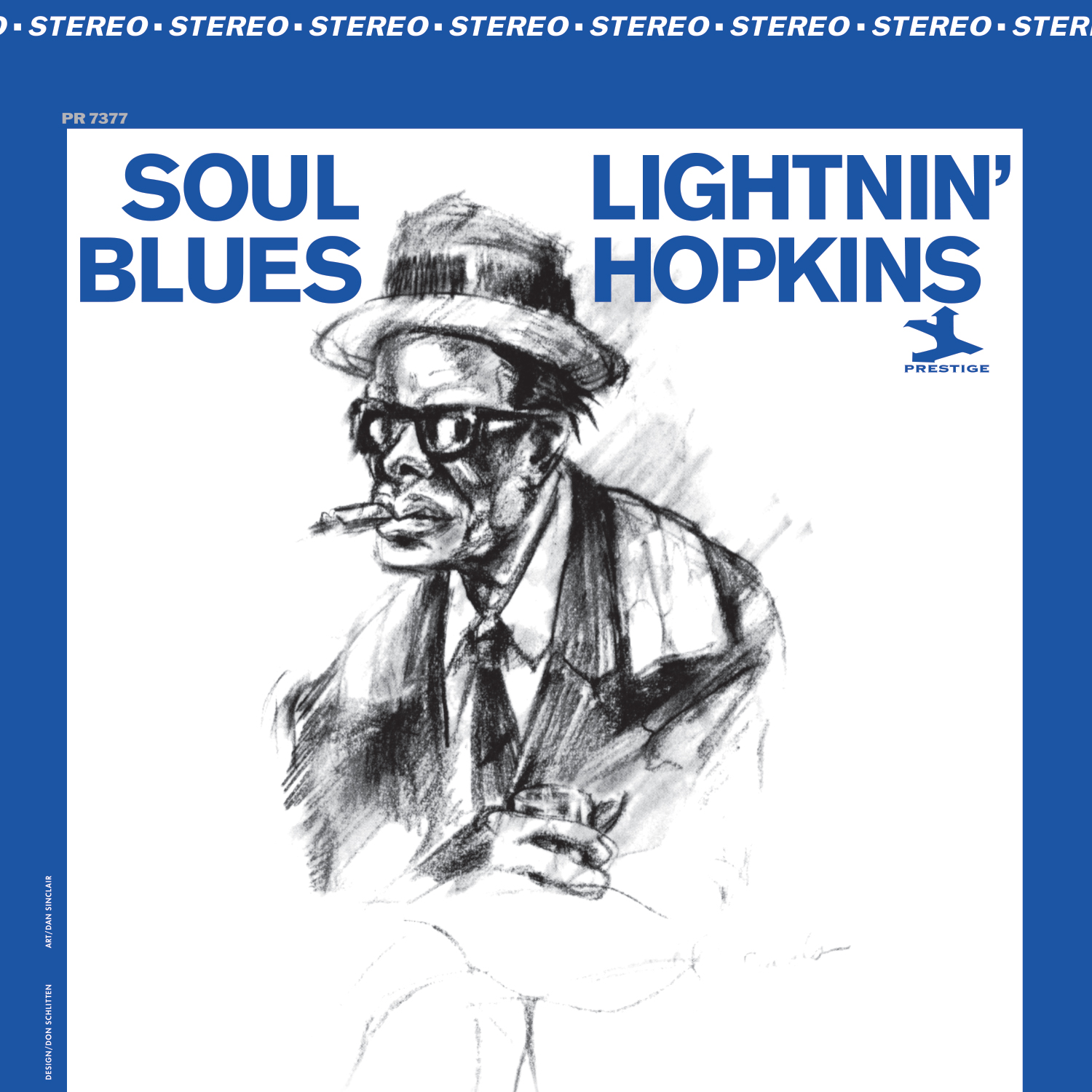
The opening title of Soul Blues establishes its world before a note has to be described: “I’m Going to Build Me a Heaven of My Own.” Lightnin’ Hopkins does not need a large stage to bring a whole scene into focus. A voice, a guitar and a story are enough. This particular story begins with an encounter with a bearded man who introduces himself as Jesus. Hopkins turns it into neither a sermon nor a solemn declaration of faith, but the kind of independent-minded tale in which everyday life, exaggeration, humour and genuine longing can coexist. Blues is not simply a form into which he places words. It is his way of thinking aloud and answering the world around him.
The recordings were made on 4 and 5 May 1964, and Prestige issued the album in 1965 as catalogue number 7377. Hopkins was already an established individual voice. His music carried Texas blues into a new recording era without smoothing away the edges of his personality. One of the attractions is how little he needs to make a song his own. Willie Dixon’s “My Babe” does not sit awkwardly among the other material as a borrowed repertoire item. It becomes another part of the conversation: a familiar song shaped around the expression and rhythmic instincts of this particular storyteller.
For collectors, Soul Blues also has a very specific second history. This Analogue Productions edition completed the label’s twenty-five-title Prestige Stereo series. It is also the documented exception among the combined fifty Mono and Stereo reissues: a usable original master tape was no longer available for this album. The way the music was recovered therefore belongs to the identity of the edition. Before following that history, however, it is worth keeping Hopkins himself in the foreground. Behind an unusual source story is a record containing ten individual performances, rather than merely an interesting restoration problem.

Three musicians, with two deliberately solitary moments
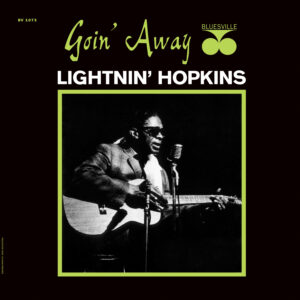
Hopkins is joined by Leonard Gaskin on double bass and Herbie Lovelle on drums. Both had accompanied him on Goin’ Away, recorded in June 1963. Placing the two records alongside each other therefore reveals a familiar small ensemble. That connection is useful because it moves attention away from a simple opposition between “solo blues” and “band blues.” The more revealing question is how much space accompaniment leaves for the singer. Bass and drums extend the musical setting without requiring Hopkins to surrender his role as narrator to a larger, more fixed arrangement.
The personnel need to be read track by track. “I’m a Crawling Black Snake” and “Darling, Do You Remember Me?” are solo Hopkins performances; Gaskin and Lovelle appear on the other eight selections. Those exceptions are more than details for a credits list. They change the perspective within the album. When voice and guitar stand alone, every instrumental answer to a sung line returns directly to Hopkins himself. The original sequence already contains this movement between songs supported by a trio and performances concentrated entirely on one person.
The titles suggest a range of imaginative settings. “Rocky Mountain Blues” looks towards distance; “I Mean Goodbye” announces a separation; “Black Ghost Blues” and “Lonesome Graveyard” invoke the darker imagery of the tradition. They should not be assembled into a literal, continuous autobiography. Hopkins uses characters, inherited images and a storyteller’s freedom. That is part of the attraction: this is not only someone reporting events, but a musician creating a presence through words, repetition and timing. His guitar functions both as a conversational partner and as a way of giving each telling its shape.

Staying with one voice for an entire side
Soul Blues rewards an approach that does not depend on counting solos or waiting for spectacular changes of personnel. More productive questions concern the way Hopkins prepares a phrase, stretches it or hands the reply to his guitar. On a return visit, try following the accompaniment and then comparing its role with the two solo tracks. What happens to the sense of movement when bass and drums are absent? What work does the guitar do between the words? These are direct routes into the performances, and they require attentive listening rather than specialist terminology.
The 33⅓ RPM LP retains the original division into two sides of five tracks each. That suits a record whose identity develops through a sequence of shorter and longer tales. Side A moves from the expansive opening proposal through “My Babe” and “Too Many Drivers” to “Rocky Mountain Blues.” Side B travels from farewell towards the graveyard image of the closing number. Turning the record once, then allowing its second half to unfold as a continuous chapter, is a practical attraction of the conventional LP format here. It concerns the sequence of the music, rather than a blanket claim that one playback speed must sound better than another.
The album also occupies a distinctive place within a Hopkins collection. Its returning rhythm section connects it with Goin’ Away, while the solo performances offer another view of the same musician. The later inclusion of this material in the compilation Double Blues shows its continuing life beyond the first release. For listeners interested in the person behind the genre, this is a particularly rewarding point of entry. Blues is not presented as a decorative atmosphere: a narrator’s unmistakable individuality is what binds the repertoire together.
APRJ 7377: a recovery with its source openly explained
The edition offered here is Analogue Productions APRJ 7377, a stereo LP cut at 33⅓ RPM, pressed at Quality Record Pressings and presented in a Stoughton Printing tip-on jacket. The publisher currently specifies 180-gram vinyl; earlier documented editions were sold as 200-gram pressings. That history should not be read as a promise of a particular earlier or numbered copy. For this title, the mastering source is more significant than the weight, because its route differs explicitly from the other Prestige reissues.
According to Analogue Productions, Ryan K. Smith at Sterling Sound made a high-resolution 24-bit/192 kHz transfer from a clean original LP. The tape initially supplied for the project proved to have been copied from a record itself; the actual original tape has been missing since the early 1970s. The fresh transfer was carefully treated to remove remaining clicks and pops and became the mastering source. Soul Blues is therefore not an all-analogue reissue cut from the original master tape. Explaining that distinction allows the edition to be considered on the basis of its real provenance.
The stereo designation also comes with a useful qualification from the publisher. The original stereo LP used as the source has very little lateral separation and can consequently seem close to mono. A wide left-to-right presentation should not be inferred from the word “stereo” alone. The interest of this edition lies in a documented effort to make the recording available again from the best surviving source, which in this case was a record—and in the individuality of Hopkins’ music beyond that unusual technical history.
You order from Michael 45 in Germany. We arrange the US import and dispatch from Hilden.
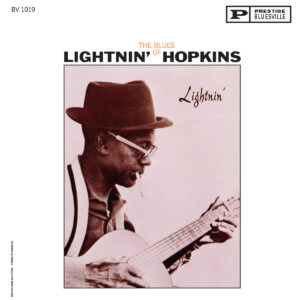
More by Lightnin’ Hopkins: Lightnin’ Strikes · Lightnin’
Customer question: Buying Analogue Productions records in Europe
Series: Analogue Productions Prestige – all 50 records, musicians and session paths
Musicians
Participants and documented credit status. Track references correspond to the tracklist.
- Lightnin’ HopkinsPortrait: 1960svocals, guitarParticipation: All tracks
- Leonard GaskinPortrait: 1960double bassParticipation: A1–A3, A5, B1–B3, B5
- Herbie LovelledrumsParticipation: A1–A3, A5, B1–B3, B5


4/5 May 1964; supervision Ozzie Cadena, engineering Rudy Van Gelder, notes Chris Albertson. Sources differ between NYC and Englewood Cliffs for the location. Hopkins solo on A4 and B4; Gaskin/Lovelle on all remaining tracks. Authorship of Too Many Drivers disputed; no firm attribution.

Reviews
There are no reviews yet.