Familiarity makes room for surprise
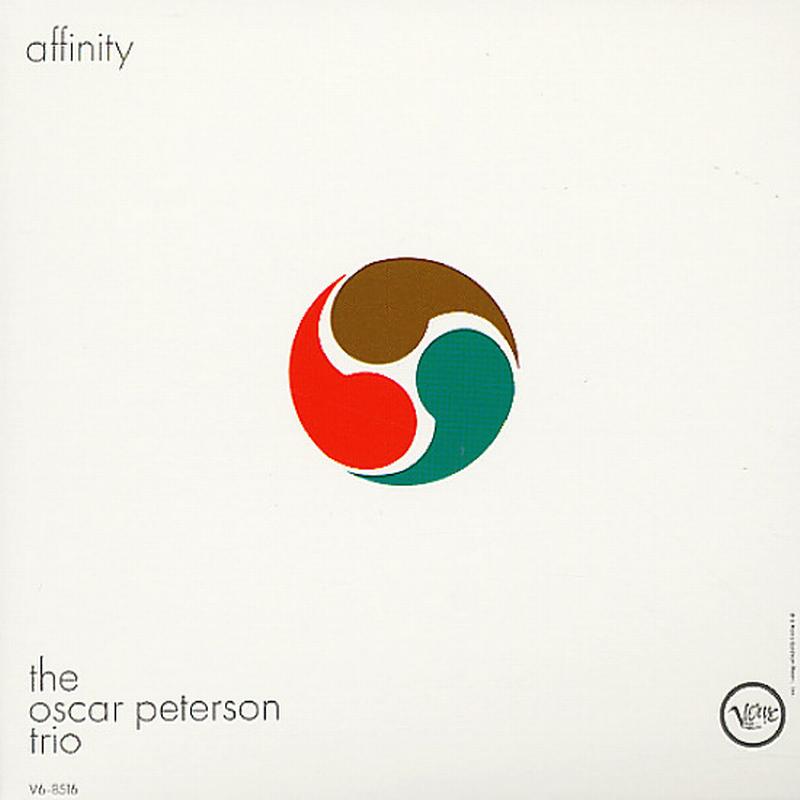
Affinity invites a simple question: what happens to a melody when three musicians know one another’s movements well enough to leave each other space? Oscar Peterson, Ray Brown and Ed Thigpen appear in the established trio of their shared years. Recorded in Chicago in September 1962, the programme travels from Bill Evans through Broadway and film to European operetta, connected by piano, double bass and drums.
Peterson’s technical resources are familiar territory. This album offers another route through the choice of tunes and their different kinds of motion. Alongside the pianist’s lines, Brown’s bass and Thigpen’s accents deserve attention. A melody may remain clearly in front while the accompaniment is already preparing the arrival of the next phrase. The album’s title becomes an audible idea: a closeness that allows individual movement.

Two waltzes with different personalities
Bill Evans’ “Waltz for Debby” opens the record. A composition by another defining jazz pianist thus provides the first encounter. Peterson need not reproduce Evans’ personality to take his melody seriously. It makes a rewarding starting point for listening: which qualities belong recognisably to the composition, and which arise from this trio’s treatment of it?
“Gravy Waltz” then leads to Ray Brown, who wrote it with Steve Allen. The bassist appears as a composer too. Two waltzes on the same side therefore offer different ideas rather than a duplicated gesture. “This Could Be the Start of Something”, another Steve Allen song, follows. The programme links contemporary jazz writing, music from within the ensemble and the songwriting of a man many listeners first knew as a television presenter.

An operetta melody on the final side
“Yours Is My Heart Alone” began as “Dein ist mein ganzes Herz” in Franz Lehár’s The Land of Smiles. Here the melody moves from a sung theatrical role into the jazz trio. It remains recognisable while inviting another approach to phrasing, accompaniment and time. As the closing selection, it brings the album back to the appeal of a strong, memorable tune.
The other pieces make connections of their own. “Baubles, Bangles and Beads” comes from Kismet, “Tangerine” carries the names Johnny Mercer and Victor Schertzinger, and “Six and Four” is by Oliver Nelson. “I’m a Fool to Want You” leads into ballad territory. These juxtapositions provide the particular richness of Affinity. Eight pieces with separate histories become a programme that repeatedly applies the trio’s mutual understanding to different material. On one pass through the record, follow Brown and Thigpen in particular: how do they help establish the character of a tune before the piano solo takes the foreground?
This edition
AVER 89544 belongs to the Verve and UMe Acoustic Sounds Series. Its eight tracks appear on one 180-gram LP at 33⅓ RPM. Acoustic Sounds names the original analogue tapes as the source and specifies Quality Record Pressings and a Stoughton Printing tip-on gatefold jacket for this edition’s manufacture and presentation.
More by The Oscar Peterson Trio: West Side Story
Series: Verve – all 34 records: voices, organ and bossa nova
Musicians
Documented selection of participating musicians. Personnel may vary by track; this list does not claim to be complete.
| Name | Instrument / role |
|---|---|
| Oscar Peterson | Piano |
| Ray Brown | Double bass |
| Ed Thigpen | Drums |

Reviews
There are no reviews yet.