
The musician behind a famous first name
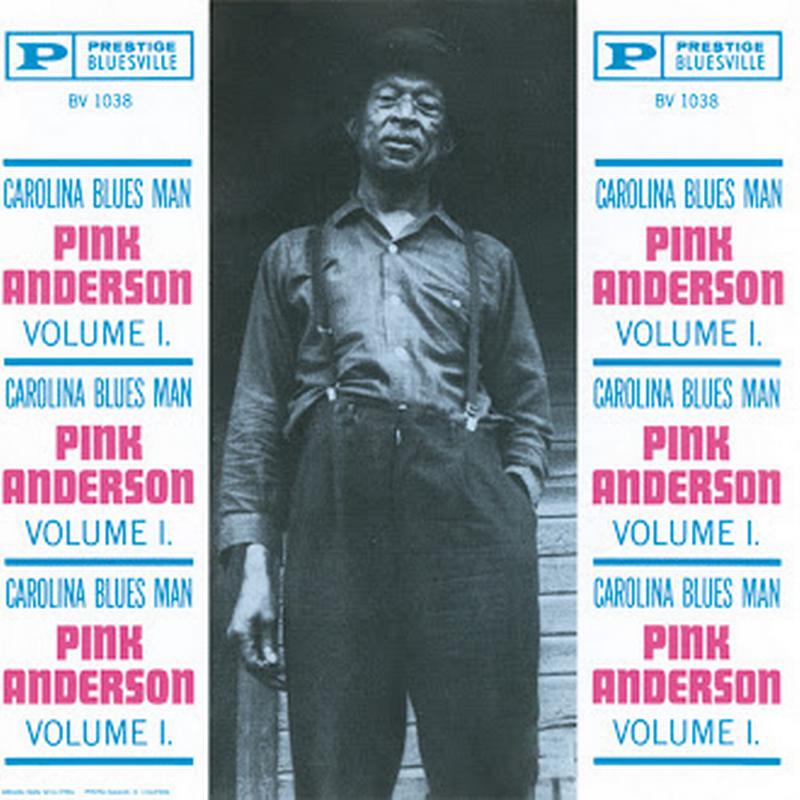
Pink Anderson’s first name reached many listeners who had never encountered his recordings. Syd Barrett combined it with that of blues musician Floyd Council to form “Pink Floyd.” Carolina Blues Man takes the story back to Anderson himself: a singer and guitarist from South Carolina whose working life had begun long before the British band existed.
Born Pinkney Anderson in 1900, he was already recording for Columbia with Blind Simmie Dooley in 1928. He also earned his living entertaining audiences at travelling medicine shows, where music formed part of a broader programme. The 1961 album documents someone with decades of experience in holding an audience’s attention through a voice, an acoustic guitar and the relationship between them.

A recording made in Spartanburg
Anderson was recorded in his home city of Spartanburg on April 12, 1961. Kenneth S. Goldstein produced the session, with Samuel B. Charters responsible for the recording. The date belongs to the folk and blues revival, when researchers and producers were seeking out older musicians and documenting their work for listeners who often knew little of the original performance circuit.
There is no backing band on Carolina Blues Man: Anderson supplies both singing and acoustic guitar. That directs attention towards two musical voices coming from the same person. How does the guitar answer a sung line? Where does the accompaniment continue while the singer takes a breath? You can follow these decisions without having to separate several instruments first. The modest personnel should not obscure the long professional experience behind it, or the demands of performing for a constantly changing audience.

Ten stops along the country blues tradition
The first side opens with “My Baby Left Me This Morning” and includes “Baby Please Don’t Go,” associated with Big Joe Williams. “Meet Me in the Bottom” closes the side. Turn the record over for selections including “Weeping Willow Blues,” “I Had My Fun” and “Everyday of the Week.” This edition contains ten tracks.
Anderson is associated with Piedmont and country blues. One useful route into the guitar playing is to follow the relationship between the lower notes and the figures above them. Listen first to the bass movement, then to what happens in the upper register, with the vocal line providing a third reference. The Pink Floyd connection is an intriguing footnote, but the music does not require that detour. It documents an artist with a history of his own, rooted both in travelling entertainment and in the later efforts of the folk revival to preserve and circulate that repertoire.
The Bluesville edition
This 180-gram LP at 33⅓ RPM carries shop number ACONC 843 and Craft Recordings catalogue number CR00843. Matthew Lutthans mastered it at The Mastering Lab, with Craft naming the original tapes as the source. The record is pressed at Quality Record Pressings and comes in a tip-on jacket, accompanied by an obi strip with notes by Scott Billington. Its ten selections follow the historical LP sequence; “Try Some of That,” found in expanded listings, is not part of this edition.
Michael 45 keeps the record in Germany and ships it from Hilden, so buyers do not need to arrange a personal US import or endure the corresponding customs wait.
More from Analogue Productions
Musicians
Documented selection of participating musicians. Personnel may vary by track; this list does not claim to be complete.
| Name | Instrument / role |
|---|---|
| Pink Anderson | Vocals, Guitar |
🎧 Review video: 15 Amazing New Reissues you might want in your Collection
This video is hosted by YouTube (Google). It only loads once you switch on “Functional” in the cookie settings.

Reviews
There are no reviews yet.