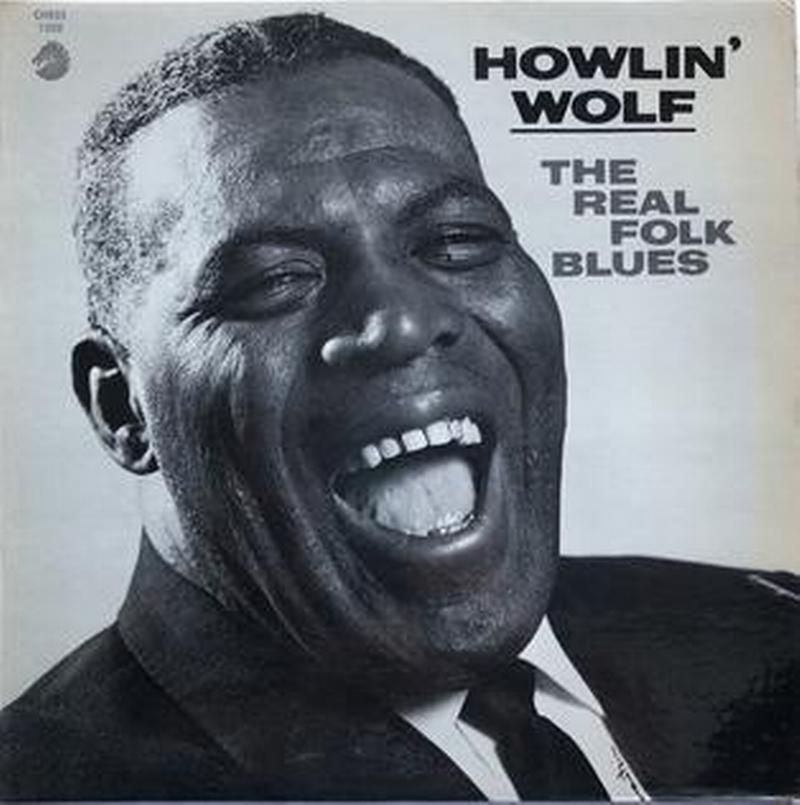


A voice that changes the room
“Killing Floor” immediately explains why Howlin’ Wolf commands attention. The guitar figure pushes forward, while the voice above it can growl, tease and give a single sound extraordinary physical presence. Chester Burnett does not need an elaborate melody to suggest a whole story. A displaced accent, a held syllable or a gap between lines is enough to set the band in motion. The friction between his singing and the instrumental replies gives the performance its life.
The Real Folk Blues was not recorded by one group over a single weekend. Chess assembled performances made between 1956 and 1965. Changes of instrumental colour and personnel therefore belong to the album’s identity. Rather than documenting one fixed line-up, it gathers different moments in a career held together by an unmistakable personality. New listeners receive a compelling introduction; established blues fans can trace connections between recordings first encountered as individual singles.

A folk title, an electric Chicago sound
The title needs a little unpacking. Much of this is electric Chicago blues, not an acoustic retreat to a front porch. The Real Folk Blues series helped Chess address the younger audience created by the folk boom. Its presentation offered a new point of entry without changing what the musicians had played. Voice, guitar and rhythm section retain their direct, sometimes abrasive conversation.
Hubert Sumlin and Buddy Guy are among the musicians involved across these sessions. Their names should not be mistaken for a permanent group appearing on every track. They point instead to the remarkable musical community around Wolf. Listen especially to the brief guitar replies between vocal phrases. These are not merely devices for filling empty space: they can challenge a line, underline its humour or carry its movement into the next bar.

Dixon’s songs, Wolf’s characters
Willie Dixon wrote “Tail Dragger”, “Three Hundred Pounds of Joy” and “Built for Comfort”. The fact that they nevertheless feel inseparable from Wolf says much about interpretation. He does more than deliver a lyric in an appropriate blues voice. Confidence, comic timing and delayed emphasis turn a short song into an encounter with a fully formed character. The musical form may be familiar; the person inhabiting it is not interchangeable.
“Sittin’ on Top of the World” opens a longer historical perspective. The Mississippi Sheiks recorded it in 1930, Wolf made his version in 1957, and Cream later included the song on Wheels of Fire. Listeners arriving through the rock recording will not find an unfinished preliminary sketch here. They encounter a different balance of voice, tension and time. The comparison reveals how widely musicians can reshape a composition without losing its identity.
Small gestures inside a commanding performance
The famous titles naturally attract attention, but “Louise”, “Poor Boy” and “Natchez Burnin’” also help define this collection. Following Wolf’s different ways of telling a story is more rewarding than simply waiting for the next familiar riff. His rough vocal surface remains recognisable, yet the dramatic pressure is not identical from song to song. That variety matters as much as the sheer force for which he is remembered.
The mono presentation encourages concentration on the ensemble’s shared pulse. Rather than following a wide stereo arrangement, the ear can settle on the relationship between vocal entrance, guitar reply and rhythmic support. Across these compact performances, personality emerges from precise decisions about timing and emphasis. The fascination is not how many notes the players can fit into a chorus, but which ones they choose—and how Wolf makes us wait for the next line.
More by Howlin’ Wolf: Moanin’ In The Moonlight
Series: Chess Records – all 10 records: singles that became albums
Musicians
Compilation with changing personnel from 1956 to 1965. Andrew “Blueblood” McMahon is credited by a combined two-album source; his contribution to this individual LP remains unresolved.
- Howlin’ WolfHarmonica, Vocals, Guitar
- Donald HankinsBaritone saxophone
- Junior BlackmonDrums
- Earl PhillipsDrums
- Sam LayDrums
- J. T. BrownTenor saxophone
- Adolph “Billy” DuncanTenor saxophone
- Arnold RogersTenor saxophone
- Eddie ShawTenor saxophone
- Lee EgglestonPiano
- Johnny JonesPiano
- Hosea Lee KennardPiano
- Lafayette LeakePiano
- Otis SpannPiano
- Buddy GuyGuitar
- Willie JohnsonGuitar
- Otis “Big Smokey” SmothersGuitar
- Hubert SumlinGuitar
- Jerome ArnoldBass
- Willie DixonBass
- Alfred ElkinsBass
- Andrew PalmerBass


🎧 Review video: 5 Legendary Reissues: Before Van Halen, Pulp Fiction & Rolling Stones Name
This video is hosted by YouTube (Google). It only loads once you switch on “Functional” in the cookie settings.

Reviews
There are no reviews yet.