Rubinstein and Reiner: two personalities, one long musical arc
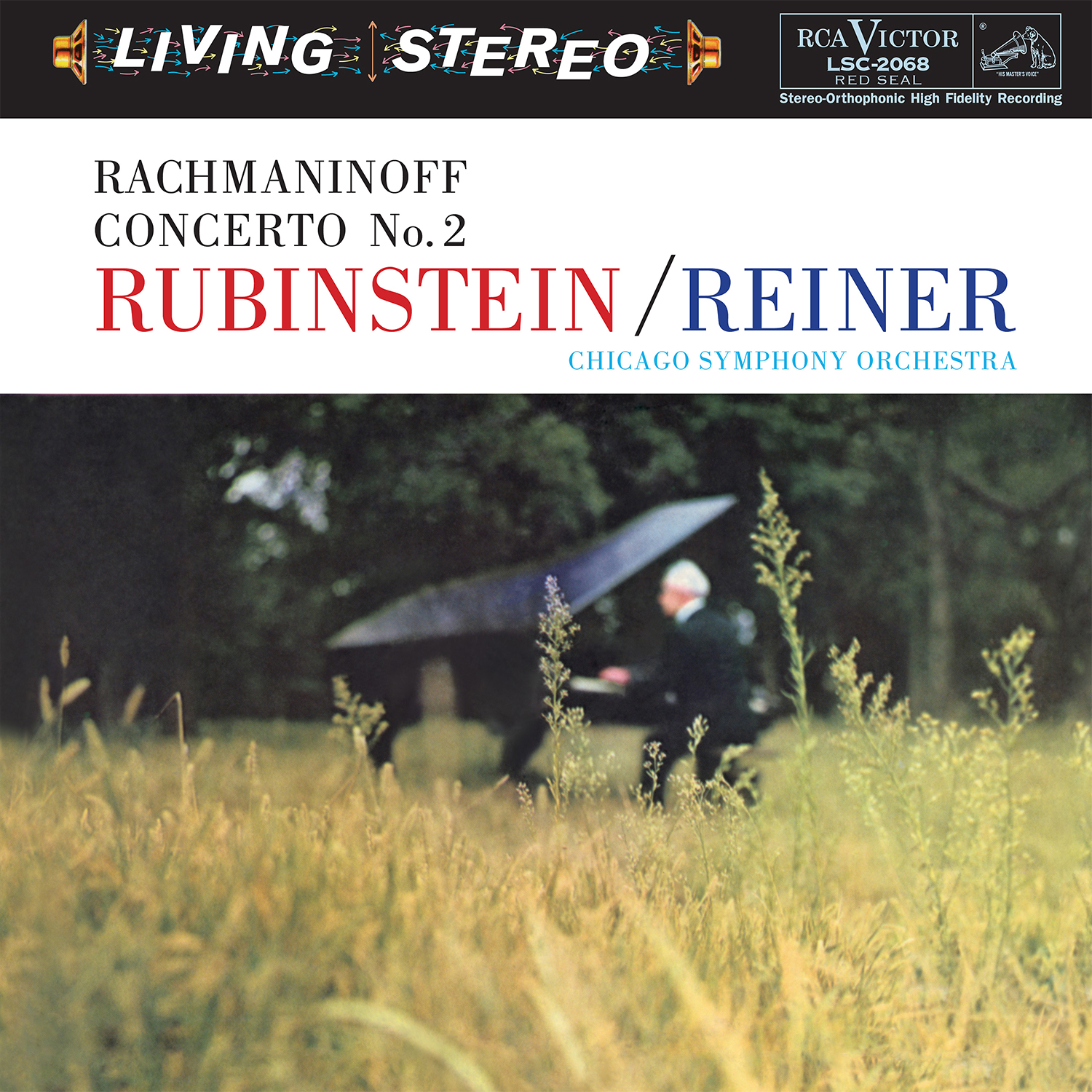
A few piano chords are enough to open the world of Rachmaninoff’s Second Piano Concerto. Before the orchestra unfolds its first expansive melody, the soloist has already prepared the space through weight, repetition and a steadily gathering sense of expectation. It is an opening that makes a partnership such as Arthur Rubinstein and Fritz Reiner particularly intriguing. A pianist with a lifelong relationship to the Romantic repertoire meets a conductor whose Chicago years form a defining chapter in RCA’s history. They recorded the concerto with the Chicago Symphony Orchestra at Orchestra Hall on 9 January 1956.
Rubinstein was then sixty-eight, only weeks away from his sixty-ninth birthday. His international career already stretched from his childhood in Łódź and his Berlin debut at thirteen to the world’s major concert halls. His name remains especially closely associated with Chopin, which makes this Rachmaninoff recording an attractive opportunity to broaden the picture. The concerto calls for formidable pianistic resources, but also for an ability to sustain melodies over long spans. Its demands concern the relationship between climaxes as much as the climaxes themselves.
Reiner had become music director of the Chicago Symphony Orchestra in 1953. Their RCA recording relationship began in 1954, while stereophonic orchestral recording was still a developing undertaking. The January 1956 session therefore brought together two kinds of experience: Rubinstein’s decades on the concert platform and an orchestral partnership writing an especially concentrated chapter of its own. Richard Mohr produced the recording and Lewis Layton was the engineer. Those credits belong to this particular performance and add to its interest as a document of early American stereo recording.
The calendar provides a rewarding companion detail. Exactly one week later, on 16 January, Rubinstein, Reiner and the Chicago orchestra recorded Rachmaninoff’s Rhapsody on a Theme of Paganini. It is not included on this LP. Nevertheless, the proximity shows that the concerto was part of a broader encounter with Rachmaninoff rather than a single unrelated meeting. Following the partnership opens a small but significant chapter within the extensive discographies of both musicians.

A concerto written on the way back to confidence
The Piano Concerto in C minor, Op. 18, has one of the most affecting background stories in Romantic music. Following the failure of his First Symphony in 1897, Rachmaninoff suffered a serious creative crisis. Treatment by the physician Nikolai Dahl helped him return to composition, and the new concerto was dedicated to Dahl. The second and third movements came first and were performed before the complete score. In 1901 the whole concerto followed, with Rachmaninoff at the piano and his cousin Alexander Siloti conducting.
There is no need to turn every note into a retrospective episode from the composer’s life. Yet knowing that background can change the way one approaches the opening. It is a carefully constructed entrance into a large musical conversation. The first movement is marked Moderato – Allegro. Soloist and orchestra exchange responsibilities, allowing attention to move between the melody and the activity supporting it. The piano does not simply occupy the foreground throughout. Its figuration can carry an orchestral line before the keyboard becomes the principal storyteller again.
The Adagio sostenuto changes the relationship between motion and stillness. An inviting way into the movement is to follow the passing of the musical line. What does the piano take up, what continues in the orchestra, and how does a passage remain alive while allowing itself time? These questions bring us closer to interpretation than a general promise of Romantic warmth. Rubinstein and Reiner address the same challenge from different positions: one shapes the piano part from within, while the other maintains the connections between the orchestral groups.
The Allegro scherzando brings a new kind of energy. Its expansive melodies exist within a movement that also depends on rhythmic insistence and quick changes of direction. The sequence gives the listener a satisfying trajectory. After the opening movement’s gradual construction and the broad breathing space of the slow movement, the finale has to provide a convincing destination. These are not merely three containers for famous tunes. They form a journey best experienced with the entire concerto in mind.

Collecting Living Stereo as a musical partnership
A famous series name can easily become the first and last thing noticed about a record like this. The deeper collecting interest begins with the performers. Rubinstein, Reiner and the Chicago Symphony Orchestra are captured at a specific point in their shared history. The 1956 recording date should also be distinguished from the later issue of the stereo LP. RCA assigned it the catalogue number LSC-2068; accounts of its early release dating are not wholly consistent. The securely documented January recording session provides the firmer point of reference for understanding the performance.
Listeners who know Rubinstein mainly through Chopin can encounter another aspect of the same musician here. Reiner’s Chicago work, meanwhile, can be approached through the demands of a soloist partnership. In a symphonic programme the orchestra often commands attention as a complete entity. In a concerto it has to preserve its character while responding to an individual piano voice. Following that exchange between shared momentum and the giving of space can become a rewarding thread through the performance.
Try beginning with a single transition. How does one passage lead into another? Where does a different instrument take over without interrupting the musical thought? On a later hearing, follow the underlying rhythmic movement instead. Rachmaninoff offers ample opportunity for both approaches, because his broad melodies are frequently accompanied by considerable activity. Familiar music can become newly engaging through a change in attention. Neither a shelf of comparison copies nor a search for a supposedly definitive interpretation is necessary to enjoy that process.
The single LP at 33⅓ RPM suits this kind of listening well. It keeps the concerto on one record, requiring only the normal side change. Compared with a programme divided across several 45 RPM sides, this format favours longer stretches of listening. That is a practical advantage for returning to a three-movement work, rather than an automatic claim of superior sound. In a collection intended to be played regularly, the combination of a manageable physical format and a substantial musical programme has considerable appeal.
Analogue Productions AAPC 2068
This edition belongs to Analogue Productions’ second RCA Living Stereo reissue series. Ryan K. Smith handled mastering and lacquer cutting at Sterling Sound. The publisher specifies the original two-track master tapes as the source, with pressing at Quality Record Pressings. The result offered here is a stereo LP running at 33⅓ RPM. These details identify AAPC 2068 and should not be confused with the production specifications of an SACD or another reissue.
A Stoughton tip-on jacket recalls the historical presentation, including the Living Stereo logo and familiar RCA label imagery. Such details help a reissue make sense as a physical object: the programme arrives in a form that visibly refers to its original LP identity. At the same time, it remains a modern Analogue Productions edition. A reproduction jacket does not turn a contemporary pressing into an original record from the 1950s.
Both 200-gram and later 180-gram pressings are documented under this catalogue number; the publisher currently describes the LP as 180 grams. That current specification should not be applied retrospectively to every earlier copy. The work, the performers, the stereo presentation and the Ryan K. Smith cut provide more useful foundations for identifying the edition. Collectors seeking a particular pressing variant should also consult the packaging and identifying marks of the individual copy.
For everyday musical enjoyment, the central attraction is straightforward: a complete Rachmaninoff concerto, an important pianist-conductor partnership and a clearly identified analogue reissue. It is a record that encourages us to give Rubinstein and Reiner time together, rather than treating their names simply as marks of prestige on a sleeve.
You order from Michael 45 in Germany. We arrange the US import and dispatch from Hilden.
Artist page: All titles by Fritz Reiner
Customer question: Buying Analogue Productions records in Europe
Musicians
Participants and documented credit status. Track references correspond to the tracklist.
- Arthur RubinsteinpianoParticipation: all movements
- Fritz ReinerconductorParticipation: all movements
- Chicago Symphony OrchestraorchestraParticipation: all movements


Recorded 9 January 1956, Orchestra Hall, Chicago. Producer: Richard Mohr; engineer: Lewis Layton. AP lacquer cutting: Ryan K. Smith, Sterling Sound; pressed at Quality Record Pressings. The work listing gives the three movements without assigning unconfirmed LP side breaks.

Reviews
There are no reviews yet.