



Two routes into Gershwin’s musical world
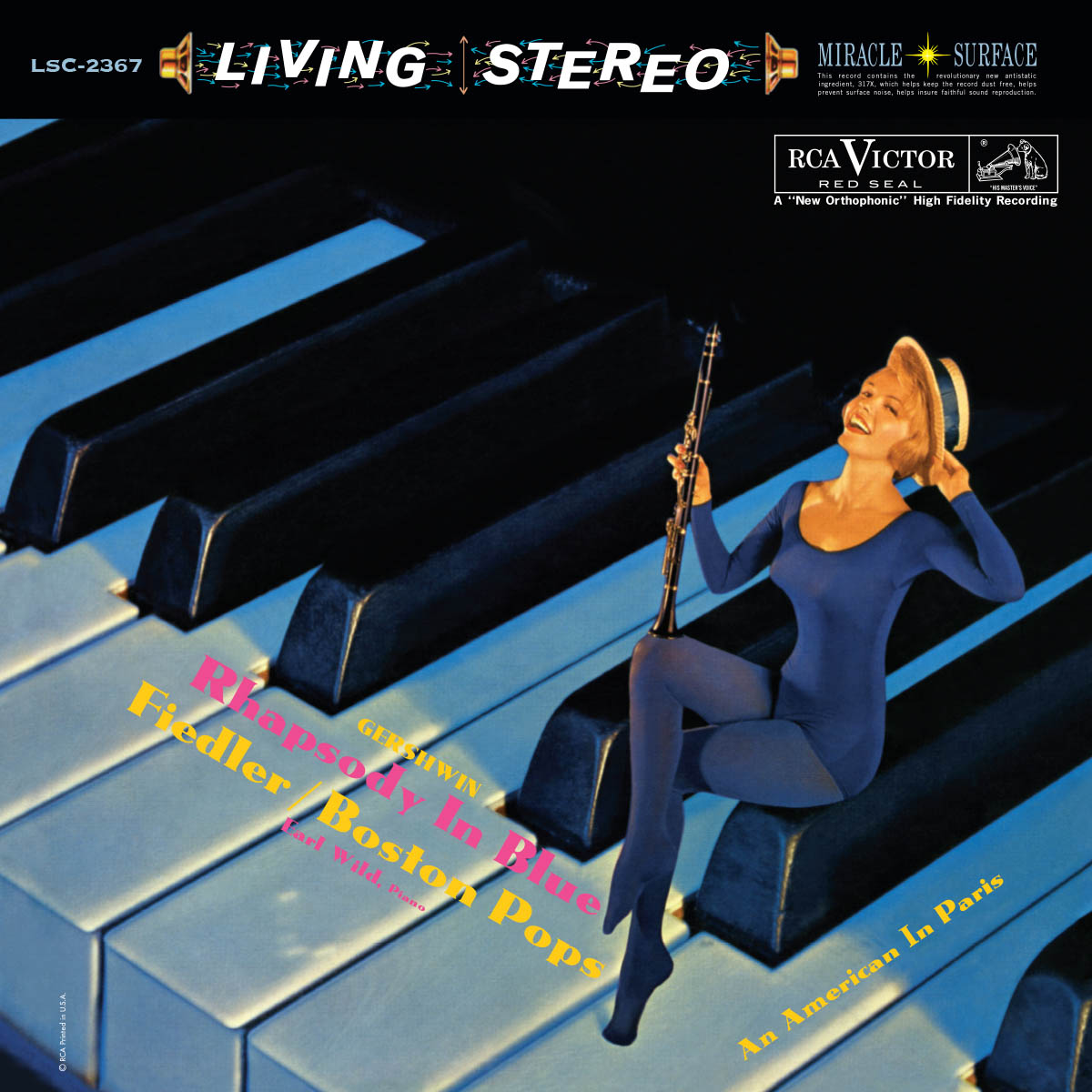
A rising clarinet gesture opens “Rhapsody in Blue” with a sound recognised far beyond the concert hall. Before long, piano and orchestra meet in music whose themes communicate directly while its form keeps moving. On the other side of the record, “An American in Paris” offers a different kind of motion: changing orchestral colours, rhythmic steps and a traveller’s view of an unfamiliar city. Arthur Fiedler and the Boston Pops Orchestra bring together two works that reveal Gershwin’s musical imagination from distinct directions.
The pairing is especially inviting because it makes both similarities and differences clear. Each work combines a strong melodic gift with rhythmic flexibility and a pleasure in instrumental colour. In the “Rhapsody,” the piano possesses an individual solo voice. In “An American in Paris,” the orchestra itself carries the changing perspective. Heard consecutively, the two sides therefore present different ways of building a larger musical argument from memorable individual ideas. The shared composer and ensemble make the comparison easy to follow without reducing either work to the other.
Earl Wild joins the orchestra as pianist for the “Rhapsody.” Clarinetist Pasquale Cardillo is also explicitly credited for that work. These individual names matter: the celebrated opening is more than an anonymously described orchestral colour, and the piano part has a clearly identified interpreter. Fiedler conducts both works, with the Boston Pops Orchestra providing their common foundation. The personnel remain straightforward while giving the solo contributions their proper place rather than allowing them to disappear inside a general orchestra credit.
The original release belongs to RCA Victor Red Seal and carries the number LSC-2367. Richard Mohr produced the recording, Lewis Layton handled engineering and Deems Taylor supplied the sleeve notes. The familiar themes provide an immediate way into the record, while the musical craft behind them offers another: the balance between soloist and ensemble, the weight given to instrumental groups and the tension of a transition. Those decisions connect individual moments into the larger shape of a complete work.

Fiedler, Wild and the orchestra’s individual voices
Fiedler’s task is to hold together several kinds of motion. A theme can appear almost as a song and then acquire a different function when another instrumental group takes it over. The orchestra must carry those transitions without losing rhythmic direction. Following the transfer of a melody offers a useful listening route. Which colour introduces it, which receives it, and how does its effect change within the larger passage? Gershwin supplies many immediately comprehensible points of reference for hearing such relationships develop.
Wild’s piano in “Rhapsody in Blue” maintains an ongoing relationship with the ensemble. The soloist can take up an idea, elaborate it or lead it elsewhere. The work draws energy from these exchanges between one voice and the collective sound. It is therefore rewarding to follow the handovers as well as the more conspicuously virtuosic passages. A brief orchestral thought can become the starting point of a larger piano movement, while a solo moment can prepare the ensemble’s return. The two sides of the conversation shape one another.
Cardillo’s clarinet credit also belongs to side A. The famous opening demonstrates how strongly one wind player can establish the character of a work within a large ensemble. Its flexibility introduces a quality that continues on other levels as the music unfolds. The rising gesture is consequently more than a recognisable signal at the beginning. It opens music that makes transitions, transformations and different styles of delivery part of its expressive language. Returning to that beginning after hearing the whole piece can reveal its broader significance.
“An American in Paris” has no corresponding featured pianist on this record. Attention turns towards the orchestra and its changing groups. The personnel overview therefore retains the specific work assignments for Wild and Cardillo, while linking Fiedler and the Boston Pops to both selections. The credits used here do not provide a complete named roster of the orchestra. The ensemble remains identified as such, without invented individual assignments. Each documented contribution receives its appropriate scope, and the distinction between the two works remains clear.

One work per side, two listening approaches
Side A is devoted entirely to “Rhapsody in Blue.” Its celebrated opening provides an immediate entrance, but the work rewards attention well beyond those first seconds. Themes return in different contexts, and the relationship between piano and orchestra continues to shift. A first hearing might follow the soloist. On the next, the ensemble’s preparation, response and integration of the piano’s movement can become the focus. A familiar melody serves as a point of orientation within the complete piece rather than a substitute for hearing its full development.
The title “Rhapsody” suits music that unfolds its ideas in a flexible succession. Particularly engaging is the coexistence of sharply defined rhythmic figures and broad melodic arcs. They ask for different kinds of attention. A short, distinctive pattern can be grasped immediately, while an extended line gains its effect from the path it takes across several phrases. The piano connects those scales. It can sharpen a small gesture, then open a larger melodic space in the following passage. The orchestra participates in both kinds of movement.
“An American in Paris” occupies side B. Its title encourages the listener to imagine a journey through a city, yet the work offers more than a succession of illustrative sounds. Changing rhythms and orchestral colours create a musical course of their own. One approach is to follow the character of the movement: where does it seem busy, where does it linger, and where does the point of view change? A later hearing can attend to individual instrumental groups and the way their entrances bring those changes about.
Placing both works on one LP establishes a particularly clear comparison. The encounter between piano and orchestra is followed by a work that distributes its perspectives within the ensemble. Fiedler and the Boston Pops connect the two sides. For listeners who know Gershwin chiefly through individual themes, the programme offers an opportunity to discover the larger forms surrounding them. More familiar listeners can return to the transitions, shifting attention between soloist, instrumental group and complete orchestral sound. The same programme accommodates both ways of approaching the music.
RCA Living Stereo through Analogue Productions
The Analogue Productions reissue offered here carries catalogue number AAPC 2367 and belongs to the RCA Living Stereo series. It is a single LP playing at 33⅓ RPM. Ryan K. Smith cut the record at Sterling Sound from the original master tape, according to the label. Gary Salstrom is documented for plating and Quality Record Pressings for manufacture. The edition retains the straightforward division of works: “Rhapsody in Blue” on side A and “An American in Paris” on side B.
Pressing-weight information requires attention to the edition’s history. The current label page lists 180 grams, while the Discogs entry used for an earlier pressing specifies 200 grams. Those descriptions are not combined into an apparently definite promise about present stock. The actual batch identification determines the supplied copy’s specification. The secure central features remain one LP, 33⅓ RPM, Ryan K. Smith’s cutting and the complete programme with one work on each side. An unverified weight is unnecessary to describe the musical pairing accurately.
The first 250 numbered copies were available through a subscription to the series. That describes an initial subset, not a limit of 250 copies for the entire release. Such numbering is not automatically promised for a copy supplied today. The separately issued hybrid SACD is also a distinct edition with its own format characteristics. Collectors comparing releases should consider catalogue number, medium and actual batch together rather than transfer isolated specifications between versions. The identity of the record in hand matters more than a general association with the series.
This LP offers a concentrated Gershwin programme in two clearly differentiated forms. Wild and Cardillo give the “Rhapsody” its named solo voices; Fiedler and the Boston Pops carry both sides. A familiar melody can provide the first point of entry, with attention gradually widening towards the interaction of the full ensemble. The clarity of the pairing makes it easy to notice what changes after turning the record over and what continues to connect the works. Returning to the beginning then offers another opportunity to hear those relationships in motion.
You order from Michael 45 in Germany. We arrange the US import and dispatch from Hilden.
Customer question: Buying Analogue Productions records in Europe
Musicians
Participants and documented credit status. Track references correspond to the tracklist.
- Arthur FiedlerPortrait reference: 1961conductorParticipation: Both works
- Boston Pops OrchestraorchestraParticipation: Both works
- Earl WildPortrait reference: 1961pianoParticipation: A · Rhapsody In Blue
- Pasquale CardilloclarinetParticipation: A · Rhapsody In Blue


Richard Mohr: producer; Lewis Layton: engineering; Deems Taylor: sleeve notes. Recording date/location unconfirmed. Earl Wild and Pasquale Cardillo on Rhapsody in Blue; Fiedler/Boston Pops on both works. Ryan K. Smith/Sterling Sound: cutting; Gary Salstrom: plating. Distinguish 180/200-g batches; 250 numbered subscription copies were an initial subset.
Also on SACD: Gershwin: Rhapsody in Blue / An American in Paris

Reviews
There are no reviews yet.