Departure and the possibility of hope
Exodus was made against the background of a profound disruption. After the assassination attempt in Kingston in December 1976, Bob Marley left for England. Much of the album was recorded at London’s Basing Street Studios. Released in 1977, it carries that movement in its title: leaving a place behind and looking towards a different future.
Its two halves have distinct centres of gravity. The first moves from “Natural Mystic” towards the title track. The second begins with “Jamming” and includes “Waiting in Vain”, “Three Little Birds” and “One Love / People Get Ready”. Political and spiritual questions share the record with love and reassurance. Neither side tells the whole story alone.

Following the Barrett brothers
Carlton Barrett’s drums and Aston “Family Man” Barrett’s bass carry the rhythmic movement. Tyrone Downie’s keyboards and Alvin “Seeco” Patterson’s percussion add further detail. Try following a bass figure rather than concentrating immediately on Marley’s voice. The accompaniment has its own part in the narrative.
Return to the same passage with the vocal at the centre of your attention. Where does the band answer, and where does it leave space? With songs this familiar, changing the focus can reveal details that memory has folded into the melody so thoroughly that they are no longer noticed separately.

Junior Marvin and the voices behind Marley
Junior Marvin supplies lead guitar, while the I Threes – Rita Marley, Judy Mowatt and Marcia Griffiths – add their vocal contributions. These parts create further layers without interrupting the album’s direct movement. The familiar songs in the second half are more than a sequence of hits: together, they change the direction of the record.
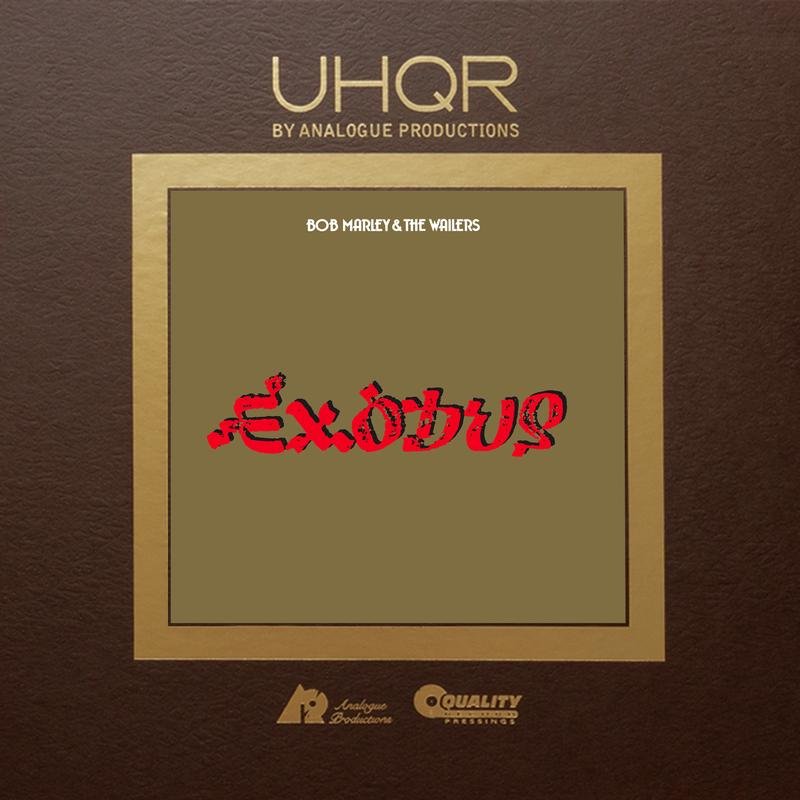
The four-side arrangement of this edition preserves that larger division. The first LP ends with “Exodus”; the second opens with “Jamming”. Although 45 RPM introduces extra side changes, the two original halves remain grouped on separate records.
This Clarity Vinyl edition
AUHQR 0016-45 is the two-LP, 45 RPM UHQR on 200-gram vinyl. The publisher credits Ryan K. Smith at Sterling Sound and identifies the original analog master tapes as the source. The records are pressed at Quality Record Pressings. The box includes a gatefold jacket and accompanying material with notes by Leroy Jodie Pierson. This is distinct from the earlier 33⅓ RPM UHQR; its format details and listening comparisons should be considered separately.
You order from Michael 45 in Germany. We arrange the US import and dispatch from Hilden.
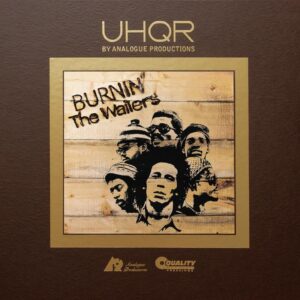
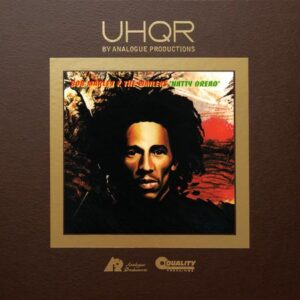
In the magazine: Bob Marley: Burnin’ and Natty Dread on UHQR
Also on SACD: Exodus
More by Bob Marley and The Wailers: Natty Dread
Artist page: All titles by Bob Marley & The Wailers
Customer question: Collecting UHQR records: limited editions of great albums
Series: UHQR – all 31 editions with pressing run and mastering
Musicians
Documented selection of participating musicians. Personnel may vary by track; this list does not claim to be complete.
| Name | Instrument / role |
|---|---|
| Bob Marley | Backing vocals, Guitar |
| Junior Marvin | Electric guitar |
| Carlton Barrett | Drums |
| Tyrone Downie | Backing vocals, Electric piano, Synthesizer, Organ |
| Alvin "Seeco" Patterson | Percussion |
| Rita Marley | Backing vocals |
| Marcia Griffiths | Backing vocals |
| Judy Mowatt | Backing vocals |
How Michael hears this edition
Listening impression · paraphrased from the video
Michael describes especially dry, fast and precise bass, with instruments clearly positioned around Bob Marley’s voice. He strongly prefers the 45 RPM UHQR to the first pressing he compared, while finding that it retains the musical character of reggae.
🎧 Review video: Inside Abbey Road: Re-Mastering Bob Marley with Chad Kassem & Michael Ludwigs
This video is hosted by YouTube (Google). It only loads once you switch on “Functional” in the cookie settings.

Reviews
There are no reviews yet.