Kingston before the next departure
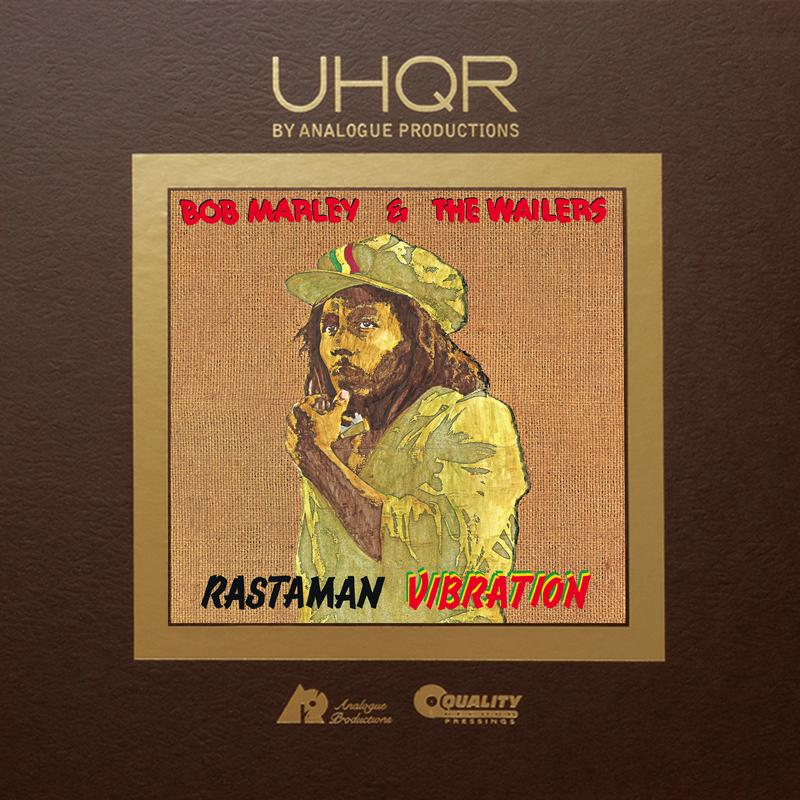
Bob Marley released Rastaman Vibration in 1976, a year before Exodus. Following the success of Natty Dread and the London Lyceum performances, the studio work returned to Kingston. Recording took place at Harry J. and Joe Gibbs, with mixing later completed in Miami. The album occupies a chapter of its own rather than merely preparing the ground for its better-known successor.
“Positive Vibration” opens the programme, followed by “Roots, Rock, Reggae”. Later, “War” and “Rat Race” shift the perspective. Shared musical energy sits alongside explicitly expressed conflict. Heard as an album, the songs have a context that compilations cannot fully preserve.

Rhythm, guitars and additional colours
Carlton and Aston Barrett form the rhythm section, with Tyrone Downie on keyboards. Earl “Chinna” Smith and Donald Kinsey are among the guitarists. Different instrumental accents meet around a firm rhythmic centre. In “Roots, Rock, Reggae”, follow the way the players distribute their entrances around the vocal line.
On another listen, focus on the keyboards. Those additional colours belong to the album as much as the guitars do. They change the setting around the voice while bass and drums maintain the movement. This gives a familiar song several possible routes of entry.

The I Threes within the story
Rita Marley, Judy Mowatt and Marcia Griffiths participate as the I Threes. Their voices expand the relationship between an individual singer and a group response that recurs throughout Marley’s work. Notice the handovers between lead vocal and backing parts: a change of voice can alter a line’s effect without requiring a large change in the arrangement.
“War” draws on a speech by Haile Selassie, placing its political reference at the centre. “Johnny Was” and “Who the Cap Fit” explore other sides of the album. Their proximity keeps Rastaman Vibration moving between personal stories, social observation and the physical momentum of the band.
The 45 RPM UHQR
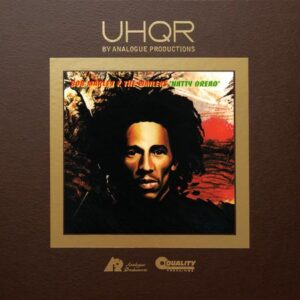
AUHQR 0006-45 contains two stereo LPs on 200-gram Clarity Vinyl. The publisher credits Ryan K. Smith at Sterling Sound with mastering from the original analog master tapes; manufacture is by Quality Record Pressings. The box includes notes by Leroy Jodie Pierson and photographs by Kim Gottlieb-Walker. These details describe the 45 RPM edition, distinct from the earlier UHQR running at 33⅓ RPM.
You order from Michael 45 in Germany. We arrange the US import and dispatch from Hilden.
In the magazine: Bob Marley: Burnin’ and Natty Dread on UHQR
Artist page: All titles by Bob Marley & The Wailers
Customer question: Collecting UHQR records: limited editions of great albums
Series: UHQR – all 31 editions with pressing run and mastering
Musicians
Documented selection of participating musicians. Personnel may vary by track; this list does not claim to be complete.
| Name | Instrument / role |
|---|---|
| Bob Marley | Vocals |
| Earl "Chinna" Smith | Percussion, Guitar |
| Al Anderson | Guitar |
| Carlton Barrett | Drums |
| Aston Barrett | Electric bass |
| Tyrone Downie | Keyboards |
| The I-Threes | Backing vocals |
| Tommy McCook | Saxophone |
| Donald Kinsey | Guitar |
Personnel vary. “No Woman, No Cry” is not included in this edition and is not retained as a track credit.
How Michael hears this edition
Listening impression · paraphrased from the video
Compared with the 33⅓ RPM UHQR he already values highly, Michael hears a little more dynamics, body and presence. The additional information strengthens the musical impact for him. In this video he compares the 45 with the 33 UHQR, not directly with a first pressing again.
🎧 Review video: Inside Abbey Road: Re-Mastering Bob Marley with Chad Kassem & Michael Ludwigs
This video is hosted by YouTube (Google). It only loads once you switch on “Functional” in the cookie settings.

Reviews
There are no reviews yet.