
Melodies with their elbows out
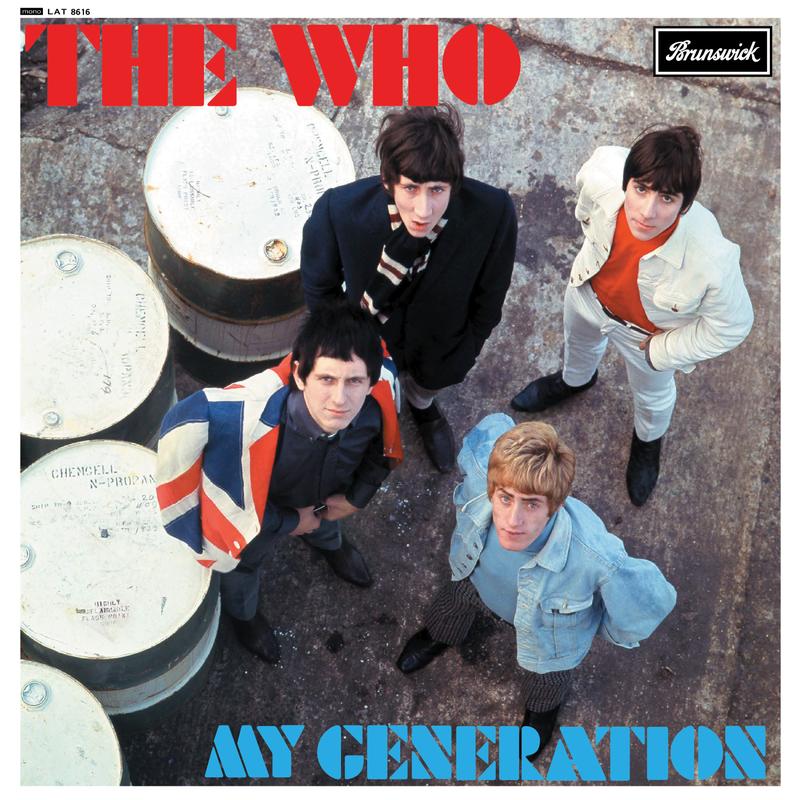
You remember the defiance. Return to the album and you notice how much melody it contains. My Generation is not simply The Who’s first great outburst: it is the debut of a band whose members already have very different ideas about what a song can do.
Working with producer Shel Talmy in 1965, the group brings its rhythm-and-blues roots into contact with Pete Townshend’s own songs. Roger Daltrey refuses to make them sound polite. John Entwistle and Keith Moon have little interest in remaining in the background. With so many forces pulling at once, even the shortest songs keep moving.

Beyond the famous title track
In “My Generation”, the bass gets a moment to speak rather than support. Entwistle’s interventions and Daltrey’s broken phrases make the song more than a slogan. The band seems to be fighting for its place in every bar.
Then comes “The Kids Are Alright”: the lightness of its melody and voices, without any loss of tension. At the other extreme stands the instrumental finale, “The Ox”. The album’s fascination lies between those poles: a feeling for pop songwriting alongside a willingness to let things run wild.

Why the original mono version matters
The British debut appeared on Brunswick in December 1965; America received The Who Sings My Generation in 1966. Producer Shel Talmy had also worked with the Kinks. The record belongs to a specific London studio culture in which young groups were turning American influences into a more impatient language of their own. Its title track is the best-known expression of that process, not the whole story.
Mono is more than a nostalgic format label here. When stereo mixes were prepared in 2014, subsequently included in the Super Deluxe Edition, Roger Daltrey and Pete Townshend recorded missing elements again. The band’s account describes efforts to match original instruments and microphone types. This AP edition instead presents the original mono version. The distinction is historical as well as spatial: these are not merely identical performances mixed with different amounts of left-to-right separation.
Collectors can find that comparison fascinating without turning it into a blanket argument against stereo. This edition centres the album as a release of its own period, with voice, guitars, bass and drums sharing a common focal point. Its directness does not need to behave like a later reconstruction. It lets the young band’s original statement retain its particular shape.
About this pressing
Analogue Productions · 2 LPs · 180-gram vinyl · 45 RPM · Mono. Mastered from the original analog master tapes by Chris Bellman at Bernie Grundman Mastering. Pressed at Quality Record Pressings (QRP). Stoughton Printing tip-on gatefold jacket.
Also on SACD: My Generation
Listening comparison: My Generation at 45 RPM against the German pressings
More by The Who: Tommy · Who’s Next
Artist page: All titles by The Who
Customer question: The Who on Analogue Productions: which edition?
Musicians
Documented selection of participating musicians. Personnel may vary by track; this list does not claim to be complete.
- Roger DaltreyLead vocals, Harmonica
- Pete TownshendBacking vocals, Lead vocals, Guitar
- John EntwistleBacking vocals, Electric bass
- Keith MoonDrums


How Michael hears this edition
Listening impression · paraphrased from the video
Compared with his German first pressing and a German reissue from 1981, Michael hears substantially more clarity, dynamics and immediate power on this mono 45 RPM edition. Its punchy mono presentation particularly surprises him. He did not have a British original available for this comparison.
🎧 Review video: The Who at 45 RPM vs First Pressings – How Big Is the Difference?
This video is hosted by YouTube (Google). It only loads once you switch on “Functional” in the cookie settings.

Reviews
There are no reviews yet.