A band opening up the room
A repeating electronic figure, then the band arrives. The opening of “Baba O’Riley” brings together two forces that make this record so compelling: the persistence of a pattern and the restless interaction of four musicians. Keith Moon responds rather than merely counts; Pete Townshend punctuates; John Entwistle supplies weight; Roger Daltrey turns an idea into a physical presence. The pattern provides a framework. The people playing around it make that framework breathe.
Released in 1971, “Who’s Next” offers a different kind of concentration from either the early Who’s sharp-edged singles or the continuous story of “Tommy”. Its nine songs stand individually, yet listening to them in sequence creates a larger movement. The pleasure is not confined to the famous opening and closing tracks. There are quieter changes of emphasis between those landmarks, and those changes reward staying with the whole record.

The larger idea behind the songs
Townshend’s ambitious “Lifehouse” project sits behind the album. What emerged was a single studio record rather than the much larger conception he had been developing. The band’s official account traces an additional change of direction: early work in New York with Kit Lambert gave way to London recordings with Glyn Johns. None of this is required homework. It simply adds another perspective on how much invention ended up inside such a direct, accessible collection of songs.
One particularly rewarding detail concerns “Baba O’Riley”: its insistent keyboard foundation is a Lowrey organ. What can seem like an abstract sound from the future has a specific instrumental origin. On another play, follow the repeating figure as the live instruments join it. The pattern does not need to become more complicated for its meaning to change. The band changes what we hear around it.
Nine songs rather than a closed system
Work moved from New York’s Record Plant with Kit Lambert to Glyn Johns and London’s Olympic Studios. More than a production credit changed: material conceived for something much larger had to become an album that worked without an accompanying explanation. Who’s Next does not demand that the listener learn the entire Lifehouse story first. Its nine songs can take different positions and still belong together.
John Entwistle’s “My Wife” interrupts the sequence of Townshend compositions. That credit alone cautions against treating the record as merely a shortened, self-contained rock opera. It remains a band album. “The Song Is Over” and “Getting in Tune”, less often used as its public calling cards, are also important to the movement between its famous opening and closing statements.
The Lowrey figure in “Baba O’Riley” places a recurring framework beside the group’s freer playing. That is a specific tension, not simply an electronic novelty: the pattern does not replace the musicians but makes their movement against it more apparent. “Won’t Get Fooled Again” consequently feels less like an extra climax attached at the end than a return to a relationship established at the beginning.
A conclusion worth reaching
“Won’t Get Fooled Again” returns to the relationship between repetition and live-band energy on a larger scale. Its duration is part of the design: recurring material prepares the final release rather than simply filling time. That is one reason to experience “Who’s Next” in sequence. The distance travelled from its first pulse to this conclusion is part of what makes the album such satisfying company.
About this pressing
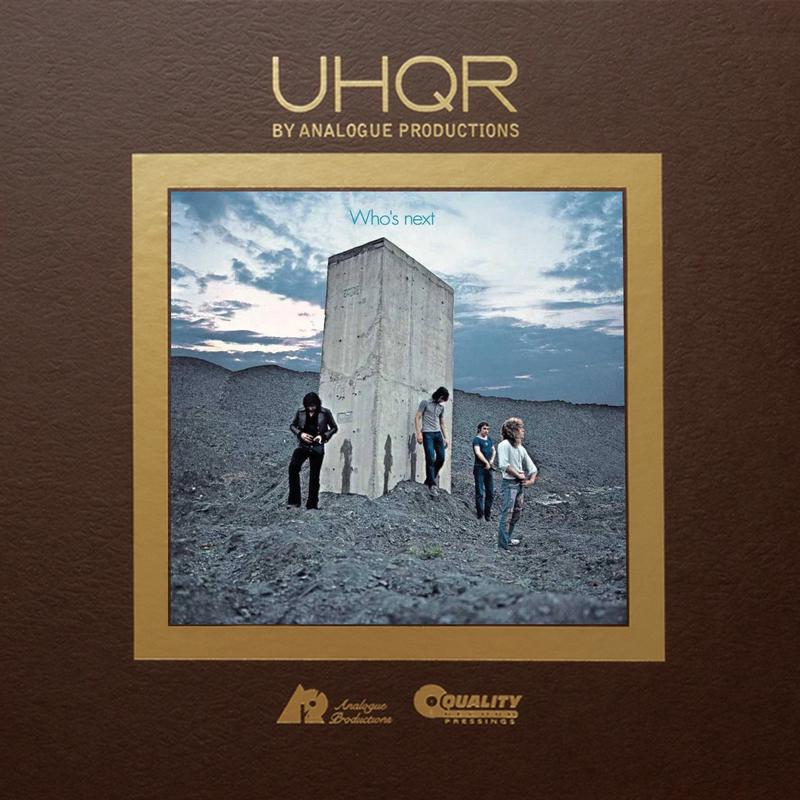
Analogue Productions · UHQR · AUHQR 0029 · 1 LP · 200 g Clarity Vinyl · 33⅓ RPM. Mastered by Chris Bellman at Bernie Grundman Mastering from the original analogue master tapes. Pressed at Quality Record Pressings (QRP). Numbered edition of 7,500; Stoughton gatefold jacket in a presentation box.
More on The Who in the listening room: The Who at 45 RPM: My Generation and Live at Leeds Compared
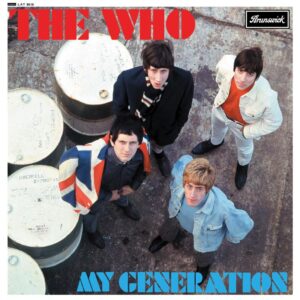
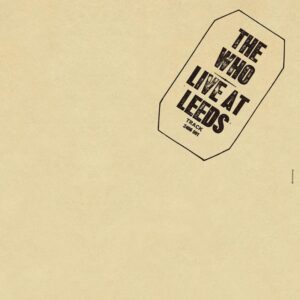
More by The Who: Live At Leeds · My Generation
Artist page: All titles by The Who
Customer questions: The Who: which edition? · Collecting UHQR records
Series: UHQR – all 31 editions with pressing run and mastering
Musicians
Documented selection of participating musicians. Personnel may vary by track; this list does not claim to be complete. Only participants in the offered original-album edition. Players on alternate takes and deluxe bonus tracks are excluded.
- Roger DaltreyVocals
- Pete TownshendVocals, Guitar, Piano, Organ
- John EntwistleVocals, Piano, Bass
- Keith MoonPercussion, Drums



Reviews
There are no reviews yet.