
The studio becomes part of the band
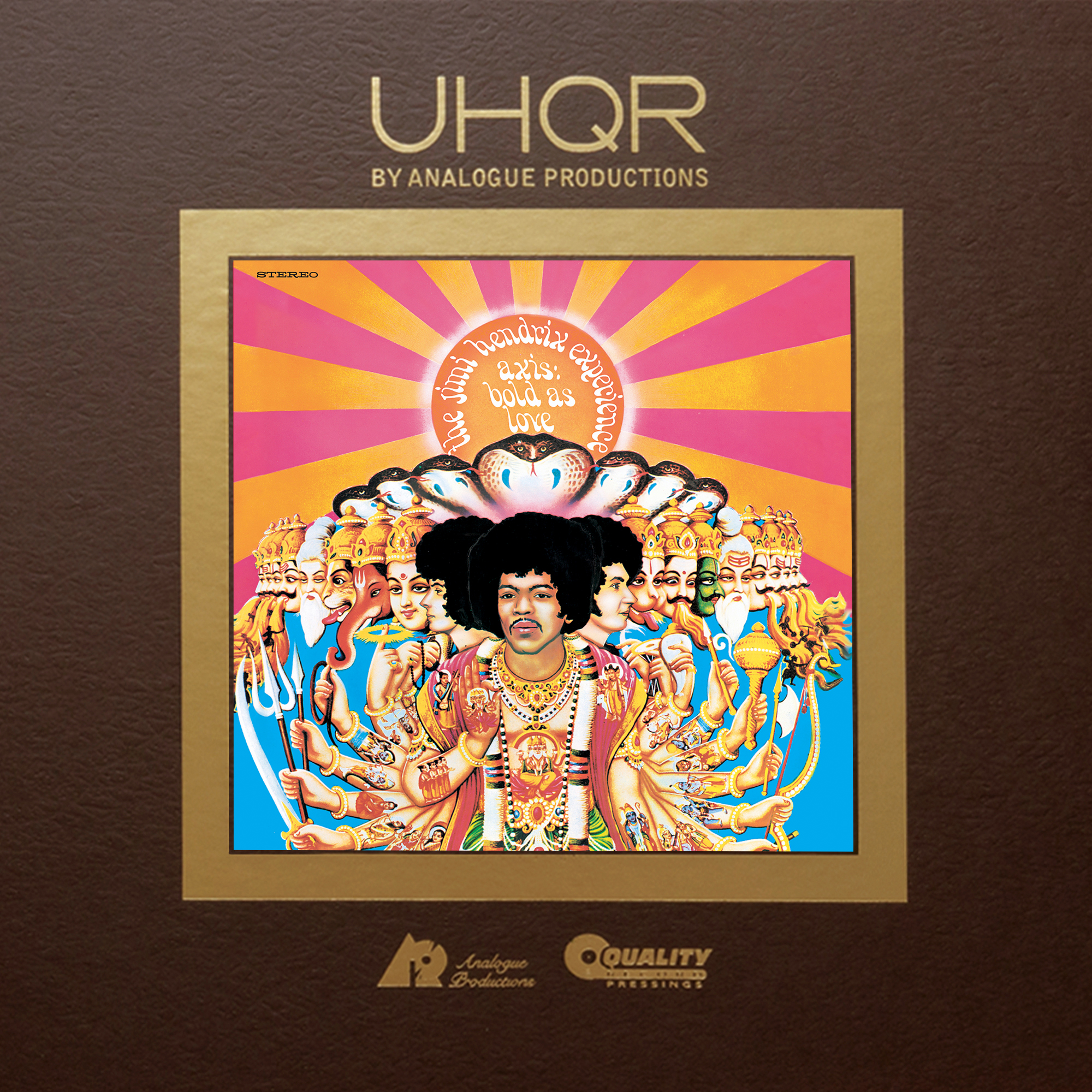
Released at the end of 1967, Axis: Bold As Love was the second Jimi Hendrix Experience album. Only a few months separated it from the debut, but studio work was taking on a new significance. At London's Olympic Studios, Hendrix, Noel Redding and Mitch Mitchell worked with producer Chas Chandler and engineer Eddie Kramer on thirteen pieces whose arrangements extend beyond the trio performing together.
“EXP” begins with an invented radio scene. Mitchell plays the interviewer and Hendrix his guest; altered vocal speeds and guitar sounds move the exchange into a less familiar world. “Up from the Skies” then introduces a very different motion. The album displays its range before settling into any single character, placing conversation, songwriting and sonic experiment next to one another.

Thirteen ways of writing a song
“Spanish Castle Magic” and “Wait Until Tomorrow” demonstrate Hendrix's concise approach to songwriting. Guitar figures, vocals and rhythmic answers interlock. Redding's bass maintains the connection while Mitchell treats the drums as a mobile partner. The trio remains the foundation even when overdubs expand the picture. Following Mitchell's accents through the transitions offers a rewarding alternative route into these familiar performances.
“She's So Fine” features Redding as both writer and lead singer, introducing a different perspective into the programme. “Castles Made of Sand” uses a sequence of images to address impermanence, while “One Rainy Wish” connects dreamlike language with changing musical intensity. The relatively short forms provide considerable variety without requiring every track to include an extended solo or instrumental passage.

Little Wing and the colours of recording
“Little Wing” lasts only a little more than two minutes. Alongside the guitar, the arrangement includes a glockenspiel played by Hendrix himself. A familiar electric instrument is paired with the bright attack of struck metal bars. Such details illustrate his interest in instrumental colour. Within a single song, the guitar can shift between accompaniment, a melodic answer and a voice of its own.
Spatial placement is another element of the stereo version's design. The closing “Bold As Love” brings the use of studio effects into particular focus. Kramer employed phasing as part of the recording, illustrating the increasingly close relationship between musical and technical decisions in 1967. The album can be followed both as the work of a band and as a collection of pieces whose final shapes depend on the treatment of recorded tracks.
This stereo UHQR
Analogue Productions AUHQR 0001-45 is the stereo edition, spread across two 45 rpm LPs on 200-gram Clarity Vinyl and pressed at Quality Record Pressings. Bernie Grundman handled remastering and lacquer cutting; the publisher identifies the original analogue master tapes as the source. Plating at QRP was directed by Stan Bishop. Packaging includes a clamshell box, a 16-page booklet and a hand-signed inspection certificate. The stereo edition is limited to 4,500 copies, with gold-foil numbering on the record jacket.
More from the series: UHQR
Also on mono vinyl: Axis: Bold As Love
More by The Jimi Hendrix Experience: Are You Experienced?
Artist page: All titles by Jimi Hendrix
Customer question: Collecting UHQR records: limited editions of great albums
Series: UHQR – all 31 editions with pressing run and mastering
Musicians
Documented selection of participating musicians. Personnel may vary by track; this list does not claim to be complete.
| Name | Instrument / role |
|---|---|
| Jimi Hendrix | Electric guitar, Glockenspiel, Harpsichord, Recorder, Vocals, Piano |
| Noel Redding | Backing vocals, Electric bass, Lead vocals |
| Mitch Mitchell | Backing vocals, Drums |
| Graham Nash | Backing vocals |
| Trevor Burton | Backing vocals |
| Roy Wood | Backing vocals |
How Michael hears this edition
Listening impression · paraphrased from the video
Michael highlights dynamics, punch, attack and a large soundstage. He strongly prefers the sound of the 45 RPM UHQR to the earlier 33⅓ RPM UHQR and the 1967 UK stereo first pressing, while continuing to value the original’s distinctive character.
🎧 Review video: Hendrix Axis Bold As Love UHQR vs. UK Original
This video is hosted by YouTube (Google). It only loads once you switch on “Functional” in the cookie settings.



Reviews
There are no reviews yet.