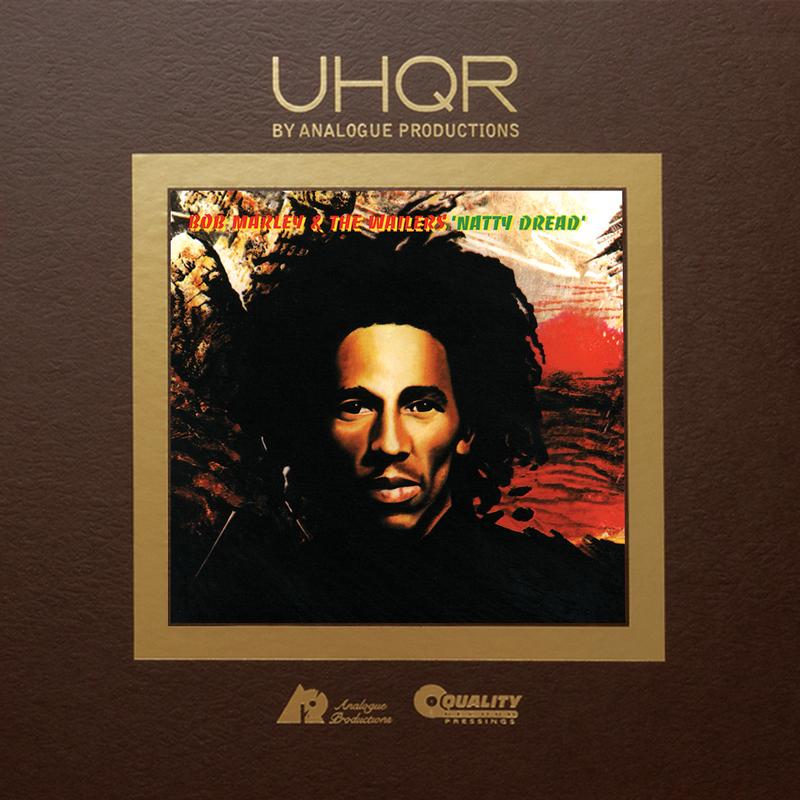

Natty Dread
A familiar title can set up the wrong expectation. Mention “No Woman, No Cry” and many listeners immediately hear a roomful of people singing along. Natty Dread takes you back to the 1974 studio recording instead. Set aside that celebrated live moment and the song becomes a more intimate encounter: a recollection of people finding ways to support one another when life gives them little room. That movement between individual experience and the world outside is essential to the album.

The voices around Marley change
This is a turning point, not a clean break with everything that came before. Peter Tosh and Bunny Wailer are no longer in the line-up, and Marley emerges as its central voice. Rita Marley, Marcia Griffiths and Judy Mowatt join him as the I-Threes. Their contribution is worth following in its own right. Sometimes a response confirms the lead vocal; elsewhere, the background voices change the emotional weight of a phrase without taking over the song.
Aston “Family Man” Barrett and Carlton Barrett provide continuity at the rhythmic centre. The change in vocal architecture therefore sits above an established musical relationship. Listening for both sides of that equation makes the record more interesting than a simple “new band” label would suggest. Marley is assuming a different role, but the music still depends on people working together rather than merely accompanying a star.

An older song inside the new beginning
“Bend Down Low” connects the album with an earlier period of Wailers independence. It had already belonged to the repertoire of their own Wail’N Soul’M label in the sixties. That name joined the Wailers with the Soulettes, Rita Marley’s vocal trio. Its return on Natty Dread brings two chapters of the same history together. The new group identity did not require the old repertoire to be discarded.
“No Woman, No Cry” also looks backwards, towards Trench Town and the experience of community under difficult conditions. That origin matters more here than the song’s later life as an international singalong. “Them Belly Full (But We Hungry)” widens personal recollection into social criticism, while “Rebel Music (3 O’Clock Roadblock)” addresses control and freedom of movement. The album gives these perspectives room beside one another.
Session keyboard credits include Bernard “Touter” Harvey and Jean Roussel. The conspicuous change in vocal harmonies is therefore only part of this transitional record’s musical story. Behind the identity now focused more clearly on Marley stands a working ensemble with additional studio contributors. Natty Dread can be heard as a new beginning without losing its connections to the group’s past.
Identity without decoration
The second side moves from “So Jah Seh” into the title track and eventually reaches “Revolution”. Rastafari is part of the record’s language and outlook, not an attractive visual shorthand. The title points towards identity: how a person understands himself, and how the surrounding world chooses to see him. Keeping that context in mind gives the apparently direct songs more depth without turning them into an academic exercise.
“Bend Down Low” and “Talkin’ Blues” also help keep the album human in scale. Firm conviction does not exclude affection, wit or vulnerability. If your starting point is the famous ballad, the rest of the record offers a rewarding change of focus. Its subject is not simply consolation; it is the many ways people insist on dignity, in private life as well as in public.
About this pressing
Analogue Productions · UHQR · AUHQR 0026
One LP · 33⅓ RPM · 200-gram Clarity Vinyl · pressed at Quality Record Pressings (QRP). Mastered by Frank Arkwright and Ryan K. Smith at Abbey Road Studios from the original master tape. This numbered 33⅓-RPM edition is limited to 4,500 copies and supplied in the UHQR box with accompanying material. It presents the original nine-track album, not the separately available 45-RPM double-LP configuration.
Also on SACD: Natty Dread
In the magazine: Natty Dread on UHQR compared with the German first pressing
Also on 45 RPM vinyl: Natty Dread
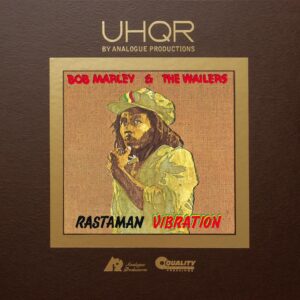
More by Bob Marley and The Wailers: Rastaman Vibration
Artist page: All titles by Bob Marley & The Wailers
Customer question: Collecting UHQR records: limited editions of great albums
Series: UHQR – all 31 editions with pressing run and mastering
Musicians
Documented selection of participating musicians. Personnel may vary by track; this list does not claim to be complete. Album credits for the 1974 studio recording. Backing vocals are by The I-Threes; this does not imply that every musician plays on every track.
- Bob MarleyLead vocals, Guitar
- Aston „Family Man“ BarrettBass
- Carlton BarrettDrums, Percussion
- Bernard „Touter“ HarveyPiano, Organ
- Al AndersonGuitar
- Rita MarleyBacking vocals
- Marcia GriffithsBacking vocals
- Judy MowattBacking vocals
- Jean RousselOrgan, Keyboards
- Lee JaffeHarmonica


How Michael hears this edition
Listening impression · paraphrased from the video
Compared with the German first pressing, Michael particularly notices the 33⅓ RPM UHQR’s more stable soundstage: voices and instruments appear more clearly positioned, while the German pressing sometimes sounds less spatially steady. He enjoys both editions. His cleaned UHQR copy plays very quietly, allowing fine information to emerge more clearly.
🎧 Review video: More Detail, Same Rebel Spirit? Bob Marley’s Burnin’ & Natty Dread UHQRs
This video is hosted by YouTube (Google). It only loads once you switch on “Functional” in the cookie settings.

Reviews
There are no reviews yet.