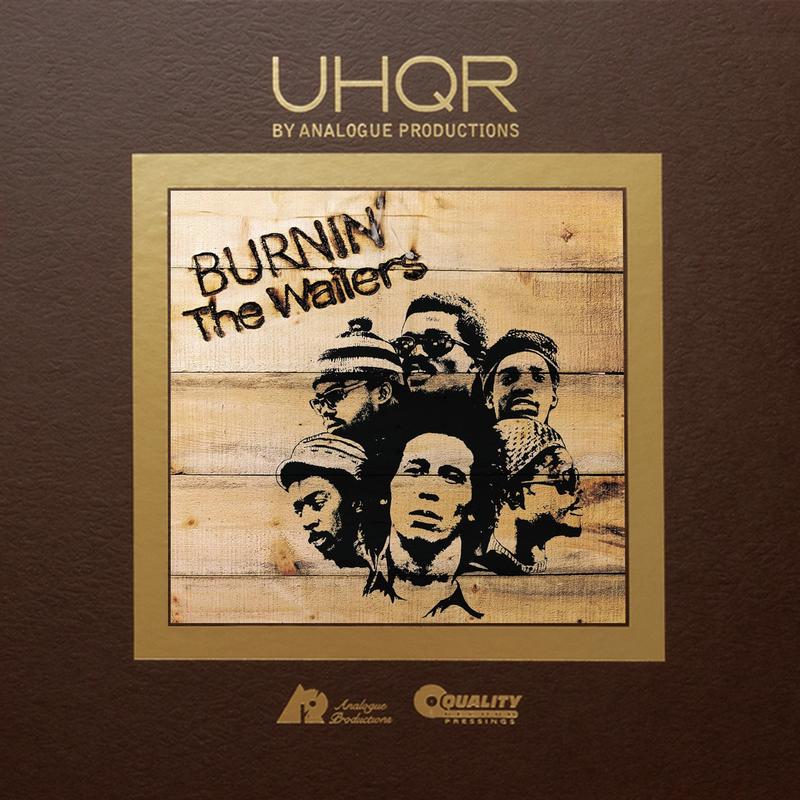
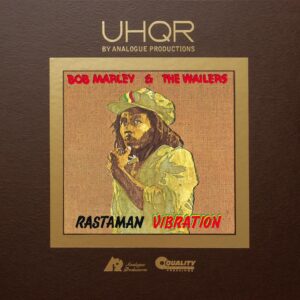
Burnin’
Before Bob Marley became a worldwide point of reference, the Wailers were a meeting of three unmistakable personalities. Burnin’ captures that relationship in 1973: Marley, Peter Tosh and Bunny Wailer still share the centre of the music. Their final studio album as the original trio rewards attention to more than its most famous voice. Different temperaments are not something the group has to overcome; they are part of what makes the record compelling.

A journey between two recording worlds
The basic tracks were recorded at Harry J’s studio in Kingston, with overdubbing and mixing subsequently taking place at Island’s Basing Street studios in London. Both places belong to the story. Calling it simply a London production misses the foundation; imagining a single untouched Jamaican session misses the work that followed.
The record also carries a history longer than its international breakthrough. “Put It On”, “Small Axe” and “Duppy Conqueror” were not newly invented songs: the Wailers returned to earlier material and recorded it again. That makes Burnin’ a particularly interesting record to live with. It looks forward without discarding what the musicians had already built. Familiar ideas become a means of hearing the group at a new stage.

Listen for the people within the group
“Get Up, Stand Up” opens with a demand, but the album does not keep striking the same pose. “Hallelujah Time” and “Pass It On” offer different forms of address; “One Foundation” brings Peter Tosh’s contribution into focus. Following the changing voices is one way to hear the trio as a relationship rather than a name printed on a sleeve.
On a second play, concentrate on the responses around the lead. The rhythm may provide a continuous foundation, yet a differently weighted phrase or a shared ending can change how the whole ensemble feels. Background singing is not simply filling empty space. It can affirm an argument, soften its edges or give a private statement the weight of a collective one. That is where the line-up becomes musical information rather than a fact to memorise.
Bunny Wailer’s longer memory
Bunny Wailer later recalled writing “Pass It On” around 1962. On Burnin’, an idea roughly a decade old therefore finds its album setting. The record is not simply an immediate response to Catch a Fire’s international reception. Some of its music has a much longer history.
Bunny also remembered Reincarnated Souls as an intended album title, although that song did not enter the original ten-track programme. His recollection reveals choices still open during the making of a record whose identity can now seem inevitable. It is valuable precisely as a participant’s account, rather than an all-knowing retrospective legend.
Putting “Pass It On” beside the better-known songs restores another kind of emphasis. “Get Up, Stand Up” and “I Shot the Sheriff” developed enormous independent lives; Bunny’s contribution offers a different way of communicating conviction. These approaches coexist on the same record. Hearing that variety makes Burnin’ more rewarding as a group album than treating it simply as a container for major Marley songs.
About this pressing
Analogue Productions · UHQR · AUHQR 0025
One LP · 33⅓ RPM · 200-gram Clarity Vinyl · pressed at Quality Record Pressings (QRP). Mastering is by Frank Arkwright and Ryan K. Smith at Abbey Road Studios, from the original master tape. The numbered edition is limited to 4,500 copies and comes in the UHQR box with accompanying material. This is the original ten-track album, without additional session outtakes.
Also on SACD: Burnin’
In the magazine: Burnin’ on UHQR compared with Jamaican and UK pressings
Also on 45 RPM vinyl: Burnin’
Artist page: All titles by Bob Marley & The Wailers
Customer question: Collecting UHQR records: limited editions of great albums
Series: UHQR – all 31 editions with pressing run and mastering
Musicians
Documented selection of participating musicians. Personnel may vary by track; this list does not claim to be complete.
- Bob MarleyVocals, Guitar
- Peter ToshKeyboards, Vocals, Guitar
- Bunny WailerPercussion, Vocals


How Michael hears this edition
Listening impression · paraphrased from the video
Michael hears more depth, detail and a more stable soundstage from the 33⅓ RPM UHQR than from his Jamaican comparison pressing. For him, the extra information reinforces the music’s original energy and roughness. He still values the Jamaican and early British editions; he had not heard the 45 RPM version in this comparison.
🎧 Review video: More Detail, Same Rebel Spirit? Bob Marley’s Burnin’ & Natty Dread UHQRs
This video is hosted by YouTube (Google). It only loads once you switch on “Functional” in the cookie settings.

Reviews
There are no reviews yet.