Two brothers making a record together
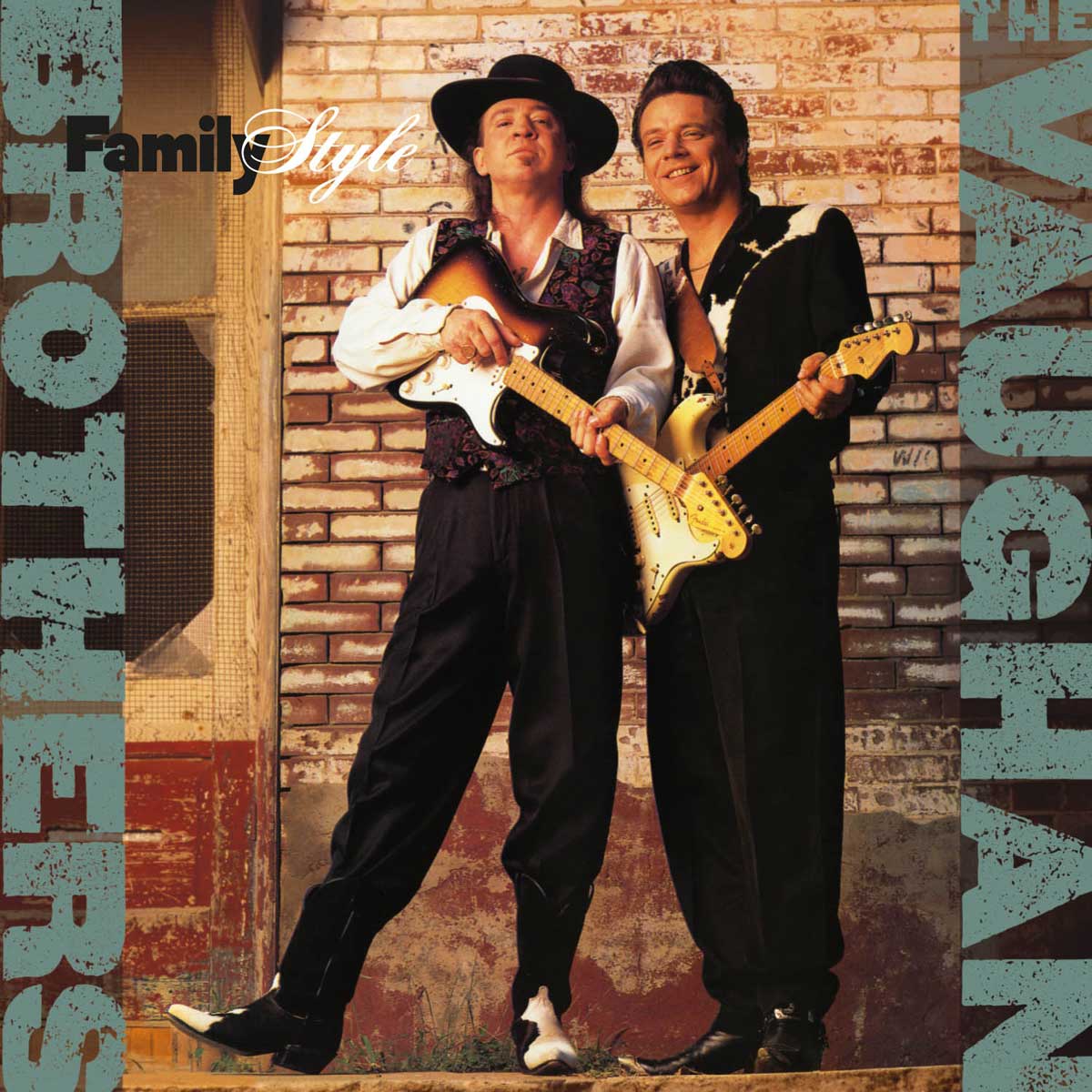
Family Style is the shared studio album by Jimmie and Stevie Ray Vaughan. Its starting point already makes it a distinctive chapter in both careers: two guitarists with established musical identities come together under the name The Vaughan Brothers. They do not simply bring their two regular bands into the studio. Nile Rodgers produces, and a specially assembled group of musicians provides the setting for ten tracks. If you want to buy Family Style on vinyl, this is the Analogue Productions edition on two LPs at 45 RPM, catalogue number AAPB 100-45.
The album appeared on Epic in 1990, shortly after Stevie Ray Vaughan’s death. That timing is inseparable from its history, but it should not turn every piece into a farewell composed after the fact. The recording was conceived as a joint project between two brothers. It contains vocal songs, instrumentals, exchanges between guitars and contributions from a wider group of players. Its variety deserves attention in its own right, without requiring every musical decision to be interpreted through the events that followed the sessions.
Jimmie and Stevie Ray do not have to occupy identical roles on a shared album. Jimmie is specifically credited as the singer on White Boots and Good Texan, alongside his guitar work and contributions on other instruments. Stevie Ray appears as guitarist and vocalist. Every track is not a vocal number, and every vocal contribution is not a lead part. Detailed personnel information is therefore more useful than a blanket statement assigning both guitar and singing to both brothers throughout all ten selections, regardless of what the individual credits actually establish.
The title can also be taken as an invitation to listen to their interaction. How does one guitar answer the other? When does an accompanying figure carry the song, and when does an individual line move forward? Such questions bring us closer to the record than imagining a competition between two soloists. Family Style offers the opportunity to hear familiar musicians within a shared setting whose identity emerges from collaboration. Their differences remain part of that collaboration rather than something the album needs to erase.

Nile Rodgers and the players behind the brothers
Nile Rodgers handled production, mixing and horn arrangements. Recording credits name Ardent Studios, Dallas Sound Lab and Skyline Studios, with mixing undertaken at Skyline. The project consequently involved several locations. An exact session date for each individual track is not asserted here. The participating musicians, however, can be identified much more precisely through the original track-specific credits than a short reissue description might suggest. Those credits give the album a more detailed shape and help distinguish its changing lineups.
Al Berry on bass and Larry Aberman on drums play on eight of the ten tracks. On Hillbillies From Outer Space and Brothers, Preston Hubbard supplies upright bass and Doyle Bramhall drums. This is an important distinction. Neither Double Trouble nor the Fabulous Thunderbirds appears as a complete regular band; that does not mean no individual from the brothers’ established musical circle takes part. Hubbard and Bramhall illustrate why the actual names and track assignments communicate more than an abbreviated promotional statement about the absence of the two bands.
Richard Hilton contributes piano, keyboards and organ, with his roles assigned to particular songs. Stan Harrison and Steve Elson provide saxophone parts on Hard To Be. The documented vocal contributors include David Spinner, George Simms, Tawatha Agee, Curtis King Jr. and Brenda White-King. Rockin’ Sidney adds accordion to Brothers. These contributions extend the album’s guitar foundation into several different colours without implying a single unchanging lineup. The personnel section below maps those differences to the corresponding positions on this four-side LP edition.
Rodgers also belongs in the performing personnel at a specific point: he is credited with guitar on Baboom / Mama Said. His role as producer alone would not justify listing him as a player, but this instrumental credit does. The distinction clarifies the responsibilities while showing how closely performance and production can connect. Family Style remains a Vaughan project, yet its particular character is developed with a carefully chosen group of additional participants. Their presence is part of the record’s musical identity, rather than incidental detail.

Ten tracks giving the guitars different responsibilities
Hard To Be and White Boots open the first side. The vocal perspective is already worth noting: Stevie Ray leads the first selection and Jimmie the second. The backing-vocal and saxophone credits also differ. The album therefore begins by presenting different ways in which the brothers can work together inside a song, rather than offering two identically constructed guitar showcases. The shared name on the sleeve describes a partnership, not the disappearance of the separate musical personalities that make that partnership interesting.
The second side contains D/FW, Good Texan and Hillbillies From Outer Space. D/FW provides an opportunity to focus on the instrumental exchange. Good Texan places Jimmie’s lead vocal at the centre, with Stevie Ray also credited among the backing voices. Hillbillies From Outer Space then changes the rhythm section to Hubbard and Bramhall and identifies Jimmie on steel guitar. Within a short sequence, the record alters its instrumental makeup while retaining the connection between the brothers. The personnel changes are part of the programme’s design rather than unrelated guest appearances.
Long Way From Home, Tick Tock and Telephone Song share the third side. Hilton’s piano and keyboards are documented on the first two respectively. Tick Tock also includes several backing singers in its credits. A listener initially approaching the record as a guitar album can return to these additional layers: the relationship between a vocal line and its response, the contribution of a keyboard instrument, or the way a rhythm section holds a song together. These are practical routes into the arrangements, without suggesting there is only one correct way to hear the music.
Baboom / Mama Said and Brothers close the programme. The former contains two title elements but remains a single track on this edition. Organ parts appear alongside Rodgers’ credited guitar contribution. Brothers brings Hubbard, Bramhall and Rockin’ Sidney into another instrumental combination, ending the album with a title that directly names its shared starting point. The ten selections are consequently more than a queue of solo features. They form a sequence of musical meetings whose participants and responsibilities change while the central relationship remains recognisable.
The Analogue Productions edition at 45 RPM
AAPB 100-45 identifies the individually available double LP at 45 RPM. This version is also documented in connection with the Texas Hurricane box, but the product here is the single album. Ryan K. Smith cut it at Sterling Sound from the original analogue tape, with pressing by Quality Record Pressings. The four sides contain two, three, three and two tracks. These are the useful identifying details when distinguishing this edition from other vinyl versions, CDs or the complete multi-album box.
Published weight specifications conflict: even the publisher’s page gives both 180 and 200 grams in different places. A particular current pressing batch is therefore not described through an unverified weight promise. The catalogue number, double-LP format, speed and mastering credit remain clear. This separation helps collectors avoid treating a historical database entry as a guarantee applying to every copy supplied today. The identity of the edition can be communicated accurately without concealing the disagreement or giving it more certainty than the evidence allows.
The four-side presentation requires more frequent record changes. At the same time, the groups of songs become manageable sections in which the changing personnel can be followed easily. Choosing a 45 RPM edition also means choosing a particular rhythm of handling and listening. No generalised sonic superlative is required to explain its place in a collection. On Family Style, the brothers, the songs and the varied supporting cast come first; this edition provides the physical form through which that programme unfolds.
Listeners familiar with Stevie Ray and curious about Jimmie’s contributions have a clear entry point, as do those interested in the meeting of blues guitar, vocals and Rodgers’ production work. The full credits make these approaches visible. Family Style remains a shared album with its own story, and its later significance need not obscure the variety of music that the participants made together.
You order from Michael 45 in Germany. We arrange the US import and dispatch from Hilden.
Customer question: Buying Analogue Productions records in Europe
Musicians
Participants and documented credit status. Track references correspond to the tracklist.
- Stan Harrisonalto saxophone, tenor saxophoneParticipation: A1
- David Spinnerbacking vocalsParticipation: A1, B2
- Steve Elsonbaritone saxophone, tenor saxophoneParticipation: A1
- Al BerrybassParticipation: A1, A2, B1, B2, C1, C2, C3, D1
- Larry AbermandrumsParticipation: A1, A2, B1, B2, C1, C2, C3, D1
- Jimmie VaughanLater reference: 2012guitar, vocals, steel guitar, organParticipation: A1, A2, B1, B2, B3, C1, C2, C3, D1, D2
- Stevie Ray VaughanPortrait reference: 1983vocals, guitar, backing vocalsParticipation: A1, A2, B1, B2, C1, C2, C3, D1, D2
- Brenda White-Kingbacking vocalsParticipation: A2, C2, D1, D2
- Curtis King Jr.backing vocalsParticipation: A2, C2, D1
- Tawatha Ageebacking vocalsParticipation: A2, C2, D1
- George Simmsbacking vocalsParticipation: B2
- Preston Hubbarddouble bass [upright bass]Participation: B3, D2
- Doyle BramhalldrumsParticipation: B3, D2
- Richard Hiltonpiano, keyboards, organParticipation: C1, C2, D1
- Nile RodgersguitarParticipation: D1
- Rockin’ SidneyaccordionParticipation: D2


Backing personnel and track assignments follow original CD credits; timings remain those of the offered LP. Nile Rodgers plays guitar on D1 and handled production, mixing and horn arrangements. Al Berry/Larry Aberman: eight tracks; Preston Hubbard/Doyle Bramhall: B3 and D2. Neither regular band appears as a complete unit, though individual guests come from their circle. Ryan K. Smith / Sterling Sound: new cut; QRP: pressing. Conflicting 180/200 g specifications; no current batch weight guaranteed.

Reviews
There are no reviews yet.