
A voice at the centre of the whole album
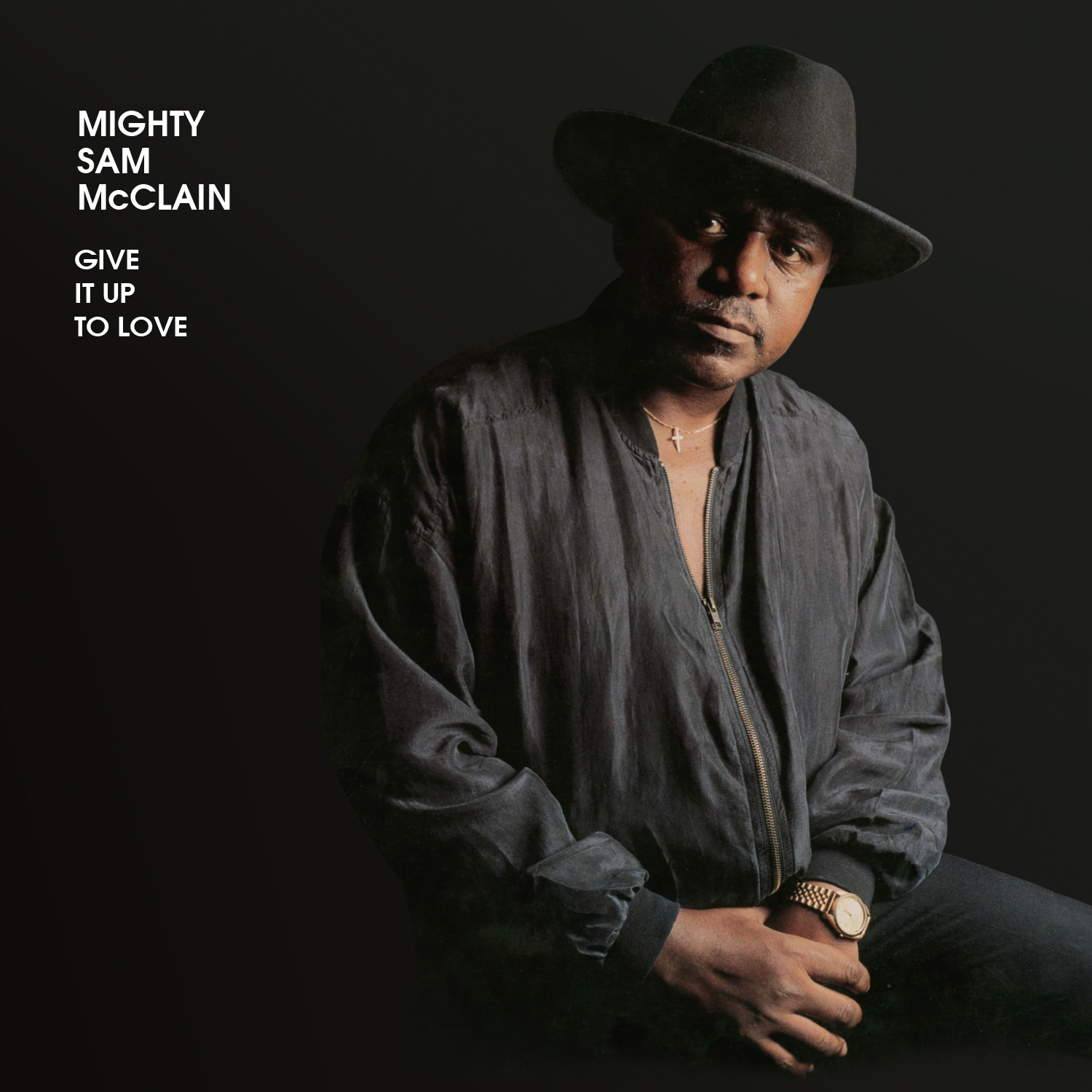
Give It Up To Love places Mighty Sam McClain at the centre of music in which soul, blues and gospel are closely connected. Originally released by AudioQuest in 1993, the album depends on his voice and a small, clearly identified band. It gives a singer room to tell his stories in several forms: as love song, blues, statement of faith and, at the end, a particularly spare duet. If you want to buy Mighty Sam McClain on vinyl, Analogue Productions presents this recording as a double LP at 45 RPM.
The album title establishes one of its central directions. Love is a subject approached from several perspectives across the sequence. Too Proud, Here I Go Falling In Love Again and Got To Have Your Love appear alongside Child Of The Mighty Mighty and Don’t Turn Back Now. Personal relationships sit within a vocabulary that also allows for confidence and conviction. The result is an album framework that extends beyond the appeal of one familiar title, encouraging attention to the connections between individual songs.
McClain is credited as a writer on much of the material, often alongside guitarist Kevin Barry and drummer Lorne Entress. Too Proud was written by Carlene Carter, while I Feel Good credits Al Green, Fred Jordan and Reuben Fairfax Jr. The combination is revealing. Original material and selected outside compositions become part of one programme whose centre remains the singer’s personality. A song does not have to be written by McClain alone to find a convincing place within the album bearing his name.
The four sides of the 45 RPM edition give the ten tracks a clear arrangement. Three songs open the programme, two occupy the second side, two the third, and the final three bring it to a close. You can therefore hear the album as one continuous sequence or in smaller sections. Turning the record introduces a pause without dissolving the connections between songs. For listeners who enjoy deliberately setting aside time to follow one voice, the format provides a concentrated and manageable framework.

Kevin Barry, Bruce Katz and the band
Kevin Barry plays electric and acoustic guitars. Bruce Katz contributes piano and Hammond B-3, Michael Rivard plays bass and Lorne Entress handles drums. The line-up combines rhythmic support with several approaches to accompaniment. Guitar, piano and organ can respond to a sung phrase in different ways, while bass and drums shape the movement of a song. Each name represents a specific musical task within a group capable of supporting the voice from more than one direction, without requiring a large ensemble.
A particular guest appearance adds another colour: Bennie Wallace plays tenor saxophone on Got To Have Your Love. On this double LP, that is track B2. Lasting more than six minutes, the selection is one of the album’s longer pieces and closes its second side. Assigning the saxophone credit to the song makes the personnel easier to understand. Wallace is identified as a guest at the documented point, rather than being presented as a continuous member of the band throughout the entire programme.
The work behind the recording is equally attributable. Joe Harley is the producer, with McClain and Entress credited as co-producers. Michael C. Ross handled recording and Dan Bosworth served as assistant. Entress thus participates both within the performing group and on the production side of the project. Such overlapping roles are pertinent to an album in which songwriting, accompaniment and overall presentation are closely linked. The credits clarify those relationships without confusing the technical contributors with additional instrumentalists heard on the record.
The small ensemble provides a useful starting point for attentive listening. You can follow the course of a vocal line and then notice which instrument responds or occupies a pause. On another play, attention can move towards bass and drums. Across several songs, the album offers a stable group of musicians whose relationships can be followed over time. It is not necessary to begin again with an entirely new personnel configuration at every track, making the occasional change of instrumentation especially easy to identify.

From the title song to Lonesome Road
Give It Up To Love opens the record, followed by Too Proud and What You Want Me To Do. The three titles alone suggest different positions: surrender, pride and a direct question addressed to another person. As an opening sequence, they offer several ways into McClain’s musical personality. The voice may be the first attraction, or the songwriting, or the band’s way of accompanying these differing situations. Following one of those elements does not prevent the others from becoming more apparent on subsequent plays.
The second side pairs Here I Go Falling In Love Again with Got To Have Your Love. Side C brings together Child Of The Mighty Mighty and I’m Tired Of These Blues. At almost seven minutes, the latter is the longest selection in the LP sequence. The programme consequently allows space for extended forms without consisting exclusively of them. Shorter songs and longer developments alternate, giving the record a shape that depends on more than a uniform succession of similarly proportioned performances.
I Feel Good and Don’t Turn Back Now lead towards Lonesome Road on the final side. The closing performance is a duet for voice and acoustic guitar. That change matters to the album’s overall progression: after the possibilities offered by the full band, the programme ends with fewer musical participants. Singer and guitar therefore assume a different responsibility for carrying the piece forward. The personnel overview reflects the distinction, rather than assigning the other band members indiscriminately to this final track as well.
The documented vinyl programme contains ten selections. Love Me If You Want To was an additional CD track and is not part of this 45 RPM tracklist. Listeners familiar with a CD or digital version can therefore compare the sequence before buying. This vinyl edition’s musical journey ends with Lonesome Road. That ending belongs to the structure of the LP and is worth recognising as its actual conclusion, particularly when approaching the record from another version with a different running order or additional material.
The Analogue Productions 45 RPM reissue
This edition carries catalogue number AAPB 1015-45. Kevin Gray recut it at Cohearent Audio from the original analogue master tapes, with Quality Record Pressings identified for pressing. The album is spread across two stereo LPs at 45 RPM and presented in a substantial tip-on gatefold. These details distinguish its format, cutting and presentation from earlier versions. A mastering credit attached to an original pressing should not automatically be transferred to a later recut simply because both editions contain the same album.
The higher speed is part of this edition’s design. It provides different physical cutting conditions from a single LP at 33⅓ RPM and also means more frequent side changes. The complete side allocation makes it easy to decide whether that listening pattern suits your habits. Here it produces four short, clearly defined sections. All ten songs remain within the documented vinyl programme, with the division allowing you to approach each section as a focused part of the album rather than an arbitrary interruption.
Give It Up To Love suits listeners interested in an expressive singer working with a clearly defined band. Its combination of original songs, selected outside material and changes in ensemble size provides more than a single demonstration moment. One track may initially command your attention, with the wider album drawing you back later. The complete personnel section makes the musicians alongside McClain visible, allowing the record to be appreciated as a collaborative performance as well as a statement by its featured singer.
You order from Michael 45 in Germany. We arrange the US import and dispatch from Hilden.
Customer question: Buying Analogue Productions records in Europe
Musicians
Participants and documented credit status. Track references correspond to the tracklist.
- Mighty Sam McClainLater portrait reference: 2013vocalsParticipation: All ten tracks
- Kevin Barryelectric and acoustic guitarsParticipation: Album personnel; D3 as a duo
- Bruce Katzpiano, Hammond B-3Participation: Album personnel; absent on D3
- Michael RivardbassParticipation: Album personnel; absent on D3
- Lorne EntressdrumsParticipation: Album personnel; absent on D3
- Bennie Wallacetenor saxophoneParticipation: B2 · Got To Have Your Love

Joe Harley: producer; Sam McClain and Lorne Entress: co-producers; Michael C. Ross: recording; Dan Bosworth: assistant. Original AudioQuest album, 1993. Bennie Wallace: tenor saxophone on Got To Have Your Love, B2 on this 45 RPM edition (A5 on the original LP). Lonesome Road: voice and acoustic guitar. Kevin Gray / Cohearent Audio: new cutting from the original analogue tapes; QRP: pressing. Ten LP tracks; Love Me If You Want To was an additional CD track. Bernie Grundman’s credit belongs to the original LP, not this recut.

Reviews
There are no reviews yet.