


Spain as a palette of orchestral colours
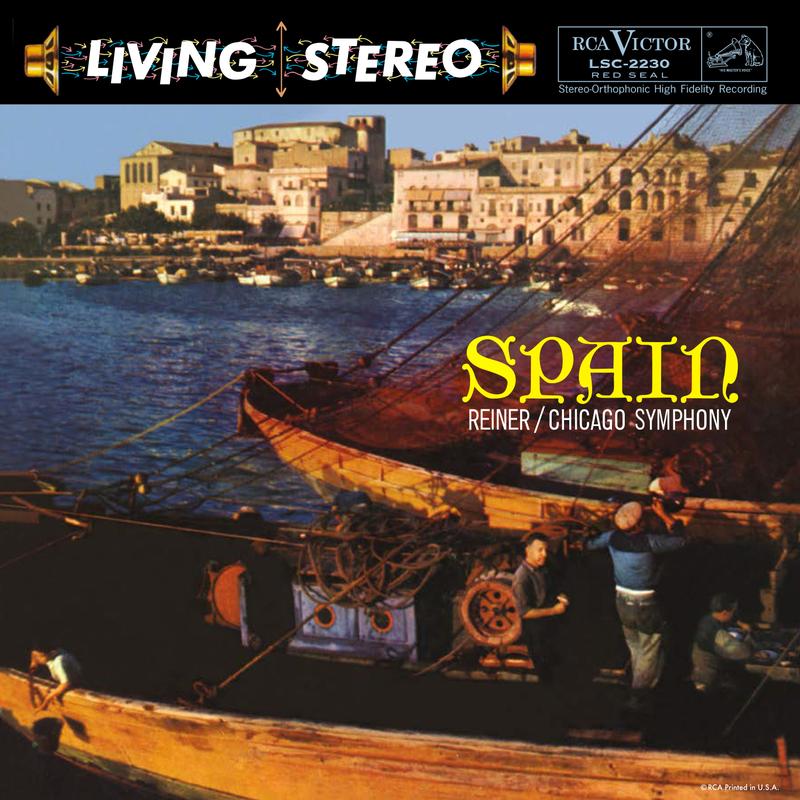
Spain is not a single composition but a selected view of Spanish music. Fritz Reiner and the Chicago Symphony Orchestra bring together Granados, Falla and Albéniz in a programme that moves between theatre, dance and musical images of place. The variety is part of its appeal. A uniform mood does not hold the record together; the orchestra’s ability to distinguish different gestures does.
Recorded in 1958 during Reiner’s Chicago years, the album gathers music with contrasting origins under its simple geographical title. An operatic intermezzo sits beside ballet music, while piano compositions appear in orchestral arrangements. Remembering those origins makes this more than a sequence of picturesque miniatures. It becomes a study in different ways of building a musical scene.

Theatre without a visible stage
Granados’ intermezzo from Goyescas opens one route into the programme. Falla is represented by La vida breve and dances from The Three-Cornered Hat. This music comes from settings in which movement and dramatic circumstances have specific roles. On a record, there is no visible scenery or action. The orchestra must guide our attention through sound and timing alone.
That makes the less conspicuous details worth following. How is a dance rhythm prepared? Which section takes up a figure, and which answers it? Why does a repetition feel different even when the material is familiar? Beneath the music’s immediate appeal lies a detailed interplay of weight, articulation and colour.

Albéniz begins at the piano
“Fête-Dieu à Séville” and “Triana” have a different starting point. Both belong to Albéniz’s piano cycle Iberia, heard here in orchestral versions by Enrique Fernández Arbós. This is not simply a louder presentation of the same notes. Piano textures are distributed among different instruments. Lines that two hands must hold together can separate into individual colours within an orchestra.
“Fête-Dieu à Séville” refers to Seville’s Corpus Christi procession; “Triana” takes its name from the city’s district. These titles offer orientation without requiring us to reduce the music to an illustrated postcard. The more rewarding question is how movement and several simultaneous musical layers can suggest a place.
“Navarra” is not another Iberia movement
One detail is easily blurred by album programming: Navarra does not belong to the completed Iberia cycle. The pieces often appear together on records, but the work and the programme remain different things. For collectors, that distinction is useful. A connection on a sleeve can be a thoughtful selection rather than the composer’s original ordering.
The double-45 edition makes the programme’s groups easy to follow. Granados and La vida breve share side A; the Three-Cornered Hat dances occupy side B. Navarra takes side C, followed by the two Iberia pieces on side D. Rather than collecting only the colourful climaxes, listen to the transitions between these different musical worlds. The journey takes place inside the orchestra, through changes of texture, movement and perspective.
More from the series: RCA Living Stereo Series
Also on SACD: Spain
More by Fritz Reiner: Tchaikovsky: 1812 Overture · Bartok: Music For Strings, Percussion And Celesta / Hungarian Sketches
Artist page: All titles by Fritz Reiner
Customer question: Buying Analogue Productions records in Europe
Series: RCA Living Stereo – all 25 titles, conductors and soloists
Musicians
Named soloists, conductors and ensembles. The album credits do not individually name every orchestra member.
- Fritz ReinerConductor
- Chicago Symphony OrchestraOrchestra


Reviews
There are no reviews yet.