The organ is not the whole story
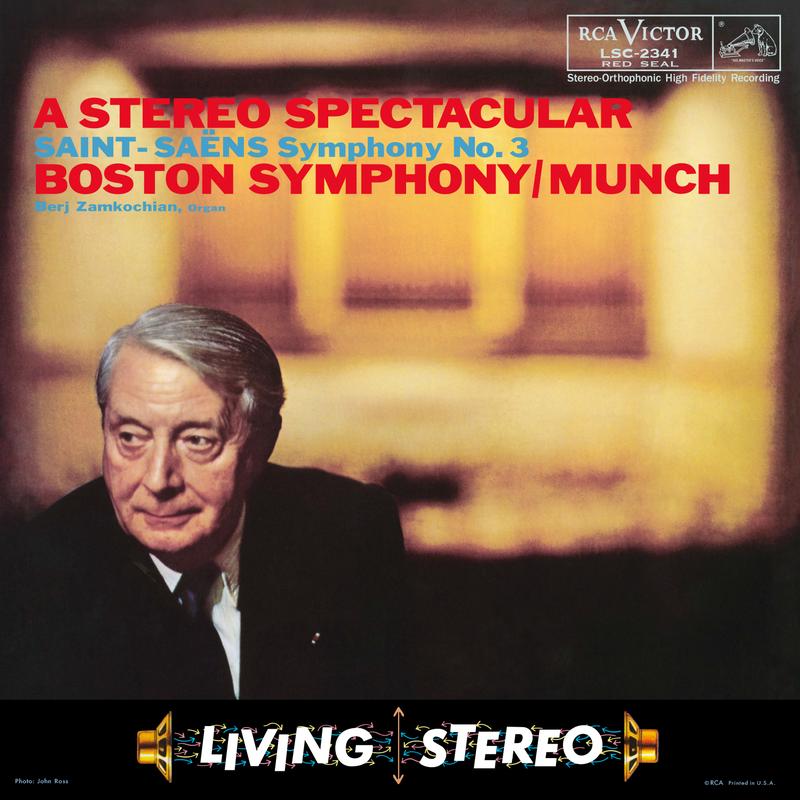
Of course we wait for the organ in Saint-Saëns’ Third Symphony. Its arrival is one of the moments behind the work’s nickname and many a memorable demonstration of a music system. But reducing this recording to that effect misses the journey. The music earns its scale through transitions, returning ideas and the orchestra’s ability to make room for a new colour.
Charles Munch conducts the Boston Symphony Orchestra, with Berj Zamkochian at the organ. Recorded in Boston’s Symphony Hall in 1959, the album was issued by RCA as A Stereo Spectacular. That title captures a period when stereo itself was still an exciting proposition. Today, it is equally rewarding to discover how carefully the composition beneath that spectacular billing is constructed.

Two large parts, four familiar functions
Saint-Saëns organises the symphony into two large parts. Within them, we can still recognise the functions of a four-movement symphony: an active opening, a slow section, scherzo-like movement and a finale. The transitions are part of the design. These are not merely four independent movements given an unconventional numbering system.
That changes how we listen. A new section is not just another track; it alters something already established. Follow the return of melodic ideas and consider what different instrumentation does to them. When does a restrained gesture acquire a ceremonial character? How does material that seemed settled become urgent again? The work’s continuity is one of its central pleasures.

There is a piano beside the organ
Another unusual element can be overshadowed by the famous organ writing: the score includes piano, at times played by four hands. That is why both Bernard Zighera and Leo Litwin appear in the recording credits. The piano is not set against the orchestra as a concerto soloist. It adds to the ensemble’s colours and ways of moving.
The organ, too, is more than a means of achieving maximum volume. Zamkochian’s contribution belongs to a texture in which sustained sound, orchestral figures and harmonic change work together. The contrast between broad gestures and smaller movements keeps the score interesting. An isolated sonic effect would exhaust its possibilities far sooner.
London in 1886, Boston in 1959
Commissioned by the Royal Philharmonic Society, the symphony received its premiere in London in 1886 with the composer conducting. Its dedication to the memory of Franz Liszt connects it with a musical world in which transforming an idea across a large structure mattered deeply. That perspective encourages us to hear an unfolding composition rather than a collection of impressive passages.
The double-45 edition distributes the music over four sides, moving from the opening Adagio and Allegro moderato through the Poco adagio and the animated second part to the Maestoso and Allegro. Those side changes belong to the format, not the original performance. Keeping the musical thread in mind when turning the record restores the larger journey. Behind the Stereo Spectacular is something more enduring: a symphony with direction, memory and an extraordinary range of colour.
More from the series: RCA Living Stereo Series
Also on SACD: Saint-Saens: Symphony No. 3 – A Stereo Spectacular
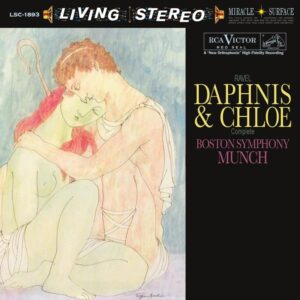
More by Charles Munch: Ravel: Bolero · Ravel: Daphnis And Chloe
Customer question: Buying Analogue Productions records in Europe
Series: RCA Living Stereo – all 25 titles, conductors and soloists
Musicians
Named soloists, conductors and ensembles. The album credits do not individually name every orchestra member.
- Charles MunchConductor
- Boston Symphony OrchestraOrchestra
- Berj ZamkochianOrgan
- Leo LitwinPiano
- Bernard ZigheraPiano



Reviews
There are no reviews yet.