The concert hall is allowed to move
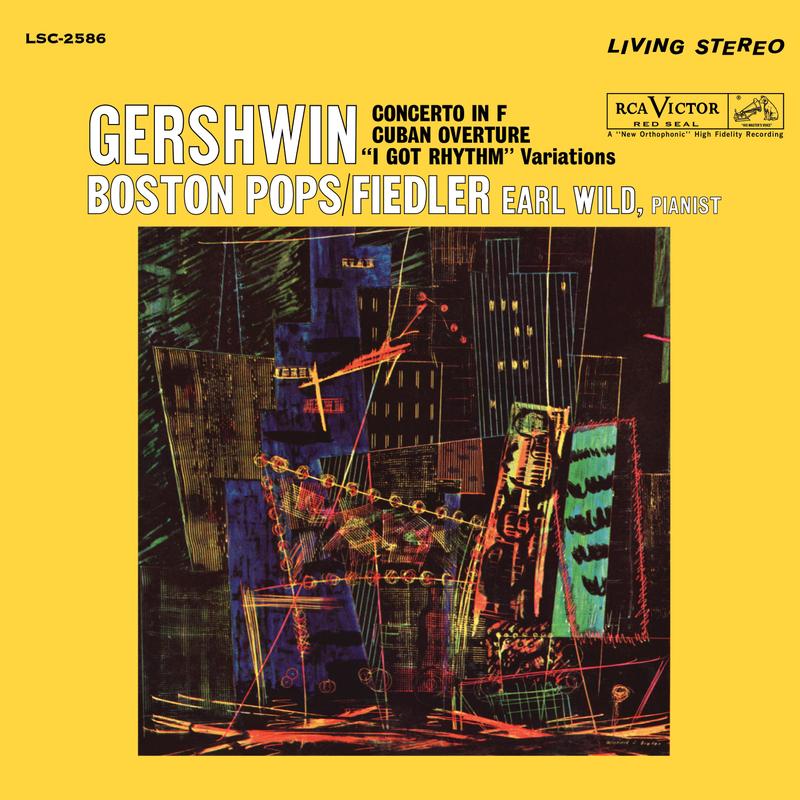
With Gershwin, you do not have to choose between a melody to hum and a composition to explore. The two belong together. Earl Wild, Arthur Fiedler and the Boston Pops meet a composer whose music retains its freedom of movement inside the concert hall.
The Concerto in F followed the success of Rhapsody in Blue in 1925. This time Gershwin undertook the orchestration himself. That matters: piano and orchestra do not tell separate stories, but develop their ideas through changing colours and perspectives.

Three routes through Gershwin’s world
After the concerto’s energetic opening, notice how the atmosphere changes. The slow movement opens another space before the finale gathers momentum again. Wild is not simply a soloist placed in front of an accompaniment: part of the interest lies in the piano’s relationship with the wider musical argument.
The Cuban Overture leads back to Gershwin’s 1932 visit to Havana and his interest in Cuban rhythms and instruments. The “I Got Rhythm” Variations begin instead with a familiar melody and transform it. Keep the theme in mind and each change becomes both a fresh idea and an act of recognition.

Three works with different reasons for existing
Walter Damrosch commissioned the Concerto in F in 1925. Gershwin undertook the orchestration himself while also working on Tip-Toes and Song of the Flame, and played the piano part at the Carnegie Hall premiere. This was not merely another attempt to repeat the success of Rhapsody in Blue. It placed responsibility for the full orchestral score in his hands and gave his rhythmic language a three-movement span.
Cuban Overture began with travel. Gershwin visited Havana in 1932 and brought percussion instruments home. Originally called Rumba, the score contains a telling practical detail: drawings of the instruments and instructions placing them in front of the conductor. Cuban rhythm was not meant to disappear as incidental colour at the back of the orchestra. Its prominence was built into the work’s physical arrangement.
The “I Got Rhythm” Variations were written for Gershwin’s 1934 concert tour, a decade after Rhapsody in Blue, and dedicated to his brother Ira. He finished them shortly before the tour began. This programme therefore connects three different impulses: an orchestral commission, a journey and a variation work intended for the composer’s own performances. They are not interchangeable examples of a broad “symphonic jazz” category. Earl Wild’s piano takes a central role in two; Cuban Overture gives the orchestra the stage to itself.
About this pressing
Analogue Productions · RCA Living Stereo · 2 LPs · 180-gram vinyl · 45 RPM. Mastered from the original master tape by Bernie Grundman. Pressed at Quality Record Pressings (QRP). Includes a two-panel insert. Side C pairs the concerto’s third movement with the “I Got Rhythm” Variations; side D contains Cuban Overture.
Customer question: Buying Analogue Productions records in Europe
Series: RCA Living Stereo – all 25 titles, conductors and soloists
Musicians
Documented selection of participating musicians. Personnel may vary by track; this list does not claim to be complete. Earl Wild is the soloist in Concerto in F and I Got Rhythm Variations. Cuban Overture is an orchestral work. George Gershwin is listed as composer.
- Earl WildPiano
- Arthur FiedlerConductor
- Boston Pops OrchestraOrchestra



Reviews
There are no reviews yet.