


The blues as the beginning of a larger musical world
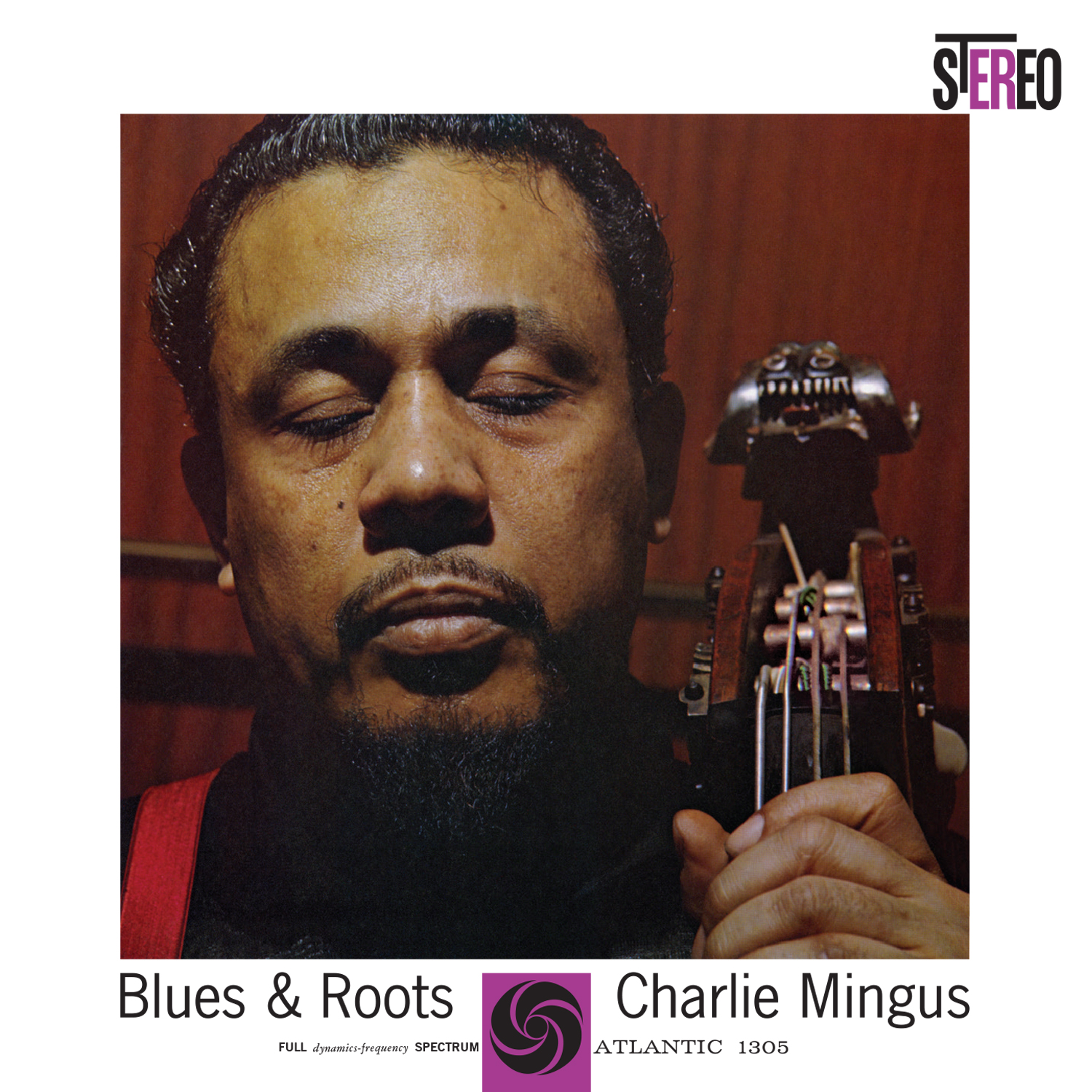
On Blues & Roots, Charles Mingus accepts an apparently straightforward challenge: to make an album placing his music in a clear relationship with the blues. Producer Nesuhi Ertegun had encouraged the project. For Mingus, however, a return to roots does not mean confinement to one form or mood. These six compositions can press forward collectively, isolate an individual voice, work through repetition or set several lines against one another. The blues becomes a starting point from which a whole musical environment can be explored.
The recordings are made in New York on 4 February 1959. Nesuhi Ertegun produces, Tom Dowd is credited as engineer, and Atlantic releases the album in 1960. Mingus plays double bass, writes every composition and leads an unusually colourful ensemble. Two alto saxophones, tenor, baritone and two trombones meet piano, bass and drums. That makes nine simultaneous instrumental positions, with a change of pianist within the programme. Ten musicians participate in total, without the group becoming a ten-piece ensemble throughout the recording.
The distinction suits music whose character emerges from the interaction of separate voices. The horns do not merely combine into an anonymous wall. Different registers, attacks and personalities can support one another or create friction. Mingus does not require a trumpet for this setting: all six horn chairs are occupied by saxophones and trombones. That particular mixture gives the album an instrumental identity of its own. Following which voice takes up a figure and which answers it provides a direct route into the arrangements, without needing to begin with a technical explanation of every passage.

Prayer Meeting, Moanin’ and the ensemble’s voices
Wednesday Night Prayer Meeting opens with a title that already points towards a communal form of musical expression. Listen for the relationship between recurring figures and individual interjections. Mingus does not think exclusively in terms of theme, solo and the next solo. The ensemble itself can become an active counterpart. Cryin’ Blues then brings another balance within the same broad subject. Placing both selections on the first side of this 45 RPM edition gives the beginning a clearly defined shape before the programme moves to the longer piece on side B.
Moanin’ has that second side to itself. This is Mingus’ composition, distinct from Bobby Timmons’ piece of the same name. Pepper Adams’ baritone saxophone is an important reference point for the colour of this performance. Its low register differs markedly from the two altos and Booker Ervin’s tenor. The distinction concerns more than pitch: the attack of a phrase and the weight given to a recurring figure contribute to the character as well. The larger ensemble consequently offers more than the possibility of additional volume or a thicker background behind the soloists.
Tensions and My Jelly Roll Soul occupy the third side, suggesting different directions even in the juxtaposition of their titles. E’s Flat Ah’s Flat Too completes the programme on the fourth. Every composition is by Mingus, yet the material does not ask the band to maintain one unchanging attitude. For collectors who know the composer through other recordings, this is particularly rewarding. Blues & Roots illuminates a specific part of his musical world without pretending to offer a complete explanation of everything he wrote or played.

Ten names, nine chairs and an important change of pianist
The two alto saxophonists are John Handy and Jackie McLean. Booker Ervin plays tenor, Pepper Adams baritone, while Jimmy Knepper and Willie Dennis occupy the trombone chairs. With Mingus on bass and Dannie Richmond on drums, the ensemble brings together registers that deserve to be identified accurately. An alto is not simply a tenor with a different label, and the baritone does not merely duplicate a part an octave below. The individual voices form part of the compositional resources on which the album draws.
Horace Parlan plays piano on the first five selections: Wednesday Night Prayer Meeting, Cryin’ Blues, Moanin’, Tensions and My Jelly Roll Soul. Mal Waldron appears only on E’s Flat Ah’s Flat Too. They should therefore not be presented as two pianists playing together across the entire record. This single change also explains why a complete personnel list contains ten names. The credits for this edition retain the relationship to individual tracks and sides instead of losing it in an undifferentiated album-wide entry.
Richmond and Mingus connect the horns to a responsive rhythmic foundation. A rewarding approach is to move your attention temporarily away from the prominent horn voices towards bass and drums. What holds a recurring figure together, and what gives an entrance renewed energy? Returning to the different registers afterwards can reveal another aspect of their interaction. Such changes of focus make repeated listening productive. There is no need to reduce the record to one famous number or to analyse every instant. Knowing the personnel provides orientation while leaving the music’s immediate force intact.
Atlantic 75: two records at 45 RPM
The edition offered here is AAPA 001-45, the Analogue Productions stereo double LP from the Atlantic 75 Series. Both 180-gram records play at 45 RPM. Kevin Gray at Cohearent Audio is credited with mastering and lacquer cutting, and the publisher identifies the original analogue tape as the source. The presentation includes a tip-on gatefold jacket made by Stoughton Printing. These specifications belong to this particular vinyl edition. The hybrid SACD of the same album is a separate product with different technical characteristics.
Side A contains Wednesday Night Prayer Meeting and Cryin’ Blues. Side B contains Moanin’ alone; side C pairs Tensions with My Jelly Roll Soul, and side D is devoted to E’s Flat Ah’s Flat Too. The programme is thus distributed across four sides. Higher speed and shorter sides give the cutting engineer different spatial conditions from those of a conventional single 33⅓ RPM LP. That does not by itself establish a universal judgement of sound quality. In practical listening terms, this edition also requires more frequent side changes and the correct speed setting on the turntable.
For the series, the first 2,000 copies were numbered and pressed at Quality Record Pressings; unnumbered copies may come from QRP or RTI. Without inspecting an individual stock copy, neither numbering nor one particular plant is promised for the record you receive. The useful identifiers are the specified Atlantic 75 edition, Kevin Gray’s work and the complete six-selection programme. Together they give this release a precise place within a Mingus collection, distinct from other LP and digital editions of the album. You order from Michael 45 in Germany. We arrange the US import and dispatch from Hilden.
Also on SACD: Blues & Roots
More by Charles Mingus: The Clown · Oh Yeah
Customer questions: Atlantic 75: which titles are worth buying? · Buying Analogue Productions records in Europe
Series: Atlantic 75 Series – all 75 albums, time journey and the people behind Atlantic
Musicians
Participants and documented credit status. Track references correspond to the tracklist.
- Charles Mingusdouble bass, composition, bandleaderParticipation: All 6 tracks
- Dannie RichmonddrumsParticipation: All 6 tracks
- John Handyalto saxophoneParticipation: All 6 tracks
- Jackie McLeanalto saxophoneParticipation: All 6 tracks
- Booker Ervintenor saxophoneParticipation: All 6 tracks
- Pepper Adamsbaritone saxophoneParticipation: All 6 tracks
- Jimmy KneppertromboneParticipation: All 6 tracks
- Willie DennistromboneParticipation: All 6 tracks
- Horace ParlanpianoParticipation: A1 · A2 · B1 · C1 · C2
- Mal WaldronpianoParticipation: D1


Track numbers and side references correspond to this edition’s tracklist.
How Michael hears this edition
Listening impression · paraphrased from the video
On the Atlantic 75 edition, Michael finds the musicians clearly positioned on the soundstage even during dense, lively ensemble playing. He hears plenty of subtle detail without the musical activity becoming confused. This is his first listening impression of this edition, not a direct comparison with another pressing.

Reviews
There are no reviews yet.