

An evening between jazz and funk
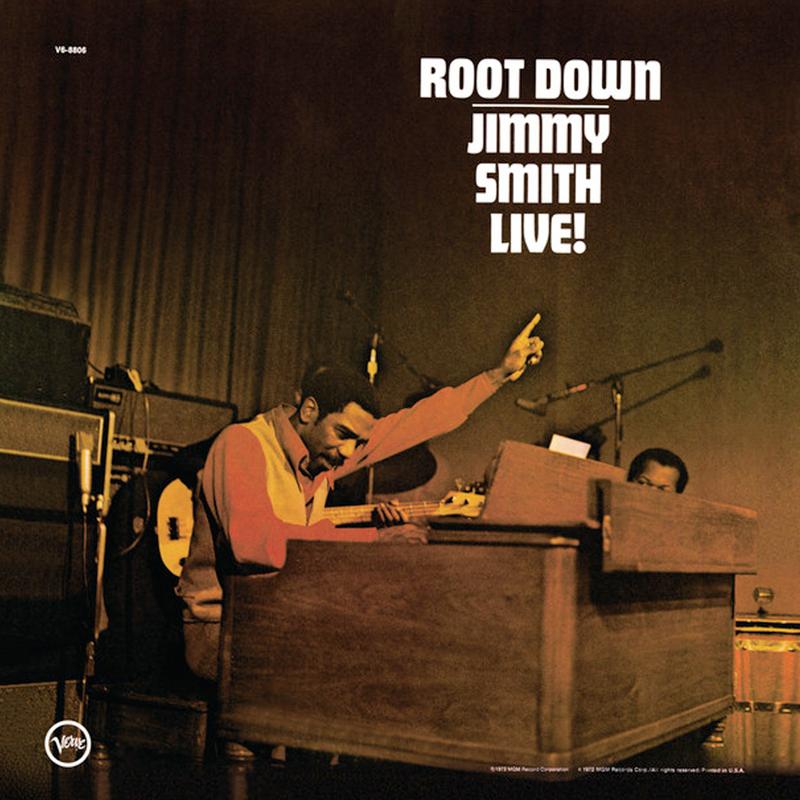
By the time Jimmy Smith was recorded in Los Angeles on February 8, 1972, he had long established the Hammond organ as an independent jazz voice. On Root Down, he placed it in a different setting. Electric bass, guitar, drums and congas formed a band whose rhythmic work extended well beyond the familiar organ trio. Released by Verve that same year, the six-track concert album captures a moment when soul, funk and jazz moved freely into one another. Smith did not have to abandon his musical background to make that connection. Blues phrasing, extended lines and the contrast between brief responses and expansive runs remained central.
The date makes the choice of repertoire especially revealing. Al Green’s “Let’s Stay Together” was a new recording at the time; four days after Smith’s performance, Green’s single topped the American pop chart. This was music responding to its own present, rather than a retrospective selection of established soul classics. At the same time, Smith reached back to Avery Parrish’s 1940 blues piece “After Hours.” Between those two points lies the album’s idea: contemporary songs and older forms become material for a shared, immediately approachable musical language.

Six musicians and a flexible foundation
Arthur Adams plays guitar, Wilton Felder bass and Paul Humphrey drums, with Buck Clarke adding congas and percussion. Steve Williams contributes harmonica; the later CD credits specify “After Hours.” The independent bass player makes a particular difference to the division of labor. Smith does not have to carry the foundation continuously with pedals and low organ notes and can position himself differently against the accompaniment. Felder, also known as a member of the Crusaders, brings a background in which jazz and soul already belonged closely together. Adams, Humphrey and Clarke can place distinct accents within that shared pulse.
It is worth occasionally shifting attention away from the organ. What figure does the bass maintain while Smith moves ahead? Where does the guitar respond, and how does a brief conga pattern alter the flow? These questions reveal the band as an interacting ensemble. The Hammond remains its most characteristic voice, but several musicians shape the music at the same time. The harmonica on “After Hours” adds another individual presence, connecting the older blues material with the amplified setting of this particular evening without turning the piece into a historical interlude.

A title with a second life
“Sagg Shootin’ His Arrow,” “Root Down (And Get It)” and “Slow Down Sagg” are Smith’s own contributions. Together with “For Everyone Under The Sun,” “After Hours” and “Let’s Stay Together,” they form the original LP program. The pieces offer different approaches to the same underlying question: how much can be developed from a recurring rhythmic idea? Following the melodic surface reveals choices of density, silence and timing. Following the rhythm section opens up the same performances from the accompanists’ perspective, where repeated figures provide both continuity and opportunities for change.
A younger generation encountered some of this music through the Beastie Boys. Their “Root Down” on 1994’s Ill Communication sampled Smith’s recording, followed by the Root Down EP in 1995. That later connection helps explain the album’s lasting visibility, but its original context remains a complete live recording from 1972. This LP contains the six edited versions of the original release. The longer, unedited performances and additional alternate version issued on the 2000 CD belong to a different program and should not be assumed to match this record when comparing running times.
The Acoustic Sounds Series vinyl edition
This edition is part of the Verve/UMe Acoustic Sounds Series: one 180-gram stereo LP playing at 33⅓ RPM. Ryan K. Smith handled the mastering, and the publisher identifies the original analog tapes as its source. Quality Record Pressings manufactures the record, which comes in a Stoughton gatefold jacket. These details identify the particular reissue and its production. Its six-track sequence follows the original album rather than the expanded program familiar from later digital editions.
That original sequence is the key reference point when placing Root Down in a collection. It preserves the compact live album and presents Smith’s meeting of blues, jazz and contemporary soul in its original order. Listeners arriving through the later sample can recover the surrounding musical context; those who know Smith primarily through smaller groups encounter a differently organized rhythm section. The product number is AVER 27381. The album’s story begins with a specific Los Angeles performance and continues through the ways later listeners have discovered it, while the music itself remains rooted in the work of this six-piece band.
You order from Michael 45 in Germany. We arrange the US import and dispatch from Hilden.
More by Jimmy Smith: Bashin’: The Unpredictable Jimmy Smith · The Cat
Musicians
Participants and documented credit status. Track references correspond to the tracklist.
- Jimmy Smithorgan (Hammond B-3), bandleaderParticipation: Album personnel
- Arthur AdamsguitarParticipation: Album personnel
- Wilton FelderbassParticipation: Album personnel
- Paul HumphreydrumsParticipation: Album personnel
- Buck Clarkecongas, percussionParticipation: Album personnel
- Steve WilliamsharmonicaParticipation: Track assignments unconfirmed

Steve Williams is documented. CD credits specify “After Hours”; his precise participation across the LP is not fully established.
How Michael hears this edition
Listening impression · paraphrased from the video
The energy and power of Jimmy Smith’s organ playing excite Michael on this live recording in its Acoustic Sounds edition. He finds it a particularly compelling record. He explicitly says that he has no original pressing available for comparison; his recommendation is based on listening to this reissue.
🎧 Review video: New Amazing Records From Smith, Simone and Webster
This video is hosted by YouTube (Google). It only loads once you switch on “Functional” in the cookie settings.

Reviews
There are no reviews yet.