
Mehta’s Los Angeles: a vast symphony at the end of an era
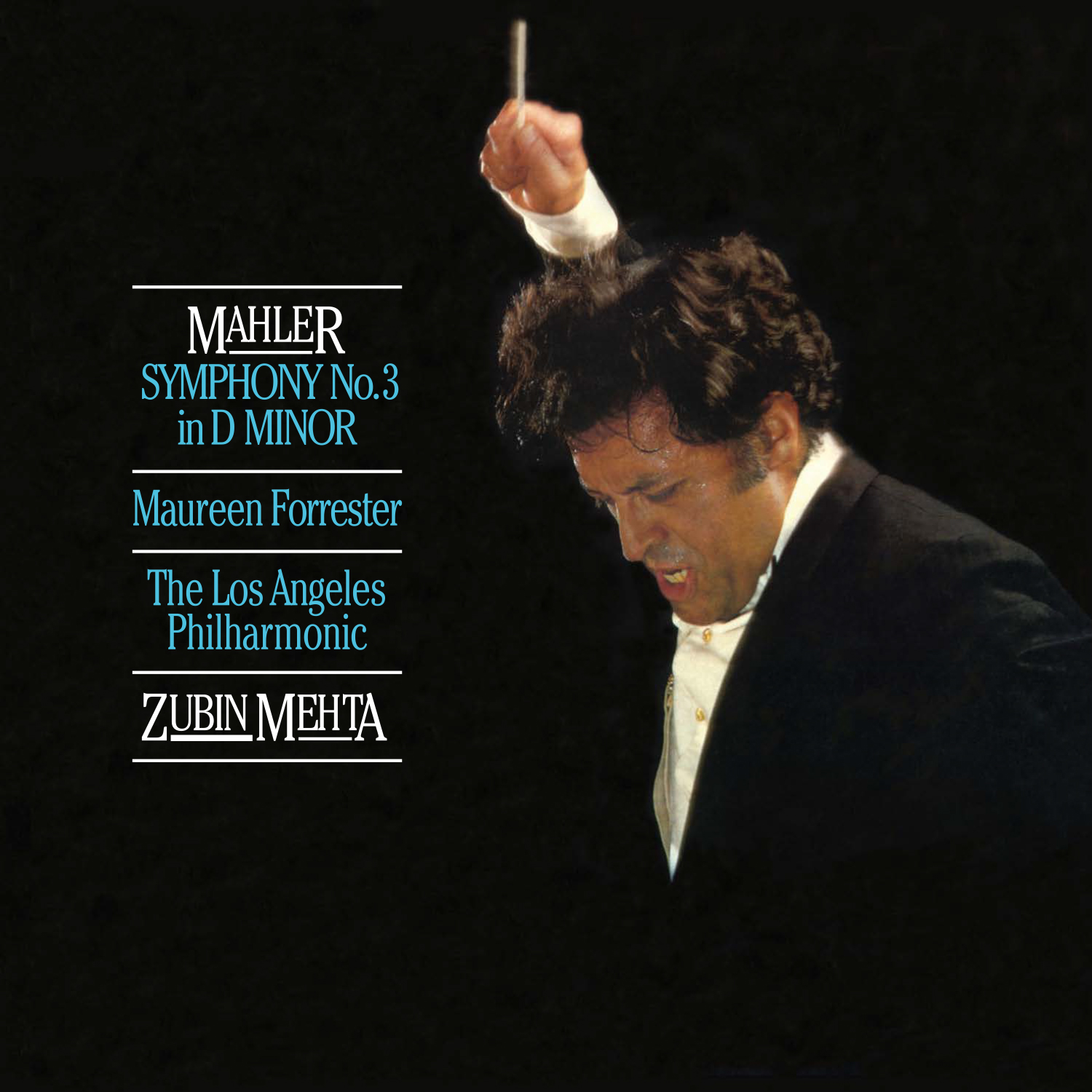
Mahler’s Third Symphony is music worth making time for. Its six movements pass through markedly different worlds, from the extensive opening movement through dance and evocations of nature to the human voice and the slow finale. Zubin Mehta recorded it with the Los Angeles Philharmonic at UCLA’s Royce Hall in March 1978. This was the final year of his tenure as the orchestra’s music director, which had begun in 1962. The recording consequently documents an established partnership confronting a work that demands an especially long shared musical breath.
Mehta had been very young when he took charge in Los Angeles. Sixteen years later, conductor and orchestra represented a relationship extending far beyond a guest appearance or a short recording project. The Third Symphony provides an illuminating setting in which to consider that relationship. It requires substantial forces, but not continuous loudness. The transitions between different scales of expression matter just as much: individual voices in relation to the ensemble, and the ability to keep a very long musical course in view.
Maureen Forrester is the contralto soloist. Her connection with Mahler had a particular biographical dimension. Following her New York debut in 1956, she worked with Bruno Walter, who had himself been closely associated with the composer. This performance also involves the women’s voices of the Los Angeles Master Chorale under Roger Wagner and the California Boys’ Choir under Douglas Neslund. The full list of participants reveals how the symphony acquires new means of expression as it progresses, rather than presenting every available resource at the outset.
This is a Decca recording. Ray Minshull produced it, with James Lock and Simon Eadon responsible for engineering. Its Californian location meets a production team associated with the British label. The Analogue Productions catalogue number AAPC 117 should therefore not suggest that it belongs to RCA Living Stereo. It comes from a different recording history and orchestral partnership, with a musical programme extensive enough to occupy two LPs.

From Pan and the natural world to the human voice
Mahler developed the symphony during the 1890s and completed it in 1896. At different stages he associated its movements with programmatic headings involving Pan, the awakening summer, flowers, animals and angels. These images can offer points of entry without reducing the music to a single prescribed story. Above all, they suggest why the work places different scales of experience beside one another. A small figure, a distant voice and an immense orchestral span can become parts of the same musical world.
The first movement occupies an exceptional amount of space. On this LP edition it extends beyond the first side, reaching its conclusion on side B. This is more than a packaging detail: it is a clue to the architecture of the symphony. The listener should not expect a brief introduction. The movement constitutes a major structure of its own, after which the remaining five movements offer changing perspectives. Side B also contains the Tempo di Menuetto, for which Sidney Harth is credited with the violin solo.
The third movement introduces the distinctive colour of the post horn, with Robert DiVall taking the solo. The instrument and its sense of distance belong to the symphony’s characteristic moments, as music seems temporarily to arrive from another space. The fourth movement, “O Mensch! O Mensch!”, then introduces Forrester’s voice. Singing is not a casual addition to an existing orchestral texture; its arrival changes the means by which the work addresses its listeners.
The fifth movement brings together contralto, women’s chorus and boys’ choir, with the familiar “Bimm bamm” forming part of its sound world. The finale is again purely instrumental and slow. That sequence is worth noticing: the symphony does not end with its largest vocal assembly, but returns to the orchestra. A further movement once considered for the work, “Das himmlische Leben”, eventually became the finale of Mahler’s Fourth Symphony. The complete Third was first performed in Krefeld in 1902, conducted by Mahler himself, several years after its completion.

Listening across the whole design
With a symphony of this scale, it is tempting to begin by seeking out the spectacular passages. Following the changes of proportion can be equally rewarding. When does a voice act alone, when as part of a group, and when within the full orchestra? How does the listener’s perspective change when a singer appears after several instrumental movements? These questions require no technical comparison test. They offer ways to discover the work’s construction gradually through listening itself.
Forrester is more than a prominent additional name on the cover. Her contribution belongs to a defined part of the score and a particular vocal register: she sings the contralto part in movements four and five. Harth’s and DiVall’s responsibilities are likewise distinct. The former is associated with the violin solo in the second movement, the latter with the post horn in the third. Knowing these names makes it possible to follow individual moments more consciously and to hear the recording as the shared work of many participants.
The choruses deserve their own identification too. The California Boys’ Choir and the women’s voices of the Los Angeles Master Chorale are separate ensembles with separate directors. In abbreviated album listings such distinctions can disappear behind a generic chorus credit. Here they help explain the performing forces. The recording team matters for similar reasons: a Decca production involving Minshull, Lock and Eadon is a specific document, rather than an interchangeable large-scale orchestral session from the 1970s.
Both LPs play at 33⅓ RPM. This gives the six movements room across four sides and keeps the number of interruptions within the familiar pattern of a double album. The first movement is still divided, a fact made clear in the side listing. For a listening evening, it helps to regard the changes as practical stopping points while retaining the wider musical course in mind. The longer sides offer a comprehensible reason for this format, without turning rotational speed alone into a judgement about sound quality.
Willem Makkee, the Decca tapes and AAPC 117
Willem Makkee undertook the mastering and lacquer cutting for this Analogue Productions edition. The publisher specifies the original tapes and cutting on a Neumann VMS 80, with pressing at Quality Record Pressings. These details identify the double LP offered here. They distinguish it from historical Decca and London releases, as well as from the separately issued SACD. The same performance appearing on several editions does not mean that every edition shares an identical production process.
The double-pocket gatefold accommodates both records and accompanying notes by David Matthews and Henry-Louis de La Grange. Its presentation also includes François Boucher’s “Pan and Syrinx” on the reverse. In relation to Mahler’s changing programme ideas, the painting offers an attractive visual association without providing a mandatory explanation for the entire symphony. The packaging gives the listener something worthwhile to explore between sides, extending attention from the performance to the work and its history.
The first Analogue Productions pressing is documented at 200 grams; later pressings and the publisher’s current description specify 180 grams. The version represented by an individual copy must be established from that copy. For choosing the performance, the fixed personnel, the March 1978 recording date and Makkee’s cut are more fundamental points of reference. This keeps the musical identity separate from physical characteristics that may vary between pressing runs.
This is a record for listeners willing to give a symphony a substantial part of an evening. It offers an opportunity to follow Mahler’s unusually large design through the work of a clearly identified group of musicians. Mehta’s long relationship with Los Angeles, Forrester’s Mahler experience, and the contributions of the choruses and instrumental soloists give the recording its historical place. The reissue makes that place accessible again as a complete double album, ready to be approached at the listener’s own pace.
You order from Michael 45 in Germany. We arrange the US import and dispatch from Hilden.
Customer question: Buying Analogue Productions records in Europe
Musicians
Participants and documented credit status. Track references correspond to the tracklist.
- Zubin MehtaconductorParticipation: album personnel
- Los Angeles PhilharmonicorchestraParticipation: album personnel
- Maureen ForrestercontraltoParticipation: IV, V
- Los Angeles Master ChoralechorusParticipation: V · director: Roger Wagner
- California Boys’ Choirboys’ choirParticipation: V · director: Douglas Neslund
- Sidney Harthsolo violinParticipation: II
- Robert DiVallpost hornParticipation: III
- Roger Wagnerchorus directorParticipation: V
- Douglas Neslundchorus directorParticipation: V


Recorded March 1978, Royce Hall, UCLA, Los Angeles. Producer: Ray Minshull; engineers: James Lock and Simon Eadon. AP lacquer cutting: Willem Makkee; pressed at Quality Record Pressings. Chorus and soloist credits follow the Decca recording; the four-side overview includes all six movements.

Reviews
There are no reviews yet.