Beyond the famous opening
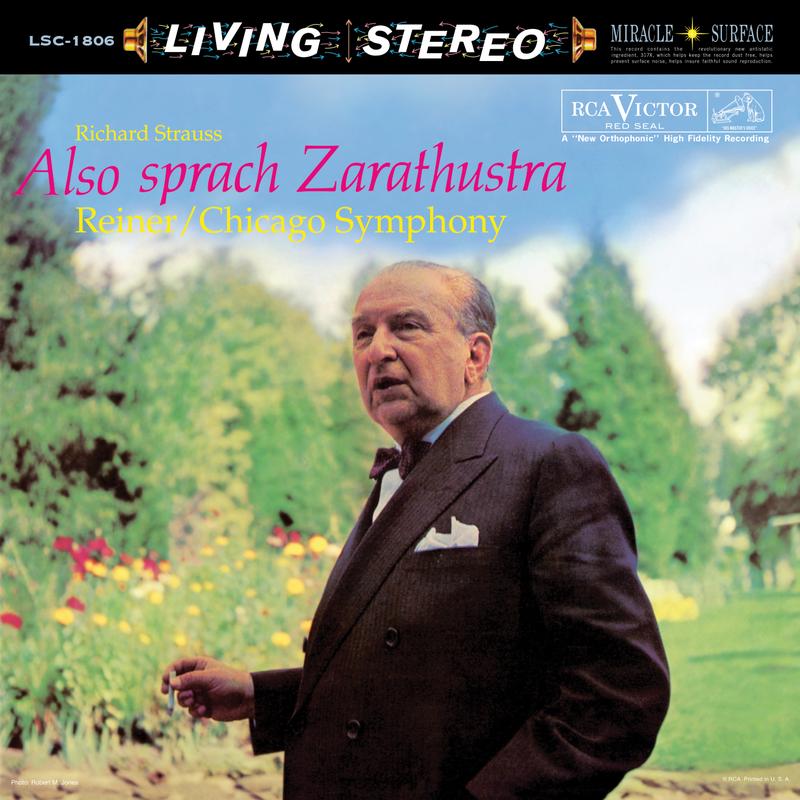
The opening of Richard Strauss's Also sprach Zarathustra is among orchestral music's most familiar passages. A low sustained foundation gives way to the rising trumpet figure and the entry of the full orchestra. The tone poem then continues far beyond that introduction. The complete recording reveals changing movements, individual voices and an unusually unresolved conclusion.
Fritz Reiner recorded the work with the Chicago Symphony Orchestra on March 8, 1954. It was his first recording with the ensemble, made during his first season as music director. The sessions took place in Chicago's Orchestra Hall, with producer John Pfeiffer and engineer Leslie Chase. The result belongs to RCA's early stereo recording history.

Individual voices inside a large ensemble
Strauss composed the tone poem in 1896, drawing inspiration from Friedrich Nietzsche's book. Its sections do not follow the conventional plan of a multi-movement symphony. Much of the music proceeds continuously, with changing themes and instrumental combinations shaping the course. You can follow a recurring idea or shift attention between different parts of the orchestra.
Bud Herseth plays the opening trumpet solo, while concertmaster John Weicher takes the violin solos. Such individual contributions offer points of orientation within the large ensemble. Listen for an instrument emerging from the group and later returning to it. The movement between solo voice and collective sound matters to the work's structure as much as its more familiar climaxes.

Recorded in 1954, released in stereo later
RCA used separate teams to record mono and stereo at this stage. The mono edition appeared in 1954, while the stereo LP of this performance followed in 1960. That interval accounts for the different dates associated with the title. The recording entered the Library of Congress National Recording Registry in 2011.
Following the music to its conclusion is especially rewarding. Strauss does not simply resolve its tonal tensions into a decisive final gesture, creating a counterweight to the imposing opening. This 45 RPM edition divides the continuous span across four sides. Fades and partly overlapping passages occur at the changes. Those interruptions are part of this particular LP presentation and affect the way the work's continuity is experienced.
This edition
Analogue Productions AAPC 1806-45, in the RCA Living Stereo 45 RPM Series, contains two 180-gram stereo LPs, pressed at Quality Record Pressings. Bernie Grundman receives the mastering and 45 RPM cutting credit. The publisher identifies the original master tape of the two-track recording as the source. A two-panel insert accompanies the records. This is Reiner's 1954 performance with the Chicago Symphony Orchestra.
Also in another edition: Richard Strauss: Also Sprach Zarathustra
More by Fritz Reiner: Bartok: Concerto For Orchestra · Prokofiev: Lieutenant Kije / Stravinsky: Song of the Nightingale
Artist page: All titles by Fritz Reiner
Customer question: Buying Analogue Productions records in Europe
Series: RCA Living Stereo – all 25 titles, conductors and soloists
Musicians
Documented selection of participating musicians. Personnel may vary by track; this list does not claim to be complete.
| Name | Instrument / role |
|---|---|
| Fritz Reiner | Conductor |
| Chicago Symphony Orchestra | Orchestra |
How Michael hears this edition
Listening impression · paraphrased from the video
Michael is particularly impressed by the wide dynamic range of this Living Stereo 45 RPM edition. He describes the listening experience as breathtaking and also praises the beauty of the performance. His praise here concerns the 45; he does not compare it with the 33⅓ RPM edition.
🎧 Review video: 8 Amazing New Reissues you want in your Collection
This video is hosted by YouTube (Google). It only loads once you switch on “Functional” in the cookie settings.

Reviews
There are no reviews yet.