A church hall, a guitar and a tenor saxophone
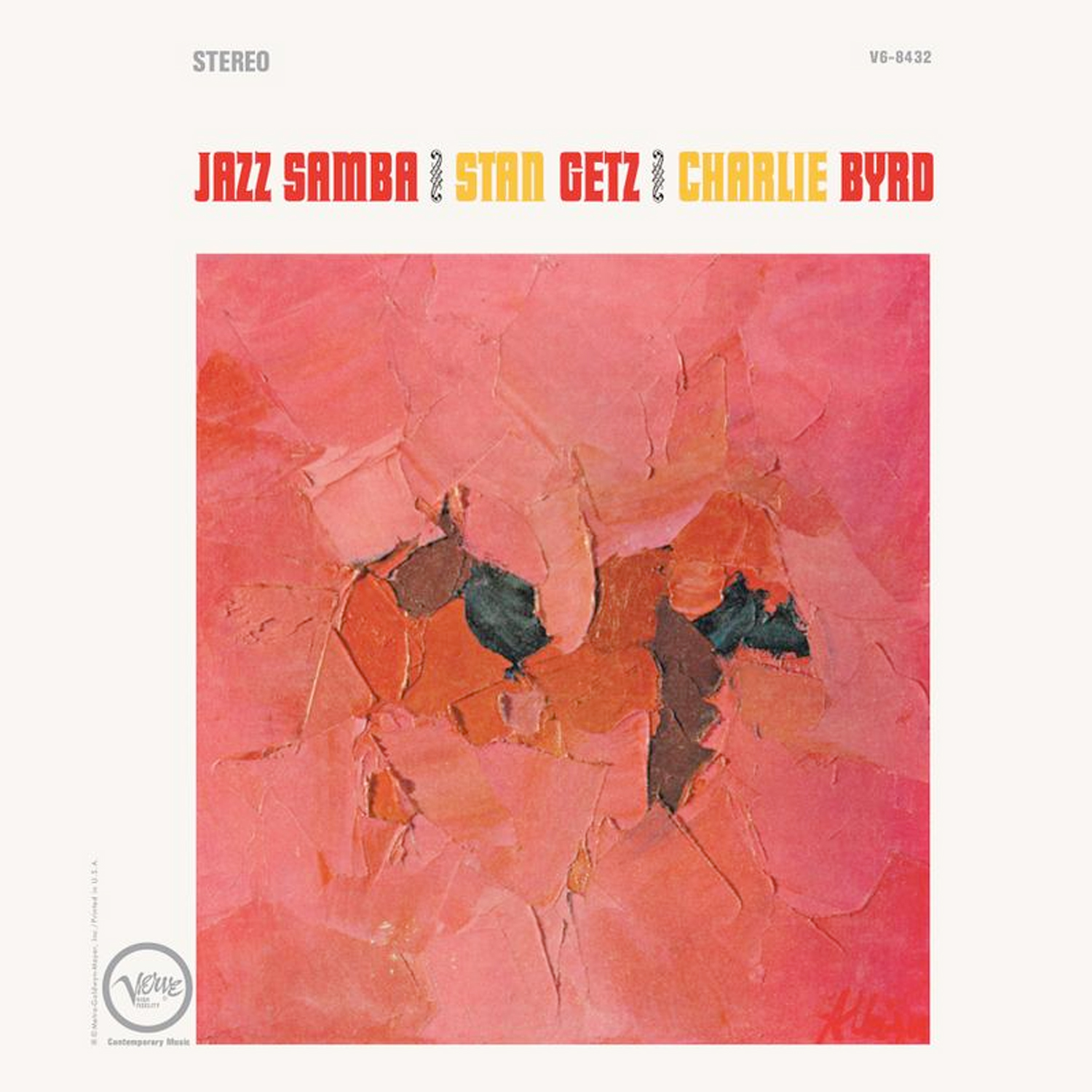
Jazz Samba brings Stan Getz’s tenor saxophone together with Charlie Byrd’s guitar and a programme drawn mainly from Brazilian composers. The recording took place on February 13, 1962, at Pierce Hall in All Souls Unitarian Church, Washington, D.C. That specific location belongs to the album’s story: a church hall, rather than a routine New York studio booking. If you want to buy Jazz Samba on vinyl, this Acoustic Sounds Series edition contains its seven pieces on one 180-gram stereo LP running at 33⅓ RPM.
The two names on the cover already suggest different ways into the music. Getz provides the melodic voice of the tenor saxophone, while Byrd’s guitar is an individual partner in its own right. Familiar melodies offer one point of entry; the relationship between the instruments offers another. A wind player’s breath and the attack of a plucked string set notes in motion in different ways. Their encounter gives the album a clear centre, supported by a larger group that shapes its rhythmic environment.
Six musicians are credited. Alongside Getz and Charlie Byrd are Gene Byrd, Keter Betts, Buddy Deppenschmidt and Bill Reichenbach. Gene Byrd’s credit includes guitar and bass, Betts plays double bass, and Deppenschmidt and Reichenbach are both listed on drums. An album personnel list should not silently become a fixed description of every instrument playing at every moment. These credits identify the participants, while leaving their precise distribution across individual tracks unspecified.
That distinction also invites closer attention to the accompaniment. Jazz Samba is more than an attractive tenor melody laid over an interchangeable backing track. The guitar participates in the musical conversation, and several named instrumentalists contribute beyond the two leaders. A seven-track programme makes the record approachable without requiring its personnel to be reduced to two famous names. The musician section below therefore keeps all six participants visible, with their documented instruments and the limits of the available track information.

Desafinado and three further views on side one
Desafinado opens the album. Antônio Carlos Jobim’s composition offers a natural introduction to his musical world. For this LP, however, the particular performance comes first: an instrumental recording from the Getz and Byrd session, rather than any later vocal or concert version bearing the same title. A familiar melody can make a record welcoming, but choosing a particular album also determines which musicians you hear playing it and what surrounds it in the programme.
Next comes Samba Dees Days, Charlie Byrd’s own contribution. It is the only composition on the record not written by Brazilian authors, giving him a second clearly identifiable presence alongside his role as guitarist. The selection combines material taken up by the group with a piece originating within it. Jazz Samba is therefore more than a loose collection of recognisable titles. The sources of its repertoire and the order in which the pieces appear give the programme an individual shape.
O Pato, by Jayme Silva and Neuza Teixeira, is the shortest track in this edition at around two and a half minutes. A compact performance among longer pieces offers another perspective on the same group. Musical ideas do not all need the same amount of space. A shorter format can draw attention to the completeness of a piece, while extended tracks give individual contributions more time to develop. That variety offers a reason to listen to the sequence rather than treating the whole side as an undifferentiated background.
Samba Triste, by Baden Powell and Billy Blanco, closes side one. Four compositions by different writers thus occupy the first half of the record within a connected instrumental setting. On a complete playing, it is rewarding to follow the contours of their melodies as well as their rhythmic character. They are separate pieces, not interchangeable versions of one idea. Their differences contribute to the album as much as the consistency of the personnel and the musical territory they explore together.

Seven pieces and six participating musicians
Side two begins with Samba De Uma Nota So, by Jobim and Newton Mendonça. It continues with E Luxo So, by Ary Barroso and Luiz Peixoto, and Baia, also by Barroso. The reverse side brings together three further aspects of the Brazilian repertoire. At more than six minutes each, the opening and closing performances have more space than E Luxo So between them. This gives the side proportions of its own, preserved when the album is heard in its complete LP sequence.
The writers’ names provide useful starting points for further exploration. Jobim and Barroso appear more than once in this programme, while Baden Powell and Billy Blanco add another connection. Composers should nevertheless remain distinct from session musicians. Jobim does not become an additional pianist on Jazz Samba simply because his name appears beside a composition. This is an instrumental album by a particular group, and its identity comes from that group’s encounter with the selected material.
Distinctions within the band matter too. Charlie and Gene Byrd are brothers, not alternative ways of naming the same guitarist. Gene is documented on guitar and bass. Bill Reichenbach is the drummer, rather than the trombonist of the same name from the next generation. Details like these make it easier to place a record accurately within a collection. The accompanists remain identifiable people with particular roles instead of disappearing behind a general phrase such as “with rhythm section.”
Creed Taylor produced the session, and Ed Greene handled the recording. Dom Cerulli wrote the liner notes; Olga Albizu created the cover painting. The visual presentation therefore also has a named creator. These contributions belong to the album’s history but should be kept separate from the performing personnel. Jazz Samba is at once a recording session, a selection of repertoire and a designed release. For listeners who enjoy an album as a complete object, those different roles provide additional points of interest beyond the two leading names.
The single-LP Acoustic Sounds Series edition
This reissue carries catalogue number AVER 83001 and appeared in 2023 as part of the Verve/UMe Acoustic Sounds Series. Ryan K. Smith cut it at Sterling Sound from the original analogue tapes. Quality Record Pressings manufactured the 180-gram LP, and Stoughton Printing supplied the tip-on gatefold jacket. The record plays at 33⅓ revolutions per minute. It contains the album’s seven tracks, without folding in later bonus material or other performances of the familiar compositions.
Four pieces on the first side and three on the second create two manageable listening spans. The format keeps the sequence together as an album and allows it to unfold without frequent side changes. There is no need for a blanket promise of technical superiority to identify this release. Its named series, documented mastering and complete running order provide more useful information. They distinguish this particular LP from other reissues, compilations and records with similar titles or overlapping repertoire.
Jazz Samba suits listeners interested in exploring the relationship between jazz and Brazilian material through a small, clearly identified group. An accessible starting point need not mean that attention remains casual. You can initially follow the tenor line and later concentrate on Byrd’s guitar or the rhythmic contributions around them. The balance of short and longer performances makes it possible to approach the record as complete sides or through individual compositions, finding a different point of focus on a later playing.
If Getz is already represented in your collection, the complete title is especially useful: Charlie Byrd is his partner here. This is a different musical encounter from a recording with a singer, an orchestra or another guitarist. The clear personnel, documented recording location and seven-track programme provide a concrete basis for that distinction. Behind a familiar album title, a particular group of musicians and a particular recording occasion remain visible.
You order from Michael 45 in Germany. We arrange the US import and dispatch from Hilden.
Series: Verve – all 34 records: voices, organ and bossa nova
Musicians
Participants and documented credit status. Track references correspond to the tracklist.
- Stan GetzExisting portrait; not a session depictiontenor saxophoneParticipation: Album personnel; individual scope unspecified
- Charlie ByrdLater reference: 1997guitarParticipation: Album personnel; individual scope unspecified
- Gene Byrdguitar, bassParticipation: Album personnel; individual scope unspecified
- Keter Bettsdouble bassParticipation: Album personnel; individual scope unspecified
- Buddy DeppenschmidtdrumsParticipation: Album personnel; individual scope unspecified
- Bill ReichenbachdrumsParticipation: Album personnel; individual scope unspecified


Six musicians from album credits; individual track participation unconfirmed. Gene Byrd: guitar/bass, not a claim of simultaneous performance. Bill Reichenbach is the drummer, not his trombonist son. Creed Taylor: producer; Ed Greene: recording; Olga Albizu: cover painting. Ryan K. Smith / Sterling Sound: mastering from original analogue tapes; QRP: pressing; Stoughton: jacket.

Reviews
There are no reviews yet.