One trio, one December and eleven pieces
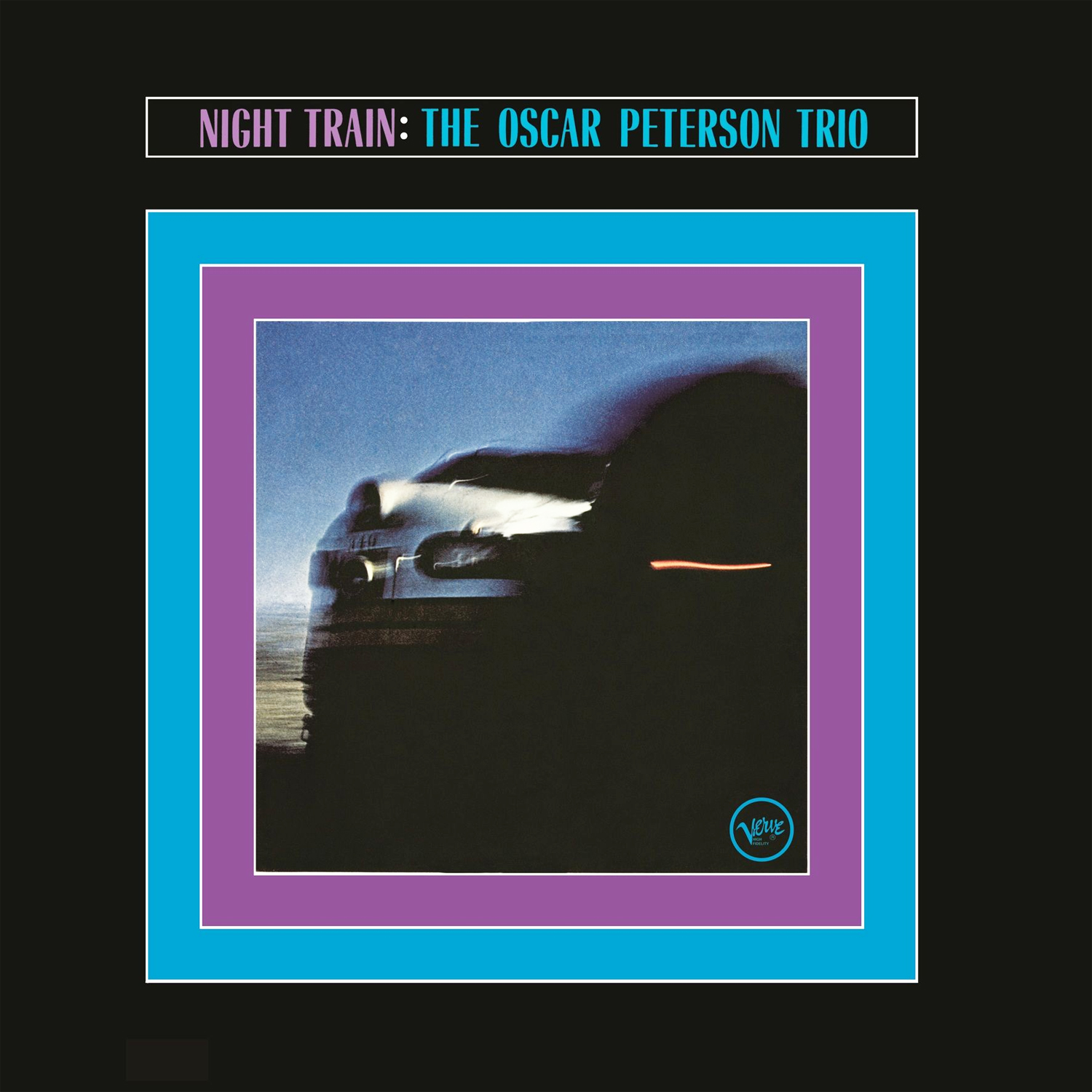
Night Train is one of those jazz albums whose modest instrumentation opens a much wider musical world. Oscar Peterson at the piano, Ray Brown on double bass and Ed Thigpen on drums: three names, with no additional horns or changing guest soloists. The recordings were made in Los Angeles in December 1962, and Verve released the album in 1963. Eleven pieces make up the original programme. Their connection comes not from an extended suite but from the repertoire and the continuity of this particular trio. Blues, songs and compositions associated with Duke Ellington meet across two LP sides.
The recording history leads to Radio Recorders in Hollywood. Discographical accounts give 15 and 16 December, while the publisher’s page for this reissue highlights 16 December. The shared point is clear: these are the December 1962 recordings by this precise group. Norman Granz continued to supervise Peterson’s work after selling Verve. Val Valentin is credited as Director of Engineering. The album consequently sits at an interesting intersection between an enduring personal artistic relationship and a changed label structure, rather than representing a break in the pianist’s connection with Granz.
The programme is compact without being narrow. “C Jam Blues” connects it to the Ellington repertoire; “Bags’ Groove” to Milt Jackson; “Georgia on My Mind” to Hoagy Carmichael and Stuart Gorrell. Peterson’s own “Hymn to Freedom” stands at the end. Following those names and relationships reveals several paths through jazz history within a single record. Yet that map is not required before meeting the trio. The eleven pieces can first be heard simply as a deliberately chosen sequence of individual themes, each with a place in the album’s progression.

Oscar Peterson, Ray Brown and Ed Thigpen
The term piano trio can make it tempting to concentrate almost exclusively on the keyboard. With Night Train, it is worth recognising Ray Brown and Ed Thigpen from the beginning as equal constituents of the musical identity. The bass does more than supply the roots of the harmony. Its lines connect events, establish routes and can develop their own direction within a piece. Drums shape time through more than volume or density. Answering a figure, changing the emphasis or leaving a space unfilled are also part of the work of a trio.
For Peterson, that creates a mobile context. A piano line can agree with the bass and drums, refer to what they are doing or move against it. A familiar standard is an especially useful starting point for following such relationships: the theme remains available as a guide while attention moves towards the collective shaping of the music. There is no need to turn listening into a technical examination. One can simply notice how a piece is sustained by three musicians even when one player is providing its most immediately prominent melodic voice.
The unchanged personnel across all eleven selections are an important part of the album. No newly arriving guest transforms the perspective after a few minutes. Differences emerge within the same continuing conversation. For collectors, that can provide an engaging counterpart to records whose attraction rests on large ensembles or spectacular combinations of names. Here the work of a settled small group can be followed through an entire programme. After a session on which Peterson accompanies other featured musicians, Night Train can offer a particularly concentrated view of his own trio’s identity and ways of working.
It also makes comparison within the record straightforward. A listener can move from one composition to another while keeping the same three instrumental voices in mind. The change of repertoire becomes a way to notice different responses from the group, rather than a reason to reset the personnel each time. Familiarity with the players can deepen during the course of a single side, allowing details of their relationship to become increasingly interesting as the programme proceeds.

From the title track to Hymn to Freedom
“Night Train” opens side A, followed by “C Jam Blues” and “Georgia on My Mind”. Those first three pieces already establish different points of reference without changing the ensemble. “Bags’ Groove” then introduces a Milt Jackson composition, before “Moten Swing” and “Easy Does It” bring the side to a close. Six selections occupy the first half. The relatively short forms of several pieces allow a number of themes to appear without reducing the album to a collection of excerpts. Each remains a complete stage in the unfolding programme rather than merely a familiar tune being acknowledged in passing.
Side B begins with “Honey Dripper”. “Things Ain’t What They Used to Be”, “I Got It Bad and That Ain’t Good” and “Band Call” follow, keeping the Ellington connection clearly in view. Accurate authorship matters here: “Things Ain’t What They Used to Be” leads to Mercer Ellington, rather than every familiar composition associated with the Ellington world automatically belonging to Duke alone. The repertoire brings together pieces with different histories. Peterson’s trio provides the shared setting in which they meet for the purposes of this recording.
“Hymn to Freedom” closes the original album. Peterson’s composition follows ten pieces by other writers and therefore occupies a particular position within the sequence. The publisher describes the performance included here as the earliest version of the piece. As an approach to the record, the placement itself is already suggestive: after blues and song repertoire, the programme ends with an original contribution by the pianist. That does not turn the album retrospectively into a concept work, but it does give it a clearly identified personal closing statement.
Following a complete side can be as rewarding as concentrating on an individual selection. Listeners who know the standards can notice their differences within the same trio setting. Those encountering them for the first time receive eleven named starting points for further exploration. This double function makes such a record useful in a growing collection: it can become a familiar companion while continuing to open routes towards other composers, bandleaders and ensembles.
The Acoustic Sounds LP and its original programme
The edition offered here, AVER 79601, belongs to the Acoustic Sounds Series from Verve and Universal Music Enterprises. It presents the album on a 180-gram stereo LP at 33⅓ RPM. The publisher identifies Ryan K. Smith at Sterling Sound as the mastering engineer working from the original analogue tapes. The record is manufactured at Quality Record Pressings and supplied in an old-style tip-on gatefold jacket from Stoughton Printing. These details identify this particular reissue among the many releases that share the same album title.
The record contains the eleven original-LP selections, with six on the first side and five on the second. Additional performances included on later CD editions are not part of this programme. The 33⅓ format retains the two longer listening sections of a single record and requires one side change. For someone wishing to stay with the trio across several successive pieces, that is a comprehensible practical attraction. It does not replace an actual listening comparison between pressings; it describes the physical and musical sequence provided by the edition offered here.
Night Train combines a manageable scale with many musical connections: Peterson, Brown and Thigpen as a stable ensemble, a strong relationship with blues and Ellington repertoire, and “Hymn to Freedom” as a personal conclusion. You order from Michael 45 in Germany. We arrange the US import and dispatch from Hilden. For listeners interested in discovering both individual personalities and collective work within a small group, the album offers ample reason to spend more time with the same three musicians.
More by Oscar Peterson: We Get Requests
Series: Verve – all 34 records: voices, organ and bossa nova
Musicians
Participants and documented credit status. Track references correspond to the tracklist.
- Oscar Petersonportrait reference 1978pianoParticipation: All tracks
- Ray Brownportrait reference 1976double bassParticipation: All tracks
- Ed Thigpenlater undated referencedrumsParticipation: All tracks


The trio plays on all eleven tracks. Recorded in December 1962; discographies give 15–16 December, the publisher gives 16 December. No bonus tracks from later CD editions.
How Michael hears this edition
Listening impression · paraphrased from the video
Michael praises the prominent, centered piano and the well-captured dynamic interplay between instruments. He also notes that the cymbal can be quite dominant at times. He has not compared this edition with the older ORG 45.
🎧 Review video: Acoustic Sound Series: Oscar Peterson: Night Train + Blue Note TP: Donald Byrd
This video is hosted by YouTube (Google). It only loads once you switch on “Functional” in the cookie settings.

Reviews
There are no reviews yet.