An American name, a London beginning
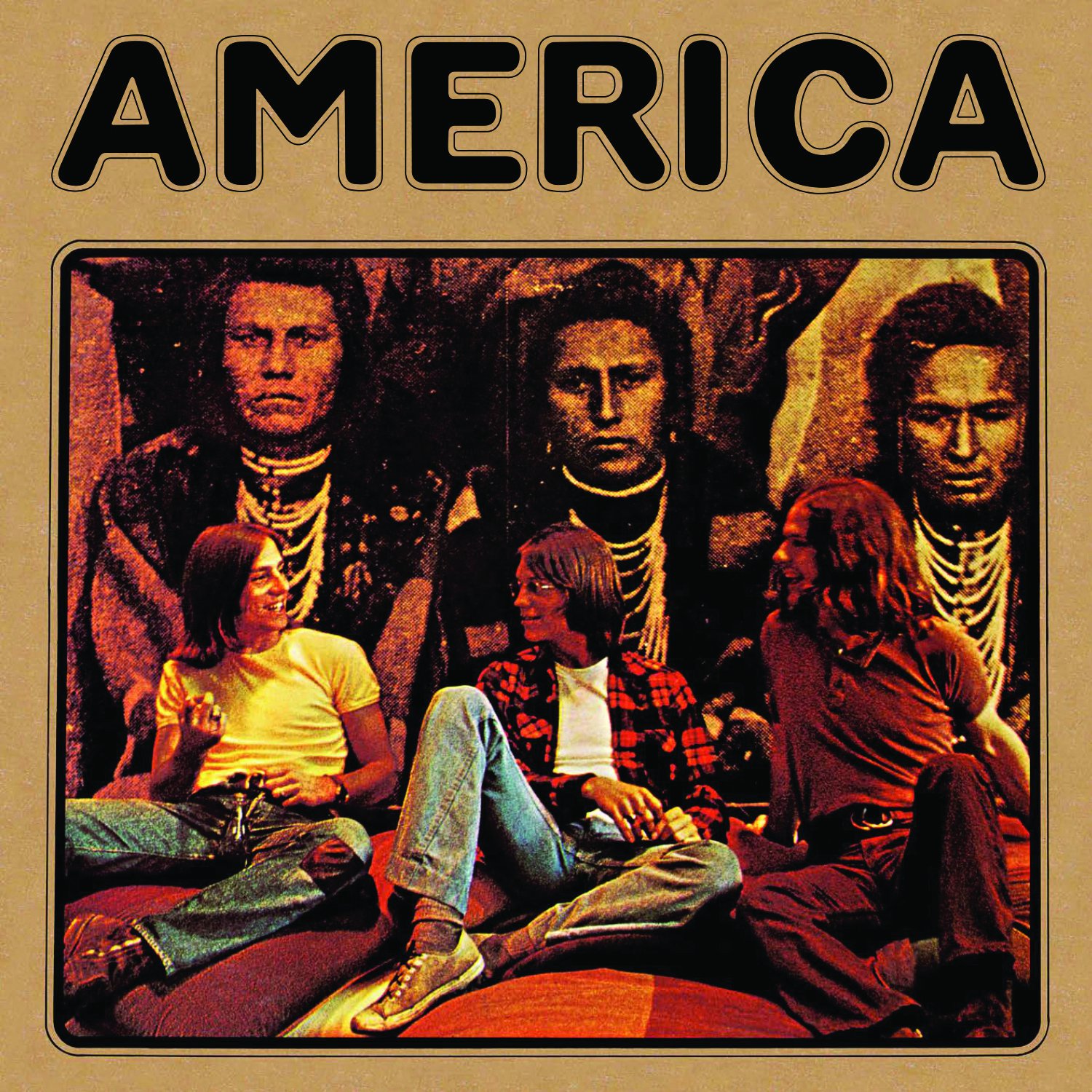
America’s debut draws much of its appeal from the natural fit between voices and acoustic guitars. The songs leave space without feeling empty. A guitar pattern can establish a setting on its own; when the harmony vocals arrive, the music opens rather than simply becoming louder. That balance makes the record inviting while preserving enough variety to keep it from settling into a single folk-pop formula.
Dewey Bunnell, Gerry Beckley and Dan Peek came together in England. Their debut was recorded in London in 1971, including work at Trident and Morgan. Ian Samwell produced, Jeff Dexter was involved as executive producer, and Ken Scott contributed engineering. The band’s name and the expansive imagery in some of its songs should not obscure the British studio surroundings in which this early music took shape.

The most famous song was not there at first
The history of “A Horse with No Name” changes the perspective on the LP. It was absent from the first album version, appearing initially as a single before its success led to inclusion on a reissued edition. The pressing offered here contains the song and therefore follows the expanded programme that many listeners now regard as the definitive album.
Its original working title was “Desert Song”, an apt description of its imagery. Musically, the economy is just as interesting. A recurring guitar movement and the vocal arrangement establish continuity without requiring constant harmonic surprises. Knowing the release history offers another way into the record: not as a collection built around its biggest hit, but as a self-contained debut that later acquired an additional centre of gravity.

Three writers, several perspectives
Gerry Beckley’s “I Need You” offers a different personality from Bunnell’s celebrated single. Piano and a more direct song shape shift the emphasis, while “Sandman” brings another kind of tension to the guitar music. These differences matter. America began as three musical personalities, not one singer surrounded by interchangeable accompanists. Their voices can blend without making every song speak in exactly the same way.
The instrumentation also extends beyond the familiar image of three acoustic guitarists. Six- and twelve-string guitars, piano, electric guitar, bass and percussion enlarge the palette. David Lindley contributes to the record, including steel guitar on “Rainy Day”. Details like these need not occupy the foreground to alter a song. A small additional colour can be the reason a passage remains in the memory after the first listen.
Carefully constructed ease
Long before these sessions, Ian Samwell had written Cliff Richard’s “Move It”. Ken Scott likewise brought experience reaching well beyond a new folk-rock group. The young trio was not working in isolation. Production serves the songs and voices without repeatedly drawing attention to the means used to present them.
In “Three Roses” or “Clarice”, try hearing the guitars as individual parts rather than as one continuous acoustic texture. Attacks, changing registers and the placement of voices keep the arrangements moving. That is a large part of the album’s lasting attraction. Its clear melodies offer an immediate welcome, but the accessible surface contains structure worth exploring. It is possible to disappear into the songs, then return and recognise how deliberately their apparently effortless world has been assembled.
More from the series: Acoustic Sounds 40th Anniversary Series
Also on SACD: America
More by America: Homecoming
Customer question: Buying Analogue Productions records in Europe
Series: Acoustic Sounds 40th Anniversary – all 25 albums, recommendations and musicians
Musicians
Personnel checked against album sources.
- Dewey BunnellLead vocals, Acoustic guitar, Backing vocals
- Gerry BeckleyLead vocals, Acoustic guitar, Electric guitar, Backing vocals, Piano, Bass
- Dan PeekLead vocals, Acoustic guitar, Electric guitar, Backing vocals, Piano, Bass
- Ray CooperPercussion
- Dave AtwoodDrums
- Kim HaworthDrums
- David LindleyElectric guitar, Guitar


How Michael hears this edition
Listening impression · paraphrased from the video
On A Horse With No Name, Michael hears much better vocals, resolution, dynamics and timing than on his second German pressing, making the song especially hypnotic. An early US pressing also falls behind for him. He prefers the first German pressing among the early editions, but it does not contain this song.
🎧 Review video: 4 New Analogue Productions Reissues: America, Benson & Bill Evans Shootout
This video is hosted by YouTube (Google). It only loads once you switch on “Functional” in the cookie settings.

Reviews
There are no reviews yet.