
A solo debut with a wide circle of players
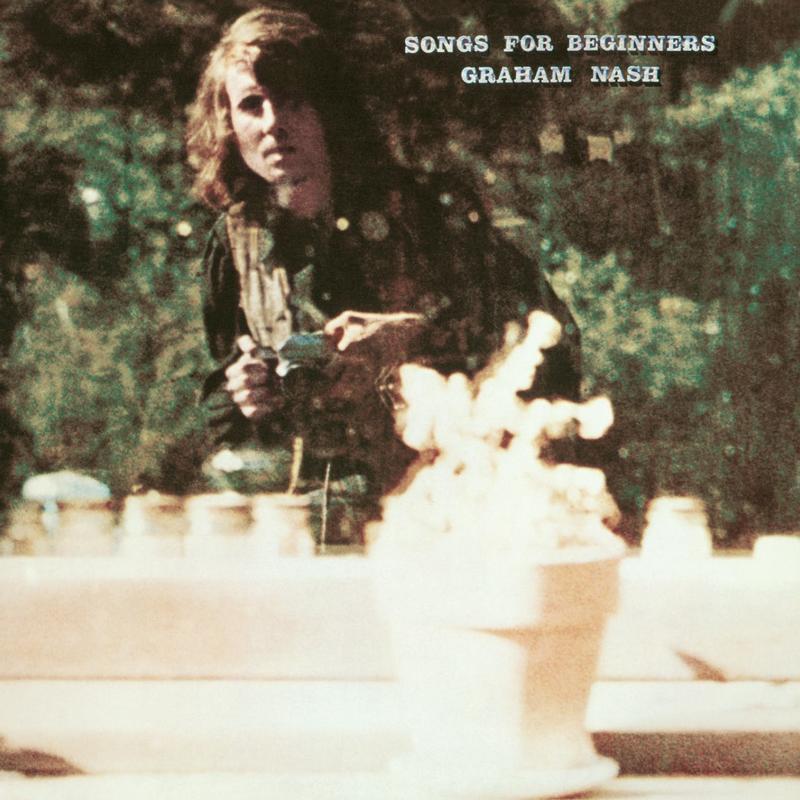
Graham Nash released Songs for Beginners in 1971 after his years with the Hollies and his work in Crosby, Stills, Nash & Young. He produced the album himself. Eleven selections bring personal writing and political engagement together, beginning with “Military Madness” and closing with “Chicago” followed by “We Can Change the World”.
Recorded during 1970 and 1971 at Wally Heider’s studios in Los Angeles and San Francisco, the album makes clear that a solo debut need not be solitary. Nash drew on musicians around him, changing the instrumental combinations from song to song. Those differences provide a reason to explore beyond the best-known selections.

The pianist called Joe Yankee
Neil Young contributes piano under the name “Joe Yankee”. David Crosby plays guitar and Jerry Garcia pedal steel. “I Used to Be a King” brings several of these connections together, with Phil Lesh also involved. Relationships between musical circles become part of the record without turning it into another CSNY group album.
Other credits lead in less obvious directions. Joel Bernstein, who supplied photographs, plays piano on “Military Madness”. David Lindley’s fiddle appears on “Simple Man”, and Rita Coolidge contributes keyboards and vocals. Listening for those changing accompaniments helps relate the personnel to the needs of each song rather than treating the credits as a celebrity list.

Personal circumstances and public concerns
The album followed Nash’s separation from Joni Mitchell. Alongside that personal background, “Chicago” addresses political events and the trial associated with the 1968 Democratic convention. Private experience and the possibility of collective action remain side by side throughout the programme.
Nash wrote “Be Yourself” with Terry Reid; the other songs are his own. The record can therefore be heard as a sequence of individual statements taking shape through different groups of collaborators. After “Chicago”, the brief “We Can Change the World” supplies a concluding thought without opening another extended song. The running order gives that short ending a specific purpose.
The 2001 remix on 45 RPM vinyl
Atlantic 75 edition AAPA 067-45 contains two 180-gram records playing at 45 RPM. It uses Glyn Johns’ 2001 remix, rather than the original 1971 mix. Bernie Grundman handled the mastering, and packaging is a Stoughton tip-on gatefold. The publisher’s analogue master-tape statement does not further identify the remix tape generation. For comparison with an original pressing, the different mix is the essential starting point.
Michael 45 keeps the goods in Germany and ships from Hilden, so buyers in Germany and throughout the EU can avoid arranging a personal US import or waiting for customs processing.
Also on SACD: Songs For Beginners
Artist page: The whole Crosby, Stills, Nash & Young family
Customer questions: Atlantic 75: which titles are worth buying? · Buying Analogue Productions records in Europe
Series: Atlantic 75 Series – all 75 albums, time journey and the people behind Atlantic
Musicians
Documented selection of participating musicians. Personnel may vary by track; this list does not claim to be complete.
| Name | Instrument / role |
|---|---|
| Graham Nash | Acoustic guitar, Tambourine, Vocals, Piano, Organ |
| Dave Mason | Electric guitar |
| David Crosby | Electric guitar |
| Jerry Garcia | Pedal steel guitar |
| Rita Coolidge | Backing vocals, Electric piano, Piano |
| Chris Ethridge | Electric bass |
| Calvin "Fuzzy" Samuel | Electric bass |
| Phil Lesh | Electric bass |
| John Barbata | Tambourine, Drums |
| Dallas Taylor | Drums |
| Dorian Rudnytsky | Cello |
| David Lindley | Fiddle |
| Bobby Keys | Saxophone |
| Simon Posthuma | Bass clarinet |
| P.P. Arnold | Backing vocals |
| Venetta Fields | Backing vocals |
| Sherlie Matthews | Backing vocals |
| Clydie King | Backing vocals |
| Dorothy Morrison | Backing vocals |

Reviews
There are no reviews yet.