A dictionary made from songs
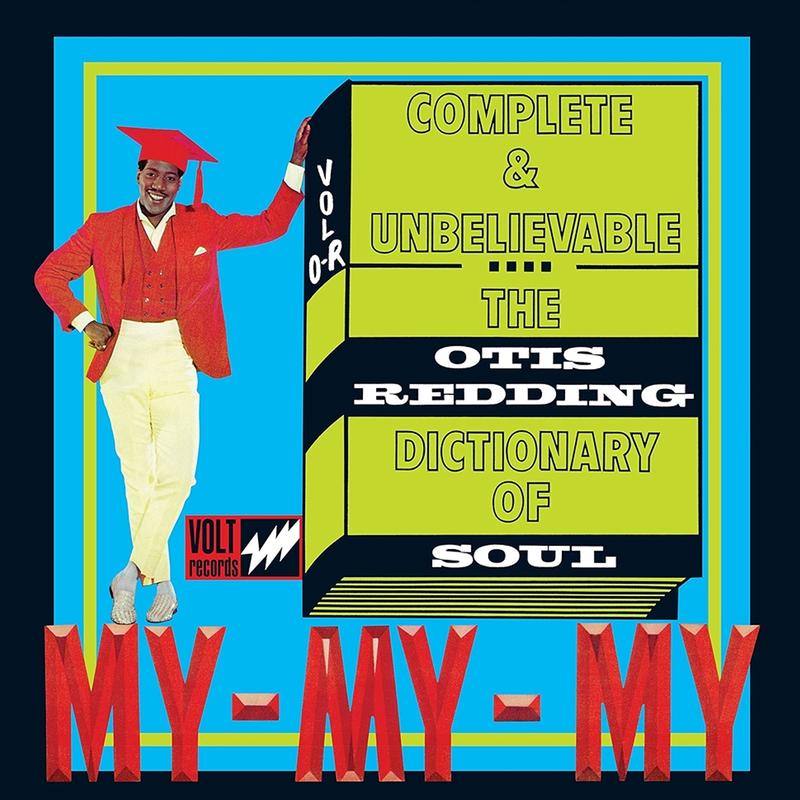
Complete & Unbelievable: The Otis Redding Dictionary of Soul has an unmistakably confident title. Its musical dictionary, however, consists of twelve songs rather than definitions. Country, older popular repertoire, a Beatles composition and originals sit alongside each other. Otis Redding approaches that material with an immediately identifiable singing personality. The album can be explored through familiar melodies and through the changes made to them: what happens when a song enters the collaboration between Redding and the musicians of the Stax studio? Each selection supplies a different answer, making the diversity of the repertoire part of the album’s central attraction rather than a distraction.
Released in 1966 on Volt, Stax’s sister label, it was Redding’s fifth studio album and the last solo studio album issued during his lifetime. Recording took place in Memphis, at the former Capitol Theatre on East McLemore Avenue, converted into the Stax studio. Jim Stewart supervised the production. The location connects the record with an entire musical community, but this particular album is also the result of specific choices about repertoire and arrangement. Its later reputation should not obscure how open those choices were. Songs from different generations are placed in a fresh relationship with the musicians performing them.

A song from 1932 becomes a centrepiece
“Try A Little Tenderness” was already decades old when Redding recorded it. Written by Harry Woods, Jimmy Campbell and Reg Connelly, it had previously belonged to the repertoire of singers including Bing Crosby and Frank Sinatra. Sam Cooke’s treatment provided an important reference point. Redding and Isaac Hayes developed a version of their own. The interest lies not only in recognising the melody, but in considering how an arrangement changes the course of a performance. Follow the relationship between voice, horn responses and rhythm section: an established song can acquire a different function through the way its musical progression is organised.
“Fa-Fa-Fa-Fa-Fa (Sad Song)”, written by Redding and Steve Cropper, offers another connection with the working life of the studio. The song relates to Redding’s habit of singing musical lines to the horn players. “Tennessee Waltz” introduces a country standard, while “Day Tripper” brings in a then-recent Beatles song. The range suggests that soul is not being treated as a closed category of origins. What matters is what the performers do with the material. The songs retain connections with their past while becoming part of a record whose continuity is established through the singer, the band and their particular interpretation.

The people behind the collective sound
The musical circle includes Booker T. Jones, Steve Cropper, Donald “Duck” Dunn and Al Jackson Jr., together with Isaac Hayes and horn players such as Wayne Jackson and Andrew Love. The credits distinguish documented participation from unresolved assignments on individual tracks. Not every instrument can be securely allocated to every song. Nor should the later name “Memphis Horns” be applied automatically to 1966: Jackson and Love established it subsequently for their own partnership. Identifying the musicians and their supported roles is more precise here than retrospectively placing every horn contribution beneath a later group name.
Alongside the familiar outside material are Redding originals including “My Lover’s Prayer”, “She Put The Hurt On Me” and “Ton Of Joy”. “Sweet Lorene” connects him as a writer with Hayes and Alvertis Isbell, later widely known as Al Bell. Hayes and David Porter wrote “Love Have Mercy”, which closes the record. The programme thus leads directly into the studio’s network of songwriters. Try following the change from a song drawn from elsewhere to one created within that circle. The album develops its understanding of soul by bringing these different beginnings into a shared musical sequence, without making their histories identical.
The Atlantic 75 edition
This release, AAPA 036-45, distributes the twelve tracks across two 180-gram LPs running at 45 RPM. Mastering and cutting are attributed to Bernie Grundman, with the publisher identifying the original master tape as the source. The edition is documented as stereo, while the original album also appeared in mono. Those formats should not be treated as interchangeable. The presence of a Volt album in the Atlantic 75 programme reflects the distribution and rights history of the Stax catalogue. Its original label remains Volt; the modern series does not retrospectively change the identity of the 1966 release.
The publisher specifies Quality Record Pressings and a Stoughton tip-on gatefold jacket. Initial numbered runs and subsequent pressings are distinct, without an individual number being promised for every copy. The song sequence is retained: on the second side, “Sweet Lorene”, “Try A Little Tenderness” and “Day Tripper” follow directly from one another. Each record side contains three selections. That specific organisation supplies the framework for exploring the programme’s different facets. This reissue does not expand the album with bonus material; it presents the original twelve songs in another physical format, preserving their order while introducing additional side changes. Michael 45 dispatches orders from Hilden, Germany, so you do not need to arrange your own US import. Please refer to the stated availability and delivery time for this item.
You order from Michael 45 in Germany. We arrange the US import and dispatch from Hilden.
Also on SACD: The Otis Redding Dictionary of Soul
More by Otis Redding: The Dock Of The Bay · Otis Blue- Otis Redding Sings Soul
Customer questions: Atlantic 75: which titles are worth buying? · Buying Analogue Productions records in Europe
Series: Atlantic 75 Series – all 75 albums, time journey and the people behind Atlantic
Musicians
Documented participants in this recording. Track references correspond to the tracklist.
- Otis ReddingvocalsParticipation: Album personnel
- Booker T. Joneskeyboards, organ, vibraphone (A3, D2), bass (A3, D2)Participation: Album personnel
- Isaac Hayeskeyboards, pianoParticipation: Album personnel
- Steve CropperguitarParticipation: Album personnel
- Donald „Duck“ DunnbassParticipation: Album personnel
- Al Jackson Jr.drumsParticipation: Album personnel
- Wayne JacksontrumpetParticipation: Album personnel
- Andrew Lovetenor saxophoneParticipation: Album personnel
- Floyd Newmanbaritone saxophoneParticipation: Album personnel
- David Porterbacking vocalsParticipation: A1
- Charles Axtontenor saxophoneParticipation: C1
- Gene Parkertenor saxophoneParticipation: C1
- Gene MillertrumpetParticipation: C1
- Sammy ColemantrumpetParticipation: C1


Album credits do not establish complete track assignments. Additional horns on C1 follow recording-specific credits. Gil Caple and Joe Arnold are excluded because the evidence conflicts.

Reviews
There are no reviews yet.