Boz Scaggs finds a different setting
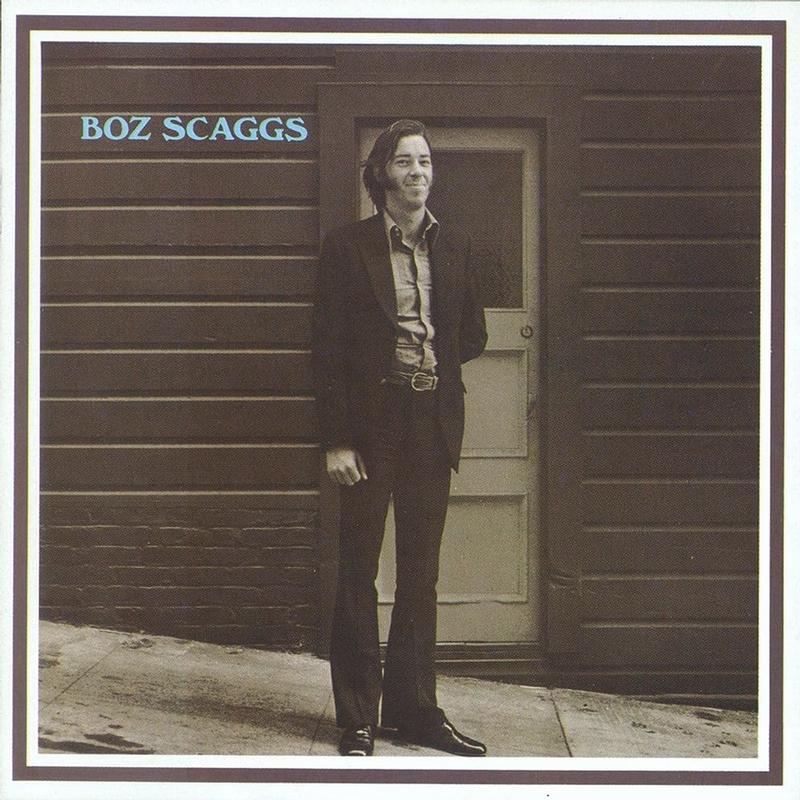
Boz Scaggs’s self-titled album leads to Alabama in 1969, to a newly opened studio populated by experienced musicians. Having played with the Steve Miller Band, Scaggs was searching for a different musical setting. Boz Scaggs is sometimes described as a debut, but it was already his second solo album. Original songs meet blues, country and soul without being sorted into separate compartments. The recording location and its participants provide the particular context. Listeners who principally associate Scaggs with the later Silk Degrees encounter another stage of his career, with different collaborators and a repertoire that travels through several American musical traditions.
Jann Wenner, co-founder of Rolling Stone and then Scaggs’s neighbour, supplied an important connection. He encouraged Scaggs to make demos and helped bring the material to Atlantic. The album was eventually recorded at Muscle Shoals Sound Studio on Jackson Highway in Sheffield. Barry Beckett, Roger Hawkins, Jimmy Johnson and David Hood had founded the studio in 1969 after working as the rhythm section at FAME. Scaggs was among the early artists at the new location. He, Wenner and Marlin Greene produced the record, with Greene also engineering. The project combined a fresh start with the experience of an established recording ensemble.

More than one famous guitar contribution
Duane Allman is among the recording’s best-known participants. He had worked in Muscle Shoals but had moved to Macon to develop his own band, returning temporarily for Scaggs’s sessions. His presence draws many listeners to the album, but should not obscure the other musicians. Hood’s bass, Hawkins’s drums and Beckett’s keyboards are as much part of the setting as Johnson’s and Eddie Hinton’s guitars. Horn players and backing singers further extend the ensemble. Some individual track assignments remain unresolved in the sources, and an album-wide credit is not used to invent a precise contribution to every selection.
“Loan Me A Dime” gives Allman considerable space and is the longest performance in the programme. The blues was written by Fenton Robinson, whose authorship was not correctly acknowledged on early releases. Scaggs recalled the song when studio time remained towards the end of the recording period. What began as an additional attempt became a central part of the album. There is more to follow here than the arrival of the guitar: how do voice, rhythm section and horns sustain the extended sequence? The development of a performance on this scale depends on the relationships between the players, rather than one isolated solo voice.

Country connections and a changed ending
“Waiting For A Train” leads back to Jimmie Rodgers and country music. Scaggs’s recollection of the session includes an unusual detail: fiddler Al Lester worked as a barber and contributed between appointments in his regular job. The episode suits an album whose personnel connections extend beyond a fixed touring band. Among the backing singers is Donna Thatcher, later known as Donna Jean Godchaux of the Grateful Dead. Such names are not invitations to hear entire later careers inside these performances. They show how many different paths crossed at this particular studio in 1969, contributing to an ensemble assembled for the recording.
This 45 RPM edition changes the original closing order. On the 1969 LP, “Sweet Release” followed “Loan Me A Dime”. Here, “Sweet Release” moves to the third side, while “Loan Me A Dime” occupies the fourth side by itself. The other songs, including “I’m Easy”, “I’ll Be Long Gone”, “Another Day (Another Letter)” and “Finding Her”, retain their places within the wider programme. The alteration matters to the listening sequence: the extended blues now becomes the album’s conclusion. These are the same nine selections, but their physical distribution and final adjacency are not identical to those of the original record.
The Atlantic 75 release and the unresolved mix
AAPA 070-45 identifies the Analogue Productions release on two 180-gram LPs running at 45 RPM. Kevin Gray at Cohearent Audio is documented as the mastering and cutting engineer, with corresponding inscriptions reported in the runouts. The publisher names the original master tape as the source. It does not, however, clearly identify which mix was used. That distinction matters because Tom Perry remixed the album in 1977, and that version subsequently appeared on several reissues. A mastering credit cannot resolve the mixing question by itself. Neither the 1969 original mix nor the later remix is therefore presented as the confirmed source of this LP.
The publisher specifies Quality Record Pressings and a Stoughton tip-on gatefold jacket made with textured stock. Initial numbered pressings and later batches must be distinguished; a number or a particular pressing plant for every subsequent copy remains unconfirmed without inspecting the item. The packaging belongs to this reissue, while the encounter at Muscle Shoals Sound Studio remains its musical centre. Allman’s contribution may be the point of discovery, but the album leads further into Scaggs’s songs, the experienced studio musicians and a repertoire that brings different American traditions into one recording project. Michael 45 dispatches orders from Hilden, Germany, so you do not need to arrange your own US import. Please refer to the stated availability and delivery time for this item.
You order from Michael 45 in Germany. We arrange the US import and dispatch from Hilden.
More from the series: Atlantic 75 Series
Also on SACD: Boz Scaggs
Customer questions: Atlantic 75: which titles are worth buying? · Buying Analogue Productions records in Europe
Series: Atlantic 75 Series – all 75 albums, time journey and the people behind Atlantic
Musicians
Documented participants in this recording. Track references correspond to the tracklist.
- Boz Scaggsvocals, guitarParticipation: Album personnel
- Duane Allmanguitar, Dobro, slide guitarParticipation: B2, B3, C1, D1
- Eddie HintonguitarParticipation: Track assignments unconfirmed
- Jimmy JohnsonguitarParticipation: D1
- David HoodbassParticipation: Track assignments unconfirmed
- Roger HawkinsdrumsParticipation: Track assignments unconfirmed
- Barry BeckettkeyboardsParticipation: D1
- Al Lesterfiddle, violinParticipation: C1
- Charles Chalmerstenor saxophoneParticipation: A1
- Floyd Newmanbaritone saxophoneParticipation: A1
- Ben CauleytrumpetParticipation: A1
- Joe Arnoldtenor saxophoneParticipation: A2, A3, B1, B2, B3
- James Mitchellbaritone saxophoneParticipation: A2, A3, B1, B2, B3
- Gene „Bowlegs“ Millertrumpet, tromboneParticipation: A2, A3, B1, B2, B3, C1, C2, D1
- Jeanie Greenebacking vocalsParticipation: A1, A2, A3, B2, B3, C1, C2, D1
- Mary Hollidaybacking vocalsParticipation: A1, A2, A3, B2, B3, C1, C2, D1
- Donna Thatcherbacking vocalsParticipation: A1, A2, A3, B2, B3, C1, C2, D1
- Joyce Dunnbacking vocalsParticipation: A2, B1
- Tracy Nelsonbacking vocalsParticipation: A2, B1
- Irma Routenbacking vocalsParticipation: A2, B1


Track references describe documented participation, not necessarily every appearance. Duane Allman: four tracks; Al Lester: C1. Other instrumental and backing-vocal assignments are partly disputed.

Reviews
There are no reviews yet.