Eight musicians and the blues
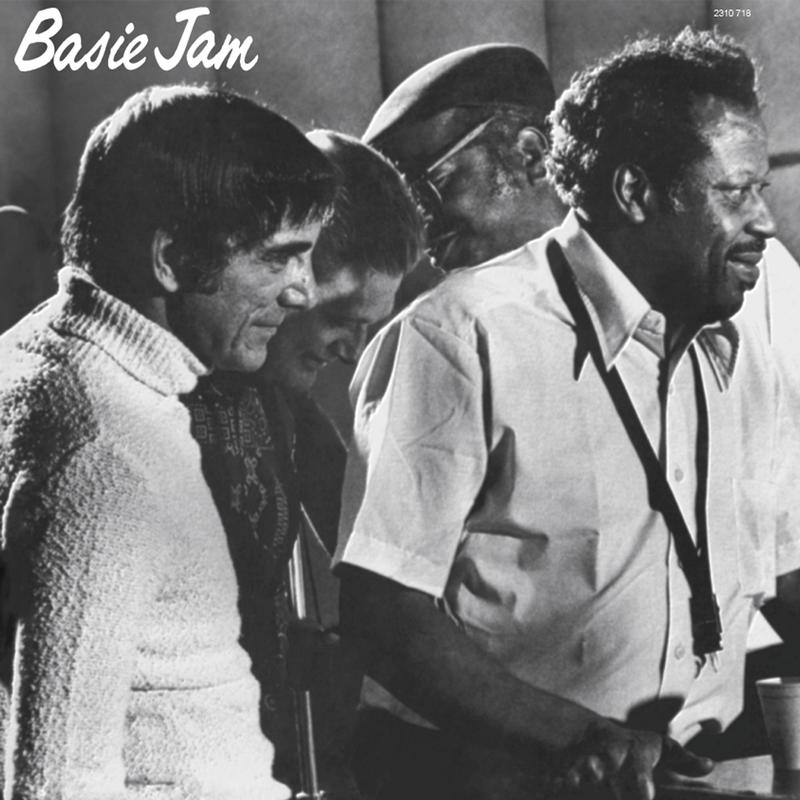
Los Angeles, December 10, 1973. Count Basie brings seven fellow musicians together for the session later released by Pablo as Basie Jam. Five pieces, all composed by Basie, form the programme, with the blues as their shared point of reference. The title already suggests the attraction: time for soloists, room for responses and a cast whose names carry a wealth of jazz history.
Basie plays both piano and organ. Joining him are Harry “Sweets” Edison, J. J. Johnson, Eddie “Lockjaw” Davis and Zoot Sims, with Irving Ashby, Ray Brown and Louie Bellson completing the octet. Norman Granz produces. The lineup shows why the smaller ensembles in the Pablo catalogue can be so rewarding to explore: individual musicians have space to bring their own voices forward.

Familiar names in direct exchange
Trumpet, trombone and two tenor saxophones form the horn section. Guitar, bass, drums and Basie’s keyboards support them. That arrangement offers several ways to change listening perspective. How does the rhythm section respond to a soloist? What changes when trumpet or trombone follows a tenor? The personnel itself provides a small guide through the album.
Irving Ashby’s guitar deserves as much attention as the celebrated horns. Alongside Ray Brown and Louie Bellson, it belongs to the foundation of this session. The pleasure of a record like this often grows with familiarity: first a solo catches the ear, then a later play reveals what the other musicians contribute beneath it. Basie’s use of piano and organ adds another colour to that experience.

Five pieces with room to play
“Doubling Blues”, “Hanging Out” and “Red Bank Blues” occupy the first side. “One-Nighter” and “Freeport Blues” make up the second. The small number of pieces allows longer performances to unfold. According to the publisher, Basie plays organ on “Doubling Blues” and “One-Nighter”, offering a concrete starting point for following his different keyboards within the same record.
The 1973 session was released as Basie Jam in 1975. It represents the pleasure of a shared musical language with plenty of room for individual routes through it. For listeners who enjoy following the names on a sleeve, these eight musicians offer good reasons to turn the record over and start again.
Doug Sax and the Pablo edition
Analogue Productions catalogue AAPJ 155 presents the album on one 180-gram LP at 33⅓ RPM. The publisher credits Doug Sax at The Mastering Lab with mastering from the original analogue master tape. This release uses the matrices of the earlier 1995 Analogue Productions edition; the credit does not describe a newly made 2024 cut.
The current pressing comes from Quality Record Pressings, with a Stoughton Printing tip-on gatefold jacket. Documented mastering history and careful present-day manufacturing give the edition a clear identity. At its centre remains the meeting itself: Basie and seven musicians taking time to give the blues their individual voices.
You order from Michael 45 in Germany. We arrange the US import and dispatch from Hilden.
More by Count Basie: Farmer’s Market Barbecue · Me And You
Customer question: Buying Analogue Productions records in Europe
Series: Pablo – all 30 records, musicians and the session book
Musicians
Participants and documented credit status. Track references correspond to the tracklist.
- Count Basiepiano, organParticipation: Album personnel
- Harry “Sweets” EdisontrumpetParticipation: Album personnel
- J. J. JohnsontromboneParticipation: Album personnel
- Eddie “Lockjaw” Davistenor saxophoneParticipation: Album personnel
- Zoot Simstenor saxophoneParticipation: Album personnel
- Irving AshbyguitarParticipation: Album personnel
- Ray BrownbassParticipation: Album personnel
- Louie BellsondrumsParticipation: Album personnel


Count Basie (piano, organ), Harry “Sweets” Edison (trumpet), J. J. Johnson (trombone), Eddie “Lockjaw” Davis (tenor saxophone), Zoot Sims (tenor saxophone), Irving Ashby (guitar), Ray Brown (bass), Louie Bellson (drums) — an octet, on all five tracks. All compositions by Count Basie. Recorded December 10, 1973, in Los Angeles. Producer: Norman Granz. Photography: Phil Stern. This edition: mastered by Doug Sax at The Mastering Lab (per the publisher; pressed from the matrices of the 1995 Analogue Productions edition, which also credits Gavin Lurssen and Ron Lewter), pressed at Quality Record Pressings, gatefold jacket by Stoughton Printing. Studio and recording engineer are not documented.

Reviews
There are no reviews yet.