A fifth voice joins the conversation
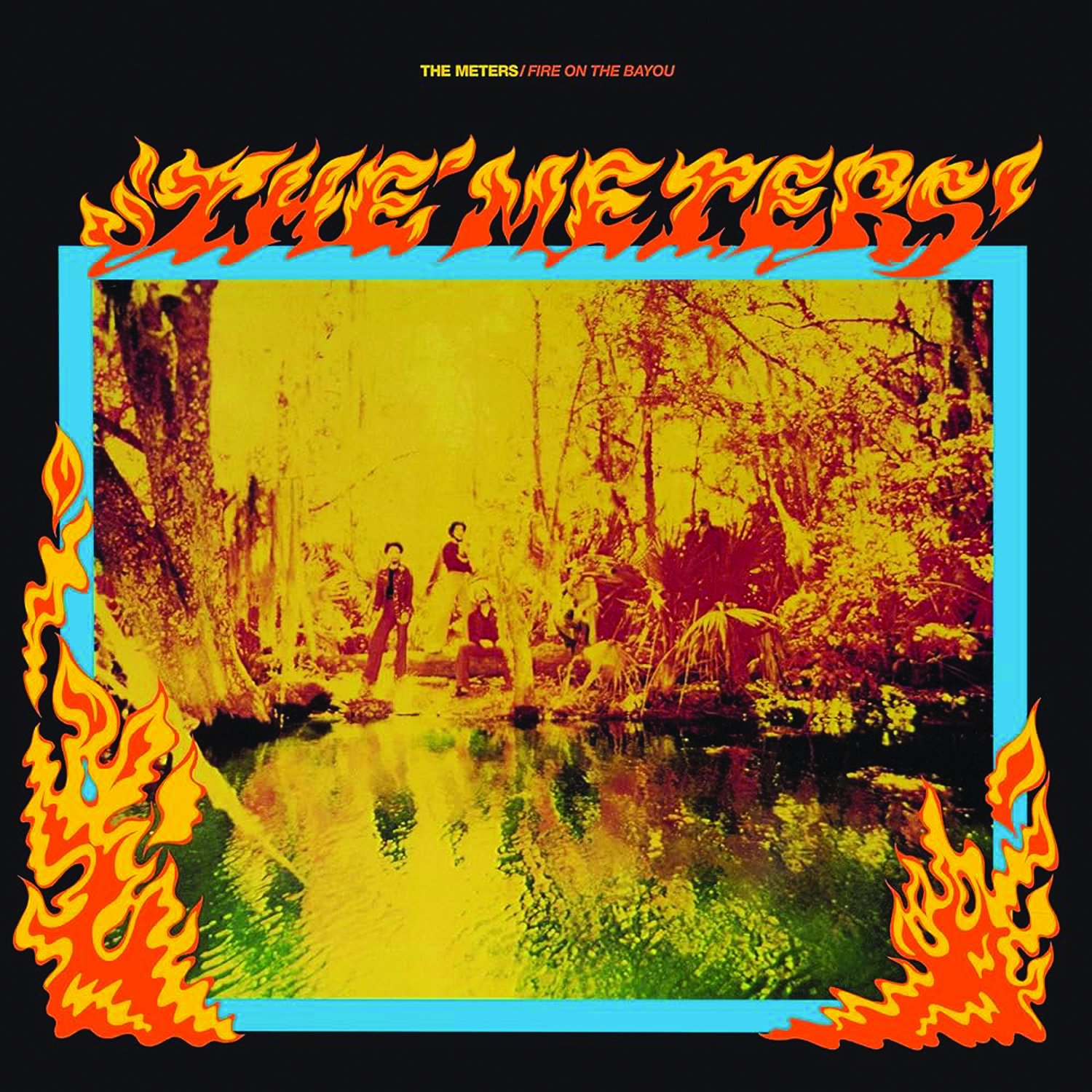
Fire on the Bayou marks a significant change in the Meters’ line-up. On this 1975 album, Cyril Neville appears as a band member for the first time. His congas, percussion and vocals join Art Neville, Leo Nocentelli, George Porter Jr. and Zigaboo Modeliste. In such a closely interlocking group, an additional instrument also creates new relationships between the existing players.
The band’s sixth studio album was again recorded at Sea-Saint Studios in New Orleans. Allen Toussaint and the Meters are credited as producers, with Roberta Grace and Ken Laxton engineering. Wardell Quezergue supplied horn arrangements. The setting remained familiar while the band expanded its personnel and musical resources. That same year, the Meters opened for the Rolling Stones on their American tour.

The city within the programme
“Talkin’ ’Bout New Orleans”, “They All Ask’d for You” and “Mardi Gras Mambo” make the connection to the city explicit. They sit alongside songs including “Out in the Country” and “You’re a Friend of Mine”. Across eleven tracks, the album moves between different forms and starting points rather than presenting one uninterrupted extended performance.
Two compositions come from outside the band: Russ Ballard wrote “Liar”, while “Mardi Gras Mambo” is credited to Frankie Adams, Lou Welsch and Ken Elliot. Their inclusion invites attention to what the Meters bring to material from different sources. A song’s place on a record depends not only on where it originated, but also on the shared language of the musicians interpreting it.

New parts in a familiar framework
Cyril Neville also shares the writing credits on “Fire on the Bayou” and “Talkin’ ’Bout New Orleans”. His arrival therefore extends beyond the addition of congas to the instrumentation. He becomes part of the songwriting process itself. One rewarding listening approach is to follow how percussion and drum kit divide their roles within the same rhythmic framework.
At nearly eight minutes, “Middle of the Road” is the longest piece. It opens the fourth side of this 45-RPM edition, followed by the brief “Running Fast” and then “Mardi Gras Mambo”. That movement from an extended form to shorter pieces is part of the album’s construction. Heard alongside Rejuvenation, the record offers a way to follow the group’s expansion while keeping the interaction of its players in focus.
This edition
Analogue Productions’ AAPR 018-45 is part of the Acoustic Sounds 40 Series: two 180-gram LPs at 45 RPM, pressed at QRP and packaged in a Stoughton tip-on gatefold. The programme contains the original album’s eleven tracks, without later CD bonus material. The publisher identifies the original analogue master tape as the source. A title-specific mastering engineer and the complete transfer chain are not documented, so an all-analogue manufacturing claim is not established by the available information.
Also on SACD: Fire On The Bayou
Customer question: Buying Analogue Productions records in Europe
Series: Acoustic Sounds 40th Anniversary – all 25 albums, recommendations and musicians
Musicians
Documented selection of participating musicians. Personnel may vary by track; this list does not claim to be complete.
| Name | Instrument / role |
|---|---|
| George Porter Jr. | Backing vocals, Electric bass |
| Leo Nocentelli | Backing vocals, Guitar |
| Art Neville | Keyboards, Vocals |
| Cyril Neville | Percussion, Vocals, Congas |

Reviews
There are no reviews yet.