Finding a new step in life and music
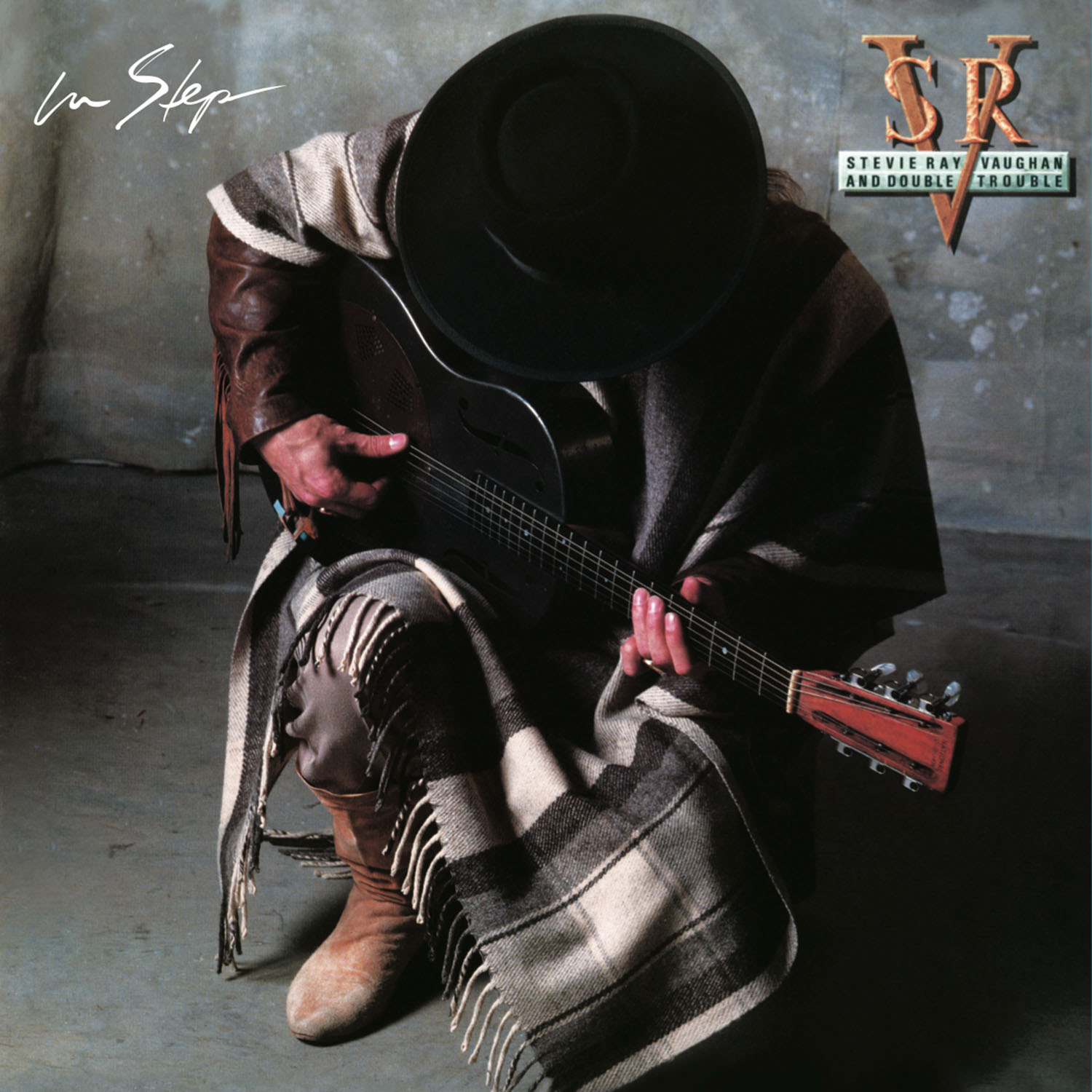
In Step appeared in June 1989 as the fourth and final studio album by Stevie Ray Vaughan and Double Trouble. Between this record and the early breakthrough lay a personal change that also left its mark on the songs. Following a serious health crisis in 1986, Vaughan had entered treatment for addiction. He explained the album title in terms of feeling aligned again with his life, himself and his music. That background is useful without requiring every guitar solo to become a biographical statement, or every musical decision to be explained through events outside the recording.
The sessions took place from late January to mid-March 1989 at Kiva Studios in Memphis and at studios in Los Angeles. Jim Gaines produced with Vaughan and Double Trouble. Richard Mullen, already associated with the band, is among the documented engineers, while Gaines and Dave McNair worked on the mixing. The available information does not assign every song securely to one studio. The established framework nevertheless identifies the record as a developed studio project from this particular phase of the band, rather than a continuation of the circumstances in which the debut had been made.
Double Trouble now comprised Tommy Shannon on bass, Chris Layton on drums and Reese Wynans on keyboards, alongside Vaughan on guitar and vocals. Compared with the trio recording Texas Flood, another musician therefore occupies a central place in the group. Wynans is not an incidental guest but a member of the regular line-up. Following the way guitar and keyboards share space provides one rewarding route through the album. The additional voice expands the possibilities of the arrangements without requiring Vaughan to withdraw from the centre of the musical conversation.
In 1990, In Step received the Grammy in the category then called Best Contemporary Blues Recording. That recognition belongs to its release history, but it need not serve as the sole explanation of the record’s significance. The programme brings together original songs, collaborations with Doyle Bramhall, writing from within the band and material by other blues composers. In retrospect it also became the final studio album by this line-up with Vaughan. It is worth resisting the temptation to place that later knowledge over every moment: in 1989, these musicians were working towards a newly regained present.

Double Trouble beyond the idea of a backing band
Tommy Shannon and Chris Layton provide the rhythmic foundation. Their work becomes easier to follow when the guitar is not treated as the only point of reference. How does the band receive a short vocal line? What maintains the movement while Vaughan extends a phrase? Where do the musicians place a shared accent? These questions offer a more precise picture than the familiar formula of a great guitarist and his backing band. On In Step, Double Trouble also contribute to the creation of the material, rather than simply performing songs supplied entirely by someone else.
“Crossfire” makes that especially clear. Its writing credits name Shannon, Layton and Wynans together with Bill Carter and Ruth Ellsworth. It became Vaughan’s only number-one song on the American Mainstream Rock chart. Behind that success stands a band contribution whose history should not be reduced to one guitar performance. The recording also offers a useful opportunity to follow the relationship between the rhythm section, keyboards and additional horns. It is a shared arrangement, with distinct parts that contribute to the identity of the song and to its place within the programme.
Joe Sublett on saxophone and Darrell Leonard on trumpet appear as the Texacali Horns on “Crossfire” and “Love Me Darlin’”. Their involvement is specific to those tracks and should not be extended across the entire record. Elsewhere, the quartet remains the central line-up. The sources consulted do not consistently break down Reese Wynans’s keyboard work by individual track and instrument. The credits therefore retain his documented role without converting a general keyboard credit into an unsupported inventory of particular organ or piano models supposedly used at each session.
Doyle Bramhall belongs to the songwriting side of the album. With Vaughan he wrote “The House Is Rockin’”, “Tightrope”, “Wall of Denial” and “Scratch-N-Sniff”. A writing credit is not the same as a documented instrumental contribution to the recording. That distinction matters because his close association with Vaughan could otherwise encourage an unverified addition to the performing line-up. It does not diminish his importance. Bramhall was among the people with whom Vaughan turned experience into songs and found a more direct language for the circumstances of this new period.

From the opening invitation to Riviera Paradise
“The House Is Rockin’” opens the programme, followed by “Crossfire” and “Tightrope”. The sequence already presents different aspects of the record: an outward-facing invitation, a song emerging from the band and a collaboration with Bramhall concerned with finding a way forward. “Tightrope” and “Wall of Denial” can be read more closely against the background of Vaughan’s change in life. Their effectiveness need not depend on knowing that history, however. The words themselves point towards uncertainty, self-examination and the continuing work involved in moving beyond a previous way of living.
The AP edition’s second side combines “Let Me Love You Baby”, Buddy Guy’s “Leave My Girl Alone” and the instrumental “Travis Walk”. “Let Me Love You Baby” is attributed here to its documented songwriter, Willie Dixon; an additional Vaughan credit in one edition listing is retained as a source discrepancy. By including these songs, In Step places itself consciously within a wider blues history. Vaughan’s own work does not stand outside that tradition. It shares the programme with compositions he approaches as an interpreter, making the relationship between writing and performance part of the album’s character.
“Wall of Denial”, “Scratch-N-Sniff” and Chester Burnett’s “Love Me Darlin’” occupy the third side. The horns return on the last of those songs. Following that return within the complete album can be rewarding: how does the addition of saxophone and trumpet alter the arrangement, and how does the quartet retain its own rhythmic identity? “Crossfire” offers a second specific point of comparison. This directs attention towards documented differences between the performances rather than asking a generalised description of a pressing’s sound to explain every musical detail on the record.
“Riviera Paradise” receives the fourth side to itself. The instrumental, almost nine minutes long, changes the album’s proportions at its conclusion. Without a vocal, the guitar can carry an extended melodic development while the other musicians help shape its course. Rather than anticipating another verse, the listener can follow the length of a phrase and the response that follows it. Giving the piece an entire side underlines its distinct place in the programme. It is a conclusion with room of its own, rather than one more short song appended to the preceding sequence.
The Texas Hurricane 45 RPM edition
This release is Analogue Productions AAPB 099-45, two LPs running at 45 RPM. The 45 RPM version belongs to the Texas Hurricane reissue programme and was subsequently made available separately. Ryan K. Smith cut it at Sterling Sound, from the original analogue tape according to the publisher, using a Neumann VMS 80. Gary Salstrom is credited for plating and Quality Record Pressings for manufacture. These are the credits of the reissue and should be distinguished from the production and mastering information attached to the original album.
The four-side arrangement gives each of the three shorter song groups and the extended finale its own section. Listeners who prefer an original album side without interruption should take the additional changes into account. Those who enjoy deliberately choosing individual sections may find a particular attraction in the separate “Riviera Paradise” side. Choosing 45 RPM therefore also means choosing a way of moving through the programme. It should not depend solely on the assumption that a higher rotational speed guarantees better reproduction independently of the actual mastering and pressing under consideration.
The documented 2017 standalone release specifies 200 grams, while the publisher and current product information state 180 grams. The stock batch has not been physically inspected here. A Stoughton tip-on gatefold jacket forms part of this edition’s presentation. Its precise identity, complete ten-track programme and traceable mastering credits provide a useful foundation for collectors. Musically, In Step remains a portrait of a band whose members, collaborators and guests were working together towards a new phase. The later tragedy in Vaughan’s life is well known; this record preserves the work that came before it.
You order from Michael 45 in Germany. We arrange the US import and ship from Hilden.
More by Stevie Ray Vaughan: Soul To Soul · Couldn’t Stand The Weather
Customer question: Buying Analogue Productions records in Europe
Musicians
Participants and documented credit status. Track references correspond to the tracklist.
- Stevie Ray Vaughanguitar, vocalsParticipation: Album personnel
- Tommy Shannonelectric bassParticipation: Album personnel
- Chris LaytondrumsParticipation: Album personnel
- Reese WynanskeyboardsParticipation: Album personnel
- Joe SublettsaxophoneParticipation: A2, C3
- Darrell LeonardtrumpetParticipation: A2, C3


Recorded 25 January–13 March 1989 at Kiva Studios, Memphis, and Sound Castle and Summa Studios, Los Angeles; track-specific studio assignments unconfirmed. Produced by Jim Gaines with Stevie Ray Vaughan & Double Trouble; engineers include Jim Gaines and Richard Mullen; mixed by Dave McNair and Jim Gaines. Texacali Horns on A2/C3 only. Doyle Bramhall: co-writer, no verified instrumental credit. AP: Ryan K. Smith, Sterling Sound; Gary Salstrom, plating; Quality Record Pressings.

Reviews
There are no reviews yet.