


A band from 1956, an album from 1961
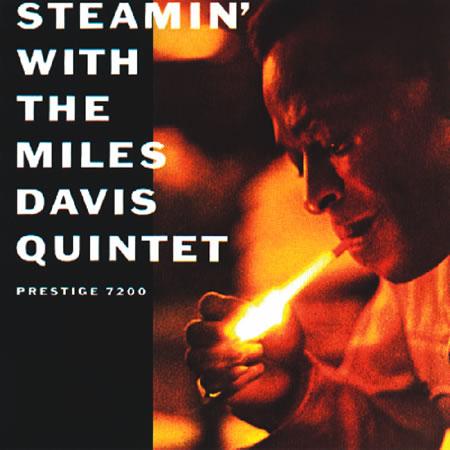
Steamin’ With The Miles Davis Quintet carries the energy of an established working band, together with an unusual shift in time. The music was recorded in 1956, but Prestige did not release the album until 1961, as PRLP 7200. Reading a release year in a discography therefore does not necessarily mean encountering the Miles Davis of that year. Here Davis, John Coltrane, Red Garland, Paul Chambers and Philly Joe Jones share the studio: the first great quintet whose Prestige recordings offer such a direct route into its working repertoire.
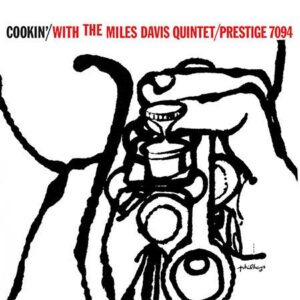
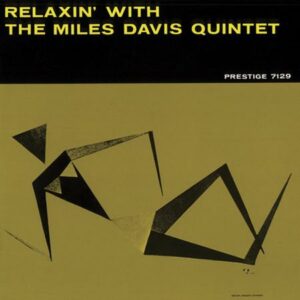
Rudy Van Gelder recorded the musicians in Hackensack, with Bob Weinstock supervising for Prestige. Two extensive dates, May 11 and October 26, 1956, supplied material for Cookin’, Relaxin’, Workin’ and Steamin’. These albums belong together without being interchangeable chapters. Their programmes establish different priorities. Five of the six selections on Steamin’ come from the May date; only Well, You Needn’t was recorded on October 26. The shared history of the four records should consequently not replace the individual session information for any one of them.
The interval between recording and release is particularly interesting for collectors. By 1961 Davis had explored other line-ups and musical settings. Prestige was presenting an earlier stage in his band’s history, but one that need not be heard merely as preparation for later achievements. The quintet has a language of its own, and this programme tests it against six compositions by other writers. Broadway melodies, ballads and modern jazz pieces become material for a shared method of working.
Nor should the title be understood as a continuous instruction to play at speed. Steamin’ also includes two quartet ballads without Coltrane. Changing the personnel and the density of the music is part of the record’s identity. Davis does not need the entire quintet to appear at every moment in order to introduce his band. The quieter passages can instead sharpen our awareness of what each participant contributes to the larger musical relationship.

Miles Davis and Paul Chambers: a line above the foundation
The first side opens with The Surrey With The Fringe On Top, the melody by Richard Rodgers and Oscar Hammerstein II. A theatre song becomes the shared starting point for a jazz quintet. The interesting question is not simply whether the musicians move away from the original, but how much of its melodic shape remains active in their playing. Davis and Coltrane can follow different paths while referring to the same form. Garland’s piano, Chambers’ bass and Jones’ drums keep that relationship flexible.
Chambers deserves attention in his own right. His double bass is more than an underlying support noticed only when it disappears. It connects harmonic stations and gives direction to the passage of time. Following the bass line for one complete hearing changes the perspective on the solos: they become responses to musical movement already in progress. This matters particularly in a group whose rhythm section does not merely follow the front line. Garland, Chambers and Jones shape the setting in which a trumpet phrase can feel concise or a tenor contribution more pressing.
Dizzy Gillespie and Kenny Clarke’s Salt Peanuts changes the language of the source material. The piece belongs to bebop history and brings rhythmic definition into the foreground. Rather than concentrating on speed alone, listen for the agreements between the theme, accompaniment and solo entrances. Where is an accent shared, and where does a player move the emphasis? Such small responses help make a familiar composition the statement of this particular group at this particular stage of its life.
Something I Dreamed Last Night closes side A with a different kind of concentration. Coltrane sits out, leaving Davis with Garland, Chambers and Jones. The Harmon-muted trumpet and piano do not have to share their space with a second horn. Reducing the ensemble changes the balance between its voices without making the accompanying musicians less significant. The ballad belongs to the album’s substance; it is not simply a recovery interval between supposedly more important fast numbers.

Three further perspectives on the same group
Side B begins with Diane, before Thelonious Monk’s Well, You Needn’t establishes a markedly different compositional reference. Bringing contrasting material into proximity is one of the pleasures of this repertoire. The band can connect a popular song and a Monk composition through its common language without flattening their individual identities. A rewarding listening approach follows not only the soloists, but also the weight Garland gives harmonic events and the way Jones prepares transitions.
Well, You Needn’t is also the only October performance on the album. The other five selections belong to May 11, 1956. An album’s musical coherence should therefore not automatically be equated with a single recording day. It can emerge from shared personnel, a developed repertoire and thoughtful selection. Session dates provide a historical framework; they do not substitute for the musical relationships that can develop between tracks as the record unfolds.
When I Fall In Love ends the programme in quartet formation once more. As on Something I Dreamed Last Night, Coltrane does not participate. The two ballads are not identical resting places, but they establish an audible parallel in personnel across the two sides. Try following Davis’s phrases through their spacing as well as their notes. What happens at the piano when the trumpet falls silent? How does the pulse remain mobile without crowding the melody? These questions lead directly into the ensemble’s working relationship.
Within a collection, Steamin’ can be heard independently or alongside its three companion albums. Comparison need not become a contest to select the single “best” record. It can reveal how the same musicians develop different conversations from different songs. There is no Davis composition in this programme. His identity emerges through selection, instrumentation and the way his band collectively inhabits material written by others. Familiarity with a melody becomes the basis for invention rather than an obstacle to it.
The Analogue Productions LP and its pressing history
APRJ 7200 is the Analogue Productions mono LP in the Prestige Mono Series. It plays at 33⅓ RPM and is manufactured at Quality Record Pressings. Kevin Gray at Cohearent Audio is credited with the series’ mastering from the original mono master tapes, with Gary Salstrom credited for plating. The current product specification lists 180-gram vinyl. Earlier AP pressings were offered at 200 grams, including the documented 2014 edition. The numbering of an initial run is not a universal characteristic of copies supplied today.
A 2022 repress deserves an additional qualification: Momchil Zanev is also documented as the lacquer-cutting engineer for side A. It would therefore be imprecise to describe every later physical copy, regardless of its matrix information, as cut exclusively by Kevin Gray. The mastering concept of the AP series and the cutting history of a particular pressing are related, but they are not necessarily identical. The current stock batch has not been identified here through examination of its runout inscriptions.
The single 33⅓ RPM LP preserves two sides of three selections each. Both ballads remain at their respective side endings, allowing the side change to play a useful role in the programme’s structure. Mono brings the ensemble together within one image; that does not constitute a promise about its effect on every playback system. The musical substance lies in the relationships between five strong personalities, and in those moments when four of them are enough to fill the space of an entire song.
You order from Michael 45 in Germany. We arrange the US import and dispatch from Hilden.
In the magazine: Miles Davis: A History in Records
More by Miles Davis: Kind of Blue · Birth Of The Blue
Artist page: All titles by Miles Davis
Customer question: Buying Analogue Productions records in Europe
Series: Analogue Productions Prestige – all 50 records, musicians and session paths
Musicians
Participants and documented credit status. Track references correspond to the tracklist.
- Miles DavisPortrait: 1950strumpetParticipation: All tracks
- John ColtranePortrait: 1950stenor saxophoneParticipation: All except A3, B3
- Red GarlandPortrait: 1950spianoParticipation: All tracks
- Paul ChambersPortrait: 1958double bassParticipation: All tracks
- Philly Joe JonesPortrait: 1962drumsParticipation: All tracks


B2: October 26, 1956; all other tracks: May 11, 1956. John Coltrane is absent on A3 and B3. Timings are indicative album-discography values.

Reviews
There are no reviews yet.