
The rhythm section comes into focus
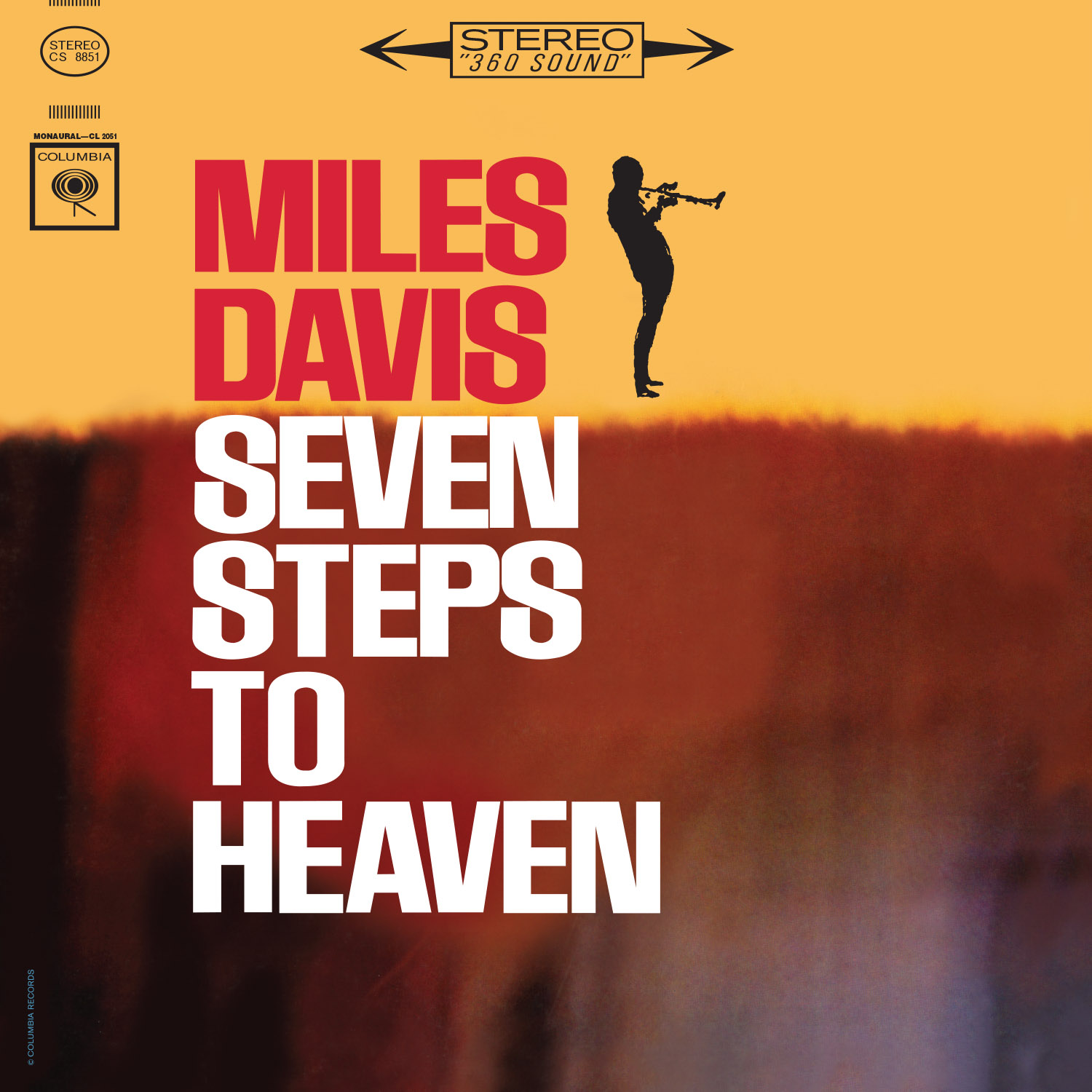
Herbie Hancock, Ron Carter and Tony Williams: Seven Steps to Heaven brings together three musicians in 1963 whose continuing partnership would become central to Miles Davis’ work. Williams was only 17 at the New York session on 14 May. With George Coleman on tenor saxophone, Davis was assembling a new musical combination.
The title track, “So Near, So Far” and “Joshua” come from that session. They account for only half the album, however. The other three selections were recorded in Los Angeles during April, with Victor Feldman on piano, Frank Butler on drums and Carter again on bass. The finished record preserves both sides of a personnel transition.

The Los Angeles selections
“Basin Street Blues”, “I Fall in Love Too Easily” and “Baby Won’t You Please Come Home” are the Los Angeles performances chosen for the original LP. The running order alternates between recording locations, so the change cannot be understood simply as one side followed by another. Older song material and the New York selections are woven together.
The April sessions also produced versions of music subsequently recorded in New York for the album. Those earlier performances appeared in later release contexts. The original six tracks are therefore a selection from a larger body of work, rather than a complete session diary. Knowing that distinction helps explain how an album can document a change while leaving many intermediate steps outside its programme.

New pianist, continuing compositions
Feldman wrote “Joshua” and co-wrote “Seven Steps to Heaven” with Davis. Although he declined the permanent touring role, his pieces remained part of the project. Hancock plays them on the released New York performances. A change of personnel and continuity of repertoire happen at the same time.
Listen for a while to Hancock, Carter and Williams together before returning your attention to the trumpet. How do they approach an entrance or accompany an extended phrase? These performances let you follow the emerging core of a celebrated group. It is not yet the complete quintet with Wayne Shorter, who joined in 1964. Coleman belongs to this particular stage in 1963, and his presence is part of the album’s identity.
George Marino’s 45 RPM edition
Analogue Productions AAPJ 8851-45 contains two 180-gram records playing at 45 RPM. George Marino at Sterling Sound is credited with the mastering. The publisher does not specify a tape source for this edition. Ryan K. Smith’s mastering and the source statement attached to the separate 33⅓ RPM single LP are not transferred to this release.
Michael 45 keeps the goods in Germany and ships from Hilden, enabling customers in Germany and throughout the EU to avoid a personal US import and the wait for customs clearance.
In the magazine: Miles Davis: A History in Records
Also in another edition: Seven Steps to Heaven
More by Miles Davis: Someday My Prince Will Come · Bags Groove
Artist page: All titles by Miles Davis
Customer question: Buying Analogue Productions records in Europe
Musicians
Documented selection of participating musicians. Personnel may vary by track; this list does not claim to be complete.
| Name | Instrument / role |
|---|---|
| Miles Davis | Trumpet |
| George Coleman | Tenor saxophone |
| Victor Feldman | Piano |
| Ron Carter | Bass |
| Frank Butler | Drums |
| Herbie Hancock | Piano |
| Tony Williams | Drums |
Two sessions with different pianists and drummers. George Coleman’s participation is not established for every track.



Reviews
There are no reviews yet.