A groove with more moving parts
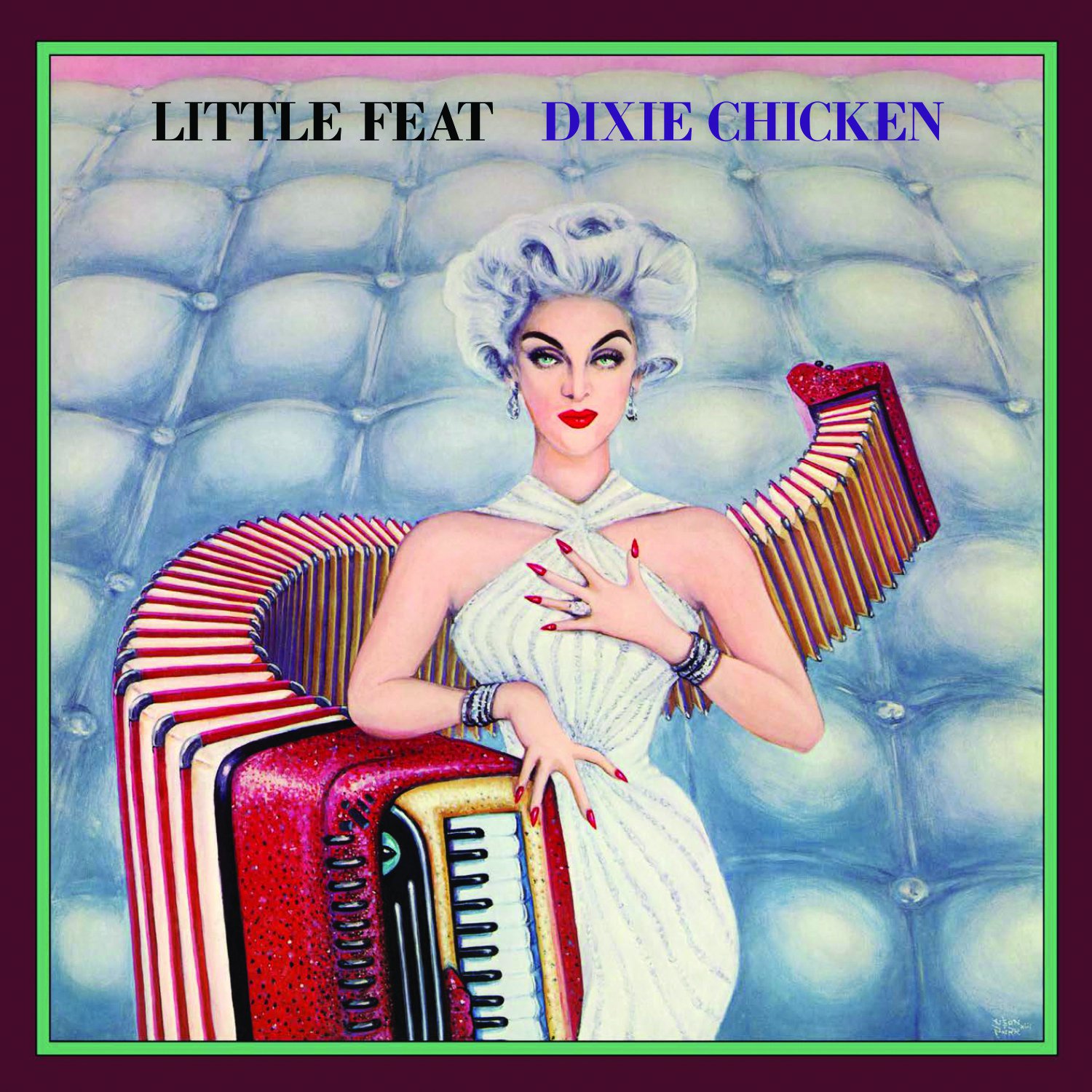
On “Dixie Chicken,” the movement does not come from the drums alone. Piano supplies its own accents, guitars slip between them, and bass and percussion give the whole pattern extra flexibility. Lowell George’s voice can lean back above that activity without draining its tension. The contrast between an easy surface and closely coordinated playing is part of Little Feat’s appeal: the groove feels natural while several different things are happening inside it.
Released in 1973, the band’s third studio album marks a decisive personnel change. Guitarist Paul Barrère and percussionist Sam Clayton joined George, keyboard player Bill Payne and drummer Richie Hayward; Kenny Gradney replaced Roy Estrada on bass. The quartet became a sextet. Those additional voices offered more than increased volume. They created new ways to distribute rhythmic responsibilities and to keep one figure moving while another changed direction.

Lowell George takes the production chair
Ted Templeman had produced the preceding Sailin’ Shoes, but George himself produced Dixie Chicken. Recording took place in Los Angeles in late 1972, at studios including Clover Recorders, Warner Bros. and Sunset Sound. The band was therefore developing through changes both in personnel and in the creative responsibility behind the studio work.
That is useful context for music with such a physical impact. What sounds spontaneous is not necessarily a document of everyone simply starting to play together. Arrangements determine when slide guitar carries a passage, when piano occupies a rhythmic opening and how percussion animates the space around them. The influence of New Orleans R&B becomes part of the group’s own language, where blues, rock and funk can overlap without needing to remain separate categories.

Toussaint and Tackett broaden the programme
George did not write every song. Allen Toussaint supplied “On Your Way Down,” creating a direct connection to a central figure in New Orleans music. Fred Tackett contributed “Fool Yourself,” while “Walkin’ All Night” was written by Barrère and Payne. George and Fred Martin share the writing credit for the title track. The range of contributors already suggests a more varied album than a single defining riff or style might imply.
The guest list brings further colours. Bonnie Raitt, Bonnie Bramlett and Danny Hutton are among the contributing voices; Malcolm Cecil is credited with synthesizer and Milt Holland with tabla. These names should not be assigned indiscriminately to every track. Instead, they indicate the breadth of resources available to the sessions, and the possibilities concealed beneath the apparently straightforward description of a six-piece rock band.
The quieter passages are part of the point
Among the title track, “Two Trains” and “Fat Man in the Bathtub,” it is worth making room for “Roll Um Easy.” Its restrained presentation changes the perspective before the band closes in again. “Juliette” and the concluding instrumental “Lafayette Railroad,” written by George and Payne, broaden the shape further. Dixie Chicken does not depend on maintaining one level of energy. Its character comes partly from knowing when to gather that energy and when to release it.
This double LP distributes the ten original tracks across four 45-RPM sides. “On Your Way Down” and “Kiss It Off” share a side, while “Juliette” and “Lafayette Railroad” finish the second record. The bonus material from later deluxe editions is not included. For a fresh listen, try a simple change of focus: follow George’s voice once, then Gradney’s bass or Clayton’s percussion on another pass. Different routes emerge through the same songs. Familiar favourites regain their capacity to surprise, not because the music has changed, but because another part of its carefully interlocking movement has come into view.
More from the series: Acoustic Sounds 40th Anniversary Series
Also on SACD: Dixie Chicken
More by Little Feat: Sailin’ Shoes
Customer question: Buying Analogue Productions records in Europe
Series: Acoustic Sounds 40th Anniversary – all 25 albums, recommendations and musicians
Musicians
Documented selection of participating musicians. Personnel may vary by track; this list does not claim to be complete.
| Name | Instrument / role |
|---|---|
| Lowell George | Vocals, Guitar, Flute |
| Paul Barrere | Backing vocals, Lead vocals, Guitar |
| Bill Payne | Backing vocals, Lead vocals, Synthesizer, Keyboards |
| Kenny Gradney | Bass |
| Richie Hayward | Backing vocals, Drums |
| Sam Clayton | Congas |

Reviews
There are no reviews yet.