Coltrane in February 1958
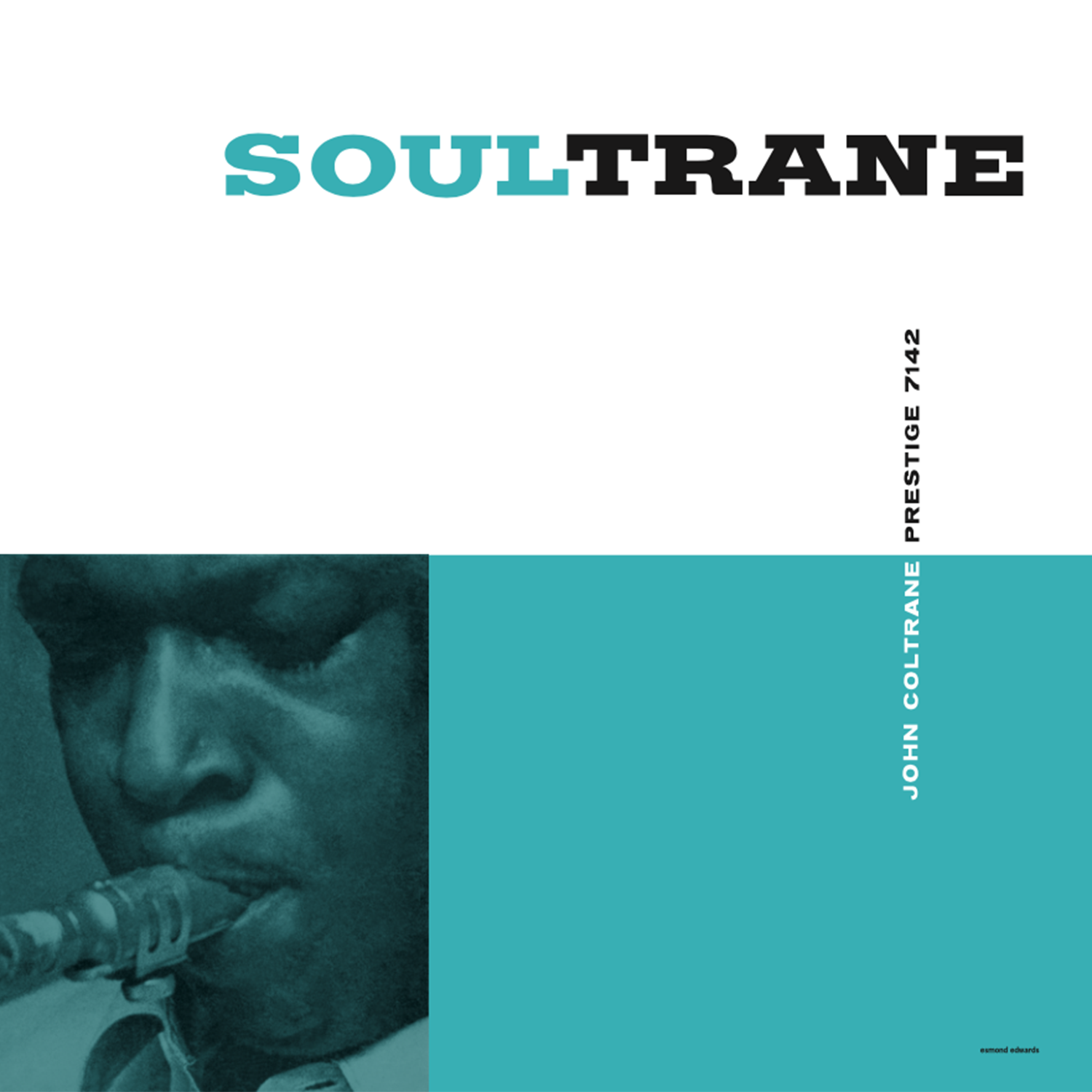
Soultrane captures John Coltrane at a point when his musical language was becoming increasingly individual. The session took place on February 7, 1958, at Rudy Van Gelder’s studio in Hackensack. Coltrane’s tenor saxophone stands alone before Red Garland, Paul Chambers and Art Taylor. No trumpet shares responsibility for the melody, and no larger horn section supplies the album’s colour. The quartet can therefore be heard particularly directly as an encounter between one soloist and three partners, each contributing to his movement in a different way. Its relatively small scale makes the exchange easier to follow without making it simple.
Coltrane and Garland knew one another from Miles Davis’ quintet, a musical setting that also included Chambers. Taylor, meanwhile, was familiar with Garland’s trio work. These connections are more than biographical footnotes. They help explain why a session need not begin from nothing, even when an album documents a single recording date. Shared experience creates a store of possible responses. How long can a phrase remain open? When will a definite harmonic answer help? How can the rhythm section support a player whose lines are becoming increasingly dense? The answers emerge in performance, rather than from the names on the sleeve alone.
Prestige released the album in 1958 under catalogue number 7142. Its five compositions include no Coltrane originals. That makes it an especially interesting point in his development. Individuality here does not depend on introducing a new repertoire of self-written pieces, but on working with existing melodies and harmonic forms. A familiar song can become such a personal statement that a strict division between interpretation and creative invention becomes unhelpful. Soultrane invites the listener to follow that work over substantial stretches of music, giving an improvisation time to establish its own shape within a borrowed framework.

Red Garland, Paul Chambers and Art Taylor
Red Garland is essential to the character of the album. His piano can provide the tenor with a clear harmonic foundation while also suggesting a different sense of pace. As a horn line moves forward, a carefully placed chord can supply weight and poise. Garland’s own solo passages direct attention towards another way of travelling through the same changes. Listeners initially drawn to this record by Coltrane should spend a subsequent hearing following the pianist. The relationship between these two musicians is one of the lasting attractions of the session, and it offers more than a simple division between lead and accompaniment.
Paul Chambers on double bass and Art Taylor on drums complete the quartet. The bass connects the chord movement to an audible line of its own, retaining direction even when the tenor becomes densely active. The drums articulate their shared time and can change the energy of a passage through small decisions. It is worth distinguishing the sustaining pulse from an accent that comments on what is happening. Both contribute, but they do not perform the same function. In a group with only one horn, the responsibility carried by each individual musician is particularly rewarding to trace.
The familiar description of Coltrane’s “sheets of sound” is closely associated with this period and Ira Gitler’s writing about his playing. It can be useful, provided it does not become the listener’s only expectation. Soultrane is not one uninterrupted stream of rapid notes. The ballads present other demands, and even in busier passages phrasing, breath and harmonic orientation remain important. A productive approach is to notice density and relaxation together. The celebrated expression then becomes a musical question again: how does a line change when a player fits more material into a smaller space, and how do the other musicians respond?

Five borrowed compositions, a personal language
Good Bait, associated with Tadd Dameron and Count Basie, opens the first side. Its extended performance gives the quartet time to establish a shared direction. It is followed by Billy Eckstine’s I Want to Talk About You, a ballad Coltrane would return to later. Here it belongs to an early quartet setting. The pairing offers more than a contrast between quicker and slower music: these are two different ways of keeping a melody alive over an extended performance. The theme remains a point of reference even as improvisation moves beyond its immediate outline.
On side two, You Say You Care by Jule Styne and Leo Robin brings the American musical theatre into the programme. Fred Lacey’s Theme for Ernie is dedicated to alto saxophonist Ernie Henry, who died late in 1957. Knowing that background need not dictate an emotional response, but it can encourage attention to restraint and to the weight given to a ballad’s notes. The interest lies in how an instrument allows a melody to speak: which tones are sustained, how a phrase is shaped, and where space is left between one statement and the next.
Irving Berlin’s Russian Lullaby closes the record. Garland’s freely paced introduction and the more active course that follows create a striking change of perspective within a single selection. The word “lullaby” does not prescribe the tempo at which musicians must treat the material. The album title also merits a small distinction: Tadd Dameron’s composition Soultrane, previously recorded by Coltrane on Mating Call, does not appear on this LP. These five selections have their own writers and histories. Their variety helps demonstrate how Coltrane could connect quite different material through a personal musical language.
One LP, two extended musical arcs
Analogue Productions issues this mono edition as APRJ 7142 within its Prestige Mono Series. The publisher credits Kevin Gray with cutting from analogue master tapes; its current product description specifies pressing at Quality Record Pressings on 180-gram vinyl, accompanied by a high-gloss tip-on jacket. The edition keeps Coltrane’s five selections together as a complete album. Alongside his later major works, this recording deserves a place of its own: it connects familiar song material with extended improvisation and reveals how productive the partnership with Garland, Chambers and Taylor was for his developing musical ideas. The original programme makes those different sides of the quartet available within one record.
The single LP plays at 33⅓ rpm. The two extended performances of Good Bait and I Want to Talk About You remain together on the first side, while side two moves through three further musical characters. On this album, the division is more than a technical convenience. The music can develop its longer arcs, and each side forms a distinct section of the programme. Listeners following the construction of Coltrane’s improvisations benefit from that continuity. Turning the record provides a pause without inserting further interruptions into the individual performances or treating their length as an inconvenience.
Mono focuses attention on the shared activity of the quartet. Instead of an emphatic distribution of instruments across a stereo panorama, the interest lies in distinctions within the ensemble: the contour of the tenor, Garland’s harmonic replies, Chambers’ line and Taylor’s accents. Soultrane is a particularly rewarding choice for listeners who want to understand Coltrane’s development beyond its most famous later turning points. It brings extended improvisation together with song melodies and ballads, density with care over a single tone. The recording has enough identity of its own to deserve a place in a collection as more than a preliminary chapter in a later story.
You order from Michael 45 in Germany. We arrange the US import and dispatch from Hilden.
Also on SACD: Soultrane
More by John Coltrane: Standard Coltrane · A Love Supreme
Artist page: All titles by John Coltrane
Customer question: Buying Analogue Productions records in Europe
Series: Analogue Productions Prestige – all 50 records, musicians and session paths
Musicians
Participants and documented credit status. Track references correspond to the tracklist.
- Paul Chambersdouble bassParticipation: Album personnel
- Art TaylordrumsParticipation: Album personnel
- Red GarlandpianoParticipation: Album personnel
- John Coltranetenor saxophoneParticipation: Album personnel


Track and side references refer to this LP edition.

Reviews
There are no reviews yet.