Between a working band and a studio workshop
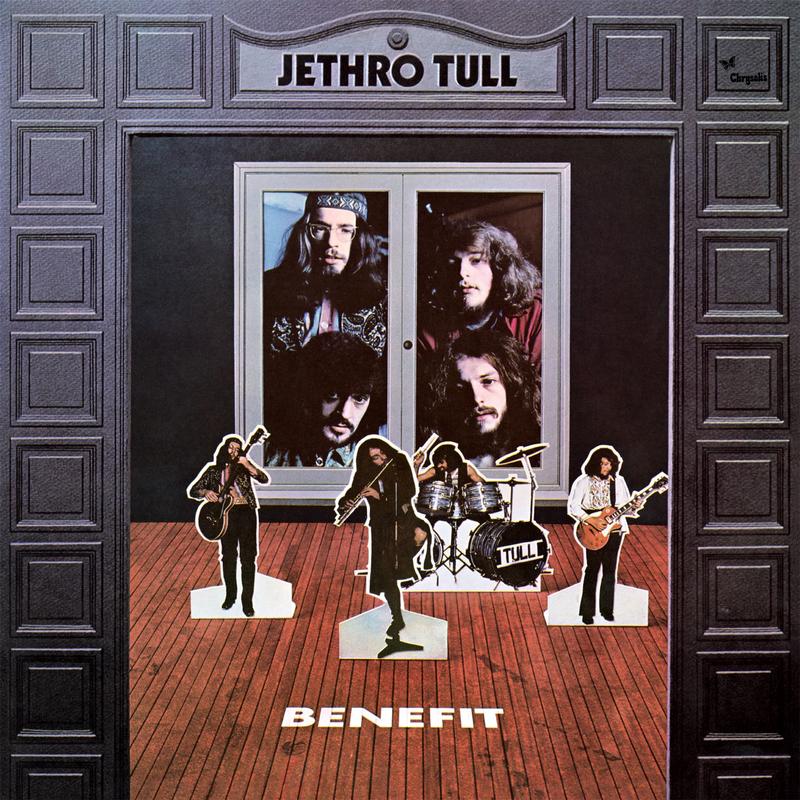
On Benefit, released in 1970, Jethro Tull gives guitars and studio possibilities a larger role. Ian Anderson, Martin Barre, Glenn Cornick and Clive Bunker record the band’s third album, joined by John Evan on piano and organ. The sessions take place at London’s Morgan Studios. Before Aqualung, this is already a substantial exploration of the group’s developing language.
Evan initially contributes as an additional musician. For Cornick, however, Benefit becomes the final Tull studio album. The record captures a lineup in transition, but it need not be heard merely as preparation for what followed. “Nothing to Say” and “To Cry You a Song” have their own dramatic weight.

A flute can run backwards too
“With You There to Help Me” uses reversed piano and flute sounds; “Play in Time” employs sped-up guitar. These interventions are part of the arrangements. They change the way an instrument enters a song and complement the band’s more immediate interplay.
In the opening track, listen to the shape of an individual sound before it merges with the accompaniment. Then turn to the guitar figures in “To Cry You a Song”. The contrast makes the different working methods tangible without reducing the record to either studio effects or heavy riffs.

John Evan opens another door
Piano and organ give Anderson additional possibilities as a writer. The keyboards do not need to stand out as solos to make a difference. Their contribution can lie in connections, harmonic responses and shifts in the balance of the accompaniment. Follow them beneath the vocals rather than waiting for an obvious featured moment.
The running order matters too. This edition combines the American album sequence, including “Teacher”, with “Alive and Well and Living In” as an additional closing track. The latter belonged to the British version of the album. Eleven tracks bring together that material while retaining the distinction between the original releases.
The original mix on two LPs
AAPP 169-45 presents the original mix on two 180-gram LPs at 45 RPM. The publisher credits Matthew Lutthans at The Mastering Lab and specifies flat copies of the original UK and US analog master tapes as the source. Plating and pressing are by Quality Record Pressings, with a Stoughton tip-on gatefold jacket. This is neither a Steven Wilson remix nor an Atlantic 75 edition.
You order from Michael 45 in Germany. We arrange the US import and dispatch from Hilden.
Also on SACD: Benefit
More by Jethro Tull: Stand Up
Customer question: Buying Analogue Productions records in Europe
Musicians
Documented selection of participating musicians. Personnel may vary by track; this list does not claim to be complete.
| Name | Instrument / role |
|---|---|
| Ian Anderson | Acoustic guitar, Keyboards, Vocals, Flute |
| Martin Barre | Electric guitar |
| Glenn Cornick | Electric bass |
| Clive Bunker | Percussion, Drums |
| John Evan | Piano, Organ |
How Michael hears this edition
Listening impression · paraphrased from the video
Michael describes the AP 45 RPM edition as dry yet powerful and full sounding, particularly appreciating Ian Anderson’s flute and the energy of the progressive and folk rock.
🎧 Review video: Amazing NEW Reissues: Jethro Tull - Dr. John - Duke Ellington - Bad Company
This video is hosted by YouTube (Google). It only loads once you switch on “Functional” in the cookie settings.

Reviews
There are no reviews yet.