A trio with more possibilities than expected
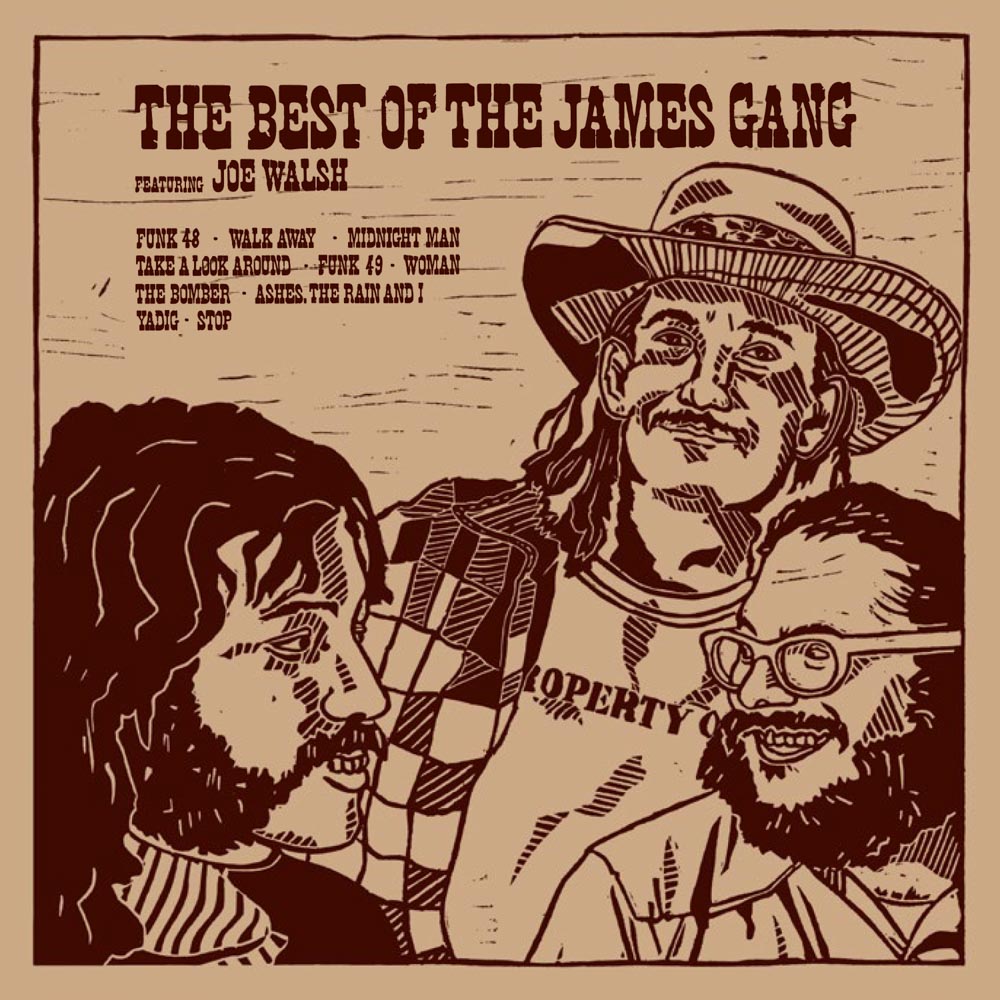
A guitar riff, a brief rhythmic hook and a voice with an unmistakably rough edge: the James Gang often needs only a few seconds to establish its world. The Best Of The James Gang Featuring Joe Walsh brings that directness together while also showing how little it explains the whole band. Between the familiar riffs are extended instrumental developments, strongly melodic songs and quieter passages that introduce quite different colours. The compilation follows the early years of a group whose strength lies in moving between a compact statement and an open area for further exploration.
Originally issued in 1973, the selection draws on three studio albums: Yer’ Album from 1969, James Gang Rides Again from 1970 and Thirds from 1971. It is therefore neither the document of one recording session nor a complete survey of every later line-up. Its focus is the Joe Walsh period, before his subsequent solo work and membership of the Eagles made his name still more widely known. Listeners approaching Walsh chiefly through that later history encounter a direct, agile form of trio playing with a character very much its own.
The James Gang formed in Ohio in 1966 and had already undergone several changes before recording its debut in the familiar trio configuration. That history matters to the music assembled here. The band did not develop its sound from a single settled formula. It explored how three players could produce sufficient weight for hard guitar music while retaining room for rhythmic turns, quieter moments and longer instrumental passages. The result is not tied to one guitar tone or a uniform pace. Different kinds of material reveal different ways of using the same limited number of players.
Ten tracks provide a manageable view of that development. “Walk Away” and “Funk #49” offer the immediately recognisable landmarks, but the selection acquires depth from the pieces around them and from the long “Stop” at the end. A best-of collection can simply place familiar songs next to one another. This one also allows the listener to hear some of the possibilities behind the band’s most widely recognised minutes, making it useful both as an introduction and as a way of reconsidering an already familiar period.

Joe Walsh, Jim Fox and two successive bassists
Joe Walsh combines guitar, keyboards and vocals, while Jim Fox is the drummer in the period represented by this compilation. The bass credits require a distinction: Tom Kriss plays on the debut, Yer’ Album, and Dale Peters on Rides Again and Thirds. They belong to successive stages of the trio’s history, rather than forming a two-person bass section together. The personnel information therefore records the origins of the performances instead of assigning all four names indiscriminately to every selection. That is especially useful on a record assembled from several earlier albums.
Walsh’s guitar playing depends on more than volume or distortion. A riff may use very few notes and still become distinctive through its pauses, attack and placement within the beat. The guitar carries considerable responsibility in a trio, but it does not need to fill every available gap. When it repeats a figure or briefly withdraws, bass and drums become particularly apparent as independent voices. This movement between concentration and space provides a useful way into the music, revealing an ensemble at work rather than merely accompaniment for a guitarist whose later fame might dominate the story.
Fox supplies a flexible rhythmic framework. The selections do not all require the same drumming: a concise song needs different transitions from an extended instrumental passage. Accents, entrances and the preparation of a new phrase consequently matter as much as a persistent beat. The bass lines connect this rhythmic activity with Walsh’s harmonic and melodic figures. The presence of two bassists from successive album periods deserves explicit mention, although it does not in itself justify sweeping claims about differences in their approaches without a closer comparison of the performances involved.
Not every colour comes from the core trio. Jack Nitzsche is credited with the orchestration on “Ashes, the Rain and I.” That contribution belongs in the credits but does not make him an additional member of the group. Likewise, broad album credits for keyboards, vocals or other instruments do not mean that every musician performs every listed function on every track. A compilation needs an account that distinguishes source album, band membership and specific additional contribution. Keeping those categories clear gives the individual musicians their due without inventing a line-up that never existed.

Riffs, expanding forms and an extended conclusion
“Walk Away” opens the selection with the direct appeal of a clearly constructed rock song. “Funk #49” then shifts the emphasis: its memorable guitar figure works as much through rhythm as through its notes. The spaces within the riff are worth following, since the other instruments use them to add resistance or momentum. “Midnight Man” brings a more melodically centred side of the group into view. Already, the first three selections demonstrate that immediate recognition can arise from different musical devices, rather than from repeating one successful arrangement in slightly altered form.
“The Bomber” opens a longer structure. This particular compilation documents the approximately five-and-a-half-minute version with “Closet Queen” and “Cast Your Fate to the Wind.” It should not simply be equated with other album versions whose components differ. The passage between an original rock section and a familiar outside melody shows the band’s interest in connecting different materials within one performance. “Yadig?” and “Take a Look Around” provide further changes of character before the end of the first side, allowing the programme to retain variety within its relatively compact physical format.
“Funk #48” begins side B and reconnects the listener with the debut album. The neighbouring numbers in the titles invite comparison, but these are separate pieces from different album stages. “Woman” returns to the period of Rides Again. “Ashes, the Rain and I” then changes the scale through its quieter design and orchestral setting. Much of its effect comes from occupying the same collection as the band’s more forceful trio performances. The selection gives those contrasts room to register instead of presenting the group as an uninterrupted sequence of heavy guitar statements.
“Stop,” written by Jerry Ragovoy and Mort Shuman, closes the record at just over twelve minutes. Its length changes the balance of the best-of format: a substantial part of the second side belongs to extended development rather than a succession of short highlights. One useful listening route is to follow the transition from concise song to more open form. On another pass, individual instruments can become the focus, revealing how the group generates movement while a guitar figure itself changes relatively little. The compilation then becomes an introduction to working methods as well as a reminder of familiar titles.
The Analogue Productions edition mastered by Kevin Gray
This version of The Best Of The James Gang Featuring Joe Walsh is issued by Analogue Productions under catalogue number AAPP 120. It is a single 180-gram stereo LP playing at 33⅓ RPM. Kevin Gray handled mastering at Cohearent Audio, with original analogue tapes named by the label as the source. Plating and pressing are credited to Quality Record Pressings. The record is presented in a Stoughton tip-on gatefold jacket, making the physical specification straightforward to distinguish from other editions of the same compilation.
These details apply to this release and should not be combined with specifications from unrelated reissues. A best-of compilation also needs a different technical context from an album made during one recording session: its source material comes from several previous releases. The label’s reference to original analogue tapes identifies the stated mastering source, but does not by itself document every historical production step for every performance included. Adding an absolute claim about the entire signal chain would go further than the available information supports and would contribute little to understanding the actual edition.
The ten selections follow the documented running order of this LP. Six occupy side A and four side B, with the extended “Stop” accounting for a significant share of the latter. The listed timings and the version of “The Bomber” are therefore as much part of the product’s identity as its weight, speed and catalogue number. Manufacturing and mastering information offers useful orientation, while a listening assessment of a particular copy remains a separate matter. The specifications are not presented as a substitute for that experience.
This edition provides a concentrated route into the James Gang’s years with Joe Walsh. Musically, it works both as an entry through the famous riffs and as a closer look at less frequently emphasised aspects of the trio. Its appeal lies in that range: a short figure can make its point almost immediately, while another performance has the patience to pursue an idea across a much longer span. The collection makes room for both kinds of invention.
You order from Michael 45 in Germany. We arrange the US import and dispatch from Hilden.
Customer question: Buying Analogue Productions records in Europe
Musicians
Participants and documented credit status. Track references correspond to the tracklist.
- Joe WalshOriginal illustration · portrait reference 1970guitar, keyboards, vocalsParticipation: Band personnel across three source albums; instruments not allocated track by track
- Jim FoxOriginal illustration · portrait reference 1970drums, percussionParticipation: Band personnel across three source albums; instruments not allocated track by track
- Tom KrissbassParticipation: Bass on Yer’ Album (1969)
- Dale PetersOriginal illustration · portrait reference 1970bass, guitarParticipation: Rides Again (1970) and Thirds (1971); additional instruments credited at album level


1973 compilation drawn from Yer’ Album (1969), Rides Again (1970) and Thirds (1971). Joe Walsh and Jim Fox: shared band personnel; Tom Kriss: debut-album bassist; Dale Peters: bassist for the second and third album periods. Album credits do not establish every instrument on every track. Jack Nitzsche: orchestration on Ashes, the Rain and I. The Bomber here runs 5:39, with Closet Queen / Cast Your Fate to the Wind. Conflicting writer credit for Funk #48 must not be used to infer performing personnel. Kevin Gray / Cohearent Audio: mastering.

Reviews
There are no reviews yet.