
Four musicians find their own language
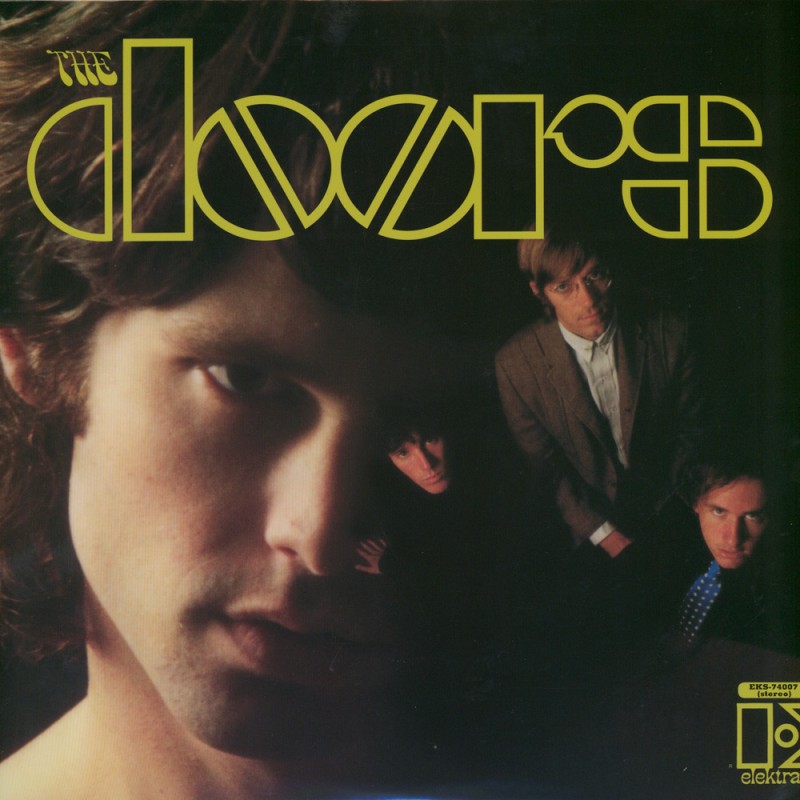
When the Doors’ debut appeared early in 1967, it carried no additional title. The band’s name was enough. Behind it was music developed in Los Angeles clubs and given concentrated form in the studio. Jim Morrison, Ray Manzarek, Robby Krieger and John Densmore brought together language and theatre, blues and rhythm, extended instrumental passages and concise songwriting. The eleven tracks present these possibilities as existing parts of the first album, rather than promises of what might come later.
Recorded during 1966 at Sunset Sound in Hollywood, the album was produced by Paul A. Rothchild and engineered by Bruce Botnick. Four-track recording imposed conditions very different from those of later studios. Decisions about interaction, balance and additional parts had to be made early. For a group that had developed its material before audiences, that limitation could also provide direction: the musicians themselves had to sustain the arrangements.
The familiar story can draw attention towards Morrison alone. Yet the instrumentation already suggests why this record differs from a conventional guitar-band session. Manzarek’s keyboards perform several functions, Krieger’s guitar moves between rhythmic support and independent lines, and Densmore shapes the music from the drums. The voice enters an ensemble that is already flexible and active. Its identity belongs to the relationships among all four musicians.

Organ, guitar and the question of bass
The four band members form the visible line-up. Larry Knechtel is additionally documented on bass guitar during the studio work, although his contribution was not acknowledged correspondingly on the original sleeve. Manzarek’s keyboard bass and an additional bass guitar are different things, and later accounts make that distinction important. Conflicting descriptions do not support an unquestioningly precise list of Knechtel’s individual track assignments.
The personnel information therefore names his confirmed contribution without inventing a definitive song-by-song allocation. Nor does a possible additional bass part by Krieger become a blanket album credit. The established outline is informative enough: four members with an individual musical relationship, supplemented by a studio player whose contribution should not be mistaken for band membership.
Rothchild and Botnick belong to the production and engineering history. Decades later, Doug Sax, Sangwook Nam and Botnick’s renewed involvement enter the account of this particular reissue. Keeping these stages separate makes the sleeve’s information more meaningful. The names describe both the creation of an album and its presentation in a later edition; they should not all be folded into one list of instrumental performers. A collector can follow those connections without losing sight of the musicians.

From “Break On Through” to “The End”
“Break On Through (To the Other Side)” makes a compact opening statement. “Soul Kitchen”, “The Crystal Ship” and “Twentieth Century Fox” follow before “Alabama Song” opens another historical space. The Bertolt Brecht and Kurt Weill piece is more than an incidental cover within an otherwise uniform rock vocabulary. Its inclusion reveals how naturally the Doors could bring material from beyond immediate blues and pop traditions into their own musical setting.
“Light My Fire” then expands the timescale. On the album it is not confined to its greatly shortened single form: extended instrumental passages belong to the piece itself. On returning to it, follow the movement between singing and instrumental development rather than simply waiting for a celebrated peak. The musicians can sustain a song while also moving beyond the expectations established by its opening.
“Back Door Man” returns to the blues from another direction. “I Looked at You”, “End of the Night” and “Take It as It Comes” provide shorter forms before “The End” occupies the closing space. On this double LP, it has side D entirely to itself. That arrangement reflects its distinctive position without requiring a biographical solution to every line. The contrast between compact songs and extended development remains central to the debut’s appeal. Eleven tracks introduce several dimensions of the same band, and their sequence rewards listening as carefully as the famous individual moments do.
An analogue copy is not the original master
The stereo edition offered here, AAPP 74007-45, comes from Analogue Productions: two 180-gram LPs at 45 RPM, pressed at Quality Record Pressings and housed in a gatefold jacket. Doug Sax handled mastering at The Mastering Lab, with Sangwook “Sunny” Nam also named in the edition credits. Bruce Botnick supervised the reissue.
The source statement deserves particular attention. Analogue Productions explicitly identifies the best available analogue tape copy for the debut. It is the exception within this Doors series and should not inherit the original-master description of the other titles. Equally, an analogue copy does not establish a digital intermediate: tape generation and the transfer chain are separate questions.
According to the publisher, the debut’s known speed and pitch discrepancies were not corrected for this edition. That decision distinguishes its approach from other reworkings. It retains the eleven-track album sequence without bonus material. For collectors, these are useful identifying characteristics: a particular version with a stated source and deliberate editorial choices, rather than simply a familiar title pressed on heavy vinyl.
You order from Michael 45 in Germany. We arrange the US import and dispatch from Hilden.
More by The Doors: L.A. Woman · Morrison Hotel
Artist page: All titles by The Doors
Customer question: Buying Analogue Productions records in Europe
Musicians
Participants and documented credit status. Track references correspond to the tracklist.
- Jim MorrisonvocalsParticipation: Album personnel; individual track assignments not specified
- Ray Manzarekorgan, piano, keyboard bassParticipation: Album personnel; individual track assignments not specified
- Robby KriegerguitarParticipation: Album personnel; individual track assignments not specified
- John DensmoredrumsParticipation: Album personnel; individual track assignments not specified
- Larry KnechtelbassParticipation: Album personnel; individual track assignments not specified


Album credits do not imply every instrument on every track.
🎧 Review video: 21 Albums to start an Audiophile Collection in 2021
This video is hosted by YouTube (Google). It only loads once you switch on “Functional” in the cookie settings.

Reviews
There are no reviews yet.