
Back in their own room
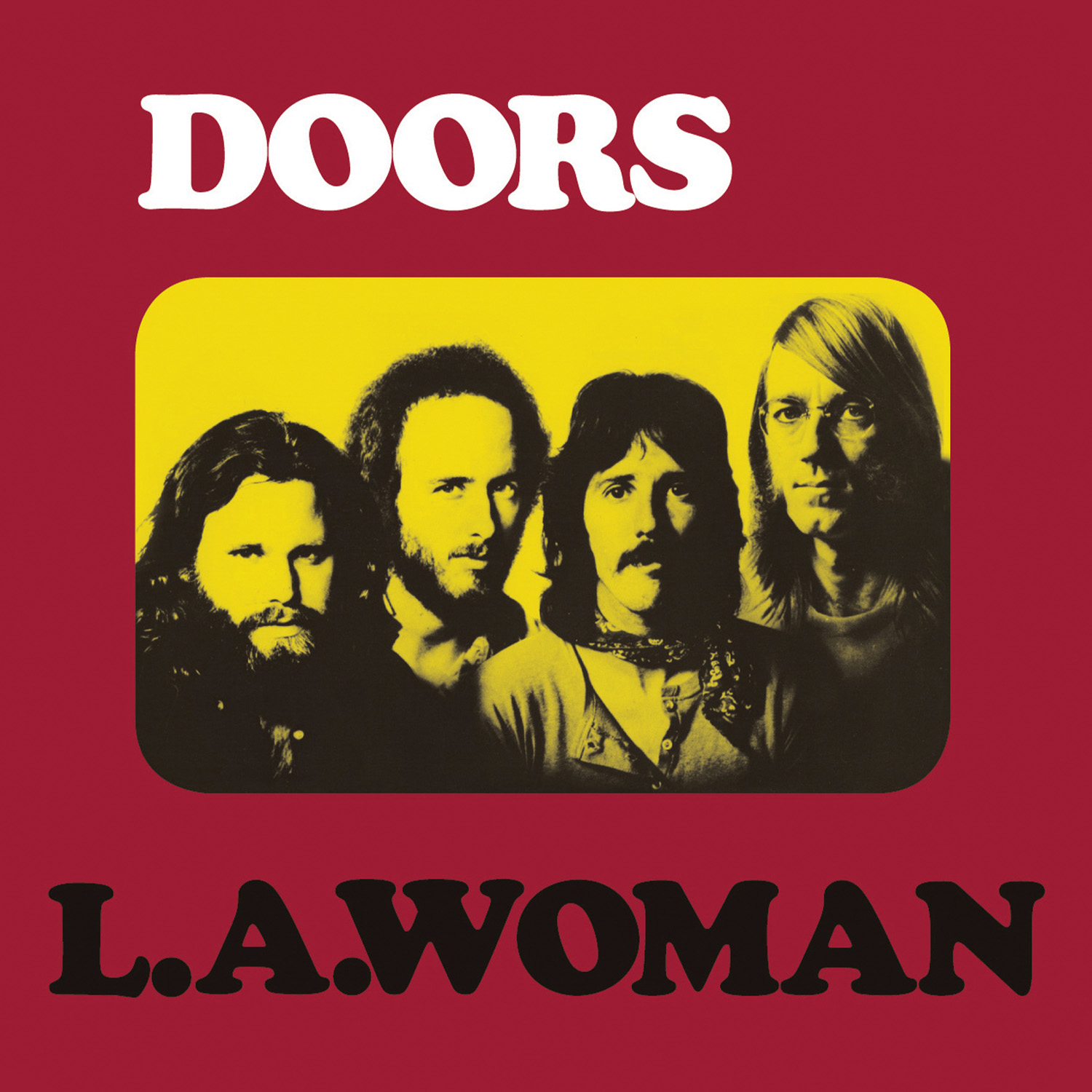
At the turn of 1971, the Doors returned to familiar surroundings for their sixth studio album: their own workshop on Santa Monica Boulevard in West Hollywood. Instead of using the rehearsal room simply to prepare, they made it the recording location. Bruce Botnick installed the equipment and shared production with the band after Paul A. Rothchild withdrew. This changed more than a credit on the sleeve. The musicians could respond to one another in a space they knew; the record would grow out of playing together.
Released in April 1971, L.A. Woman became the last studio album by this line-up issued during Jim Morrison’s lifetime. Subsequent events cast a long shadow over it. Yet the sessions themselves deserve attention: a band bringing blues, concise songs and extended forms together once more. This is neither merely a farewell document nor a vehicle for its two most famous tracks. Across ten pieces, it reveals different aspects of a group whose musical language had been distinctive since its debut.
Most of the recording took place during the winter of 1970–71. Botnick’s dual role as trusted engineer and new co-producer connected experience with a different working environment. The workshop represented a practical musical intention: to shorten the distance between one player’s idea and another player’s response. That relationship offers a useful starting point for hearing the album as an ensemble performance.

Four Doors and two important guests
Morrison, Ray Manzarek, Robby Krieger and John Densmore remained at the centre. Two additional musicians nevertheless made important contributions: Jerry Scheff on bass and Marc Benno on rhythm guitar. Scheff was already known for work that included Elvis Presley’s band. His presence should not be confused with membership of the Doors. It shows how deliberately the group expanded its studio resources.
Benno is documented on “Been Down So Long”, “Cars Hiss by My Window”, the title track and “Crawling King Snake”. A second guitarist changes the possibilities within an arrangement: Krieger need not supply its rhythmic foundation alone at every moment. Scheff’s album credit is secure, while sources do not provide an entirely consistent account of every individual track assignment. The accompanying personnel information therefore distinguishes confirmed participation from an apparently definitive list for each performance.
There are useful shifts of perspective within the band, too. Manzarek’s keyboards do more than supply harmony, while Densmore’s drums shape transitions and redirect a phrase. Morrison’s voice belongs inside this network. Following the bass on one return, the guitar on another and the drums on a third reveals relationships that a singer-centred reading can overlook. Familiarity with the songs can become a beginning rather than the end of listening.

Blues and the spaces beyond it
“The Changeling” opens the programme before “Love Her Madly” introduces a different, more compact shape. “Been Down So Long” and “Cars Hiss by My Window” then move more explicitly into blues territory. That sequence matters: the album does not settle into a single mood. Familiar forms and individual gestures coexist, with the musicians’ personalities providing continuity.
The extended title track forms a substantial centrepiece. “Mr. Mojo Risin’” is an anagram of Jim Morrison, but the performance also depends on what the group builds around those words. A recurring idea changes its weight as tempo, accompaniment and voice treat it differently. Rather than waiting for the celebrated passage, follow how the players prepare it and how the music moves away again.
“L’America”, “Hyacinth House” and “Crawling King Snake” offer three contrasting destinations. “The WASP (Texas Radio and the Big Beat)” brings Morrison’s spoken delivery forward before “Riders on the Storm” closes the record. Rain and thunder form part of that recording’s construction, giving the ending a setting of its own. For a collector, there is particular pleasure in restoring the entire sequence to view: ten performances assembled as an album, including the pieces that retrospective accounts mention less often.
The Analogue Productions edition
The edition offered here is AAPP 75011-45, the Analogue Productions stereo reissue on two 180-gram LPs at 45 RPM. Doug Sax handled mastering at The Mastering Lab; the edition credits also name Sangwook “Sunny” Nam. Bruce Botnick supervised the reissue project. Analogue Productions identifies the original analogue master tapes as the source for L.A. Woman. This is the publisher’s specific statement about the edition, rather than a promise inferred from the album’s reputation.
The current version is pressed at Quality Record Pressings and housed in a gatefold jacket. Earlier pressings within the same catalogue family were offered at 200 grams; those variants belong to its release history and do not replace the present 180-gram specification. The ten original tracks occupy four sides, with no bonus material. Turning the records divides a familiar programme into new listening intervals and gives its quieter corners room alongside the famous songs. Recording, programme and physical edition remain clearly distinguished.
You order from Michael 45 in Germany. We arrange the US import and dispatch from Hilden. Editions not currently in stock are dispatched after the goods arrive.
Also on SACD: L.A. Woman
Also on UHQR: L.A. Woman
More by The Doors: Morrison Hotel · The Soft Parade
Artist page: All titles by The Doors
Customer question: Buying Analogue Productions records in Europe
Musicians
Participants and documented credit status. Track references correspond to the tracklist.
- Jim MorrisonvocalsParticipation: Album personnel; individual track assignments not specified
- Robby KriegerguitarParticipation: Album personnel; individual track assignments not specified
- Ray Manzarekpiano, organParticipation: Album personnel; individual track assignments not specified
- John DensmoredrumsParticipation: Album personnel; individual track assignments not specified
- Jerry ScheffbassParticipation: Album personnel; individual track assignments not specified
- Marc Bennorhythm guitarParticipation: A3, B1, B2, C3


Album credits do not imply every instrument on every track.
How Michael hears this edition
Listening impression · paraphrased from the video
Compared with the 50th Anniversary edition, Michael hears greater punch and dynamics, explicitly including Jim Morrison’s voice. The AP 45 RPM opens up the presentation considerably for him, while he still calls the anniversary edition good sounding.

Reviews
There are no reviews yet.