

A conductor helps bring a work into being
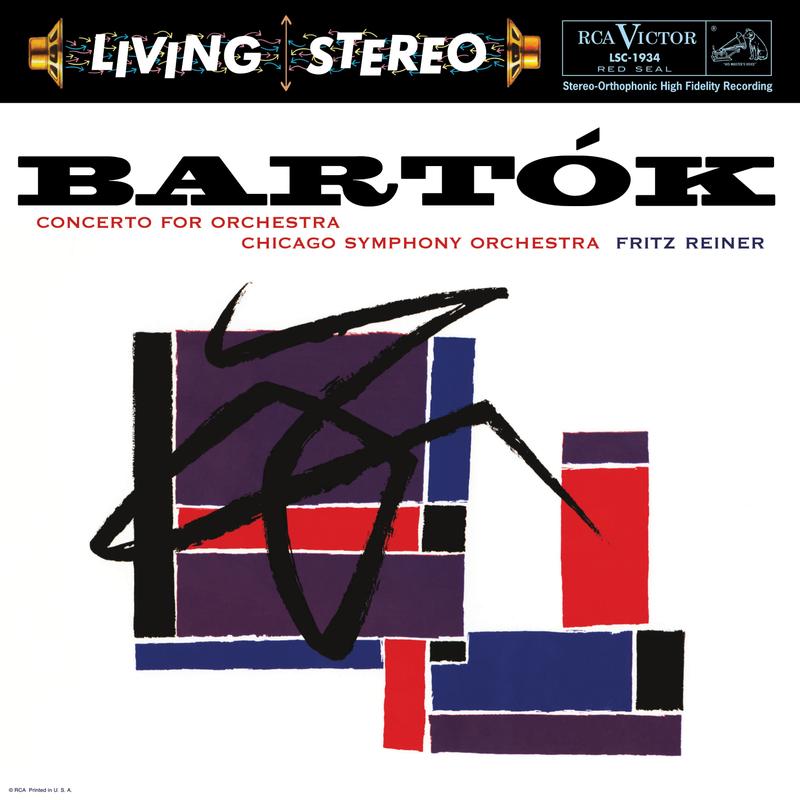
Fritz Reiner had a connection with this score before he recorded it in Chicago. Together with violinist Joseph Szigeti, he encouraged Serge Koussevitzky to commission a new composition from Béla Bartók. The result was the Concerto for Orchestra, written in 1943. Bartók was living in the United States and was seriously ill. The commission gave him the opportunity to undertake another substantial orchestral work.
Twelve years later, Reiner recorded it with the Chicago Symphony Orchestra. The session took place at Orchestra Hall on October 22, 1955, shortly after their first performances of the piece together. Richard Mohr was the producer and Lewis Layton the recording engineer. The recording therefore brings a personal link with the composer into the practical setting of Reiner's work with his Chicago orchestra.

The orchestra becomes the soloist
The title describes how Bartók distributes the musical tasks. There is no single featured soloist standing in front of the ensemble. Instead, individual instruments and entire sections emerge with the agility normally associated with concerto soloists. Five movements lead from the “Introduzione” through the presentation of pairs and the “Elegia” to the “Intermezzo interrotto” and the concluding “Finale”.
The idea is particularly easy to follow in the second movement. Wind instruments appear in pairs, each with its own character. The third movement changes the perspective: the “Elegia” forms the slow centre of the work. Listen for the way attention moves between individual lines and larger groups. These changes help reveal the structure without requiring a score. In the fourth movement, an interruption is part of both the title and the musical action: the course of events is deliberately knocked off balance.

From Saranac Lake to Boston and Chicago
Bartók composed the concerto between August and October 1943 at Saranac Lake in New York State. Koussevitzky conducted its premiere with the Boston Symphony Orchestra on December 1, 1944; Bartók revised the ending in 1945. Between the composition and Reiner's session lie the composer's final years and the beginning of the work's independent life in the concert hall.
Reiner had also been Bartók's pupil. That relationship connects the recording to the history of the piece. A useful focus is the orchestra's handling of its constantly changing responsibilities. Follow the passing of material between sections in the finale, then the movement towards the collective ending. The virtuosity resides in coordination as well as in the difficulties of the individual parts.
This edition: five movements across four sides
This Analogue Productions stereo edition comprises two 180-gram records playing at 45 RPM, pressed at Quality Record Pressings. The publisher credits Bernie Grundman with mastering from the original two-track master tapes. An insert is included. Side one contains movement I, side two movement II, side three movements III and IV, and side four movement V. No movement is divided in the middle. The catalogue number for this edition is AAPC 1934-45.
Michael 45 holds the records in Germany and dispatches them from Hilden, so customers can avoid arranging a personal US import and waiting for customs processing.
More from the series: RCA Living Stereo Series
Also in another edition: Bartok: Concerto For Orchestra
More by Fritz Reiner: Brahms: Violin Concerto
Artist page: All titles by Fritz Reiner
Customer question: Buying Analogue Productions records in Europe
Series: RCA Living Stereo – all 25 titles, conductors and soloists
Musicians
Documented selection of participating musicians. Personnel may vary by track; this list does not claim to be complete.
- Fritz ReinerConductor
- Chicago Symphony OrchestraOrchestra


Reviews
There are no reviews yet.