A city tells its musical story
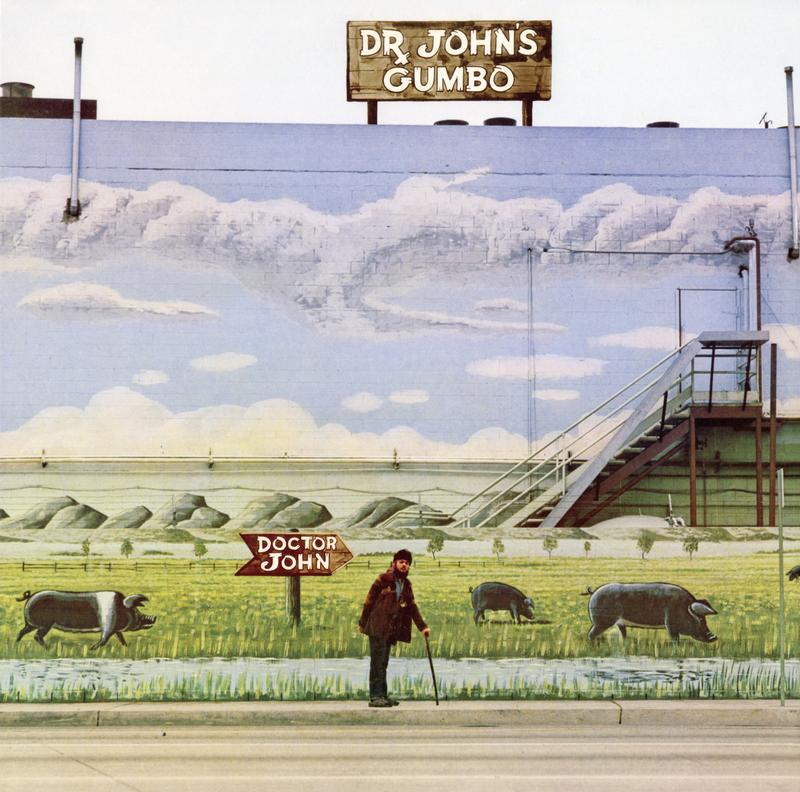
Dr. John’s Gumbo is a declaration of affection for New Orleans from a musician who knew its musical language from within. Released by Atco in 1972, the album gathers twelve selections from the musical memory of his home city. Mac Rebennack, known as Dr. John, brings voice, piano and an extensive ensemble to songs that connect street celebration, rhythm and blues, blues and rock and roll. The title offers a useful image: as with the dish itself, the ingredients retain their individual character while their combination becomes something more than a list of separate components.
The fifth album occupies a distinctive position in his catalogue. Following the idiosyncratic musical worlds of the early Dr. John releases, it places repertoire associated with older New Orleans traditions at its centre. Professor Longhair, Huey “Piano” Smith and Earl King are among the essential names in that story. The record can therefore be approached both as a self-contained album and as an invitation to further discovery. Listeners who already know individual songs through other performances can consider how Dr. John connects them, and how his personality emerges through material with a history of its own.
A musical home does not imply a single, uniform style. New Orleans contains many intersecting traditions. A piano figure, a sung refrain and a response from the horns can carry different histories and still belong naturally together. That makes the small transitions particularly rewarding subjects for attention: how is a refrain prepared, what does the piano contribute between vocal lines, and how does an answering voice change a song’s character? These questions offer a more specific route into the album than a general promise of Southern atmosphere.

Dr. John and the people behind the gumbo
Production is credited to Harold Battiste and Jerry Wexler, with arrangements attributed to Battiste and Dr. John. At the centre is Dr. John’s relationship between singing and piano playing. His instrumental credits also extend to cornet and, on “Let the Good Times Roll,” guitar. Ronnie Barron is credited with piano on that selection, alongside his wider contributions on organ, electric piano and backing vocals. Such exchanges reveal an adaptable collaboration. A musician can move beyond a familiar principal role when a particular song suggests a different combination.
The horn personnel include Lee Allen on tenor saxophone, Melvin Lastie on trumpet and cornet, and John Ewing on trombone. Battiste, Moe Bechamin, Sidney George and Dave Lastie add further saxophone credits; Battiste is also identified with clarinet on “Somebody Changed the Lock.” These instruments deserve their individual names. Cornet is not simply an alternative spelling of trumpet, and tenor saxophone cannot be replaced indiscriminately by another member of the saxophone family. Recognising those distinctions helps listeners think about the arrangements as the work of particular musicians contributing particular colours.
Alvin Robinson and Ken Klimak supply guitars, Jimmy Calhoun bass, and Freddie Staehle drums and percussion, with Richard “Didimus” Washington also credited on percussion. Voices form another important part of the gathering. Shirley Goodman, Tami Lynn, Robbie Montgomery and Jessica Smith appear among the documented backing singers, alongside vocal contributions from other members of the group. The musician section preserves the expanded album credits. Where a secure track assignment is unavailable, the information remains at album level; a sleeve credit does not automatically place every musician on every selection.
This is a particularly useful way of approaching the record. The accompaniment need not be treated as an anonymous frame around a famous singer. It invites attention to relationships: between lead voice and response, rhythmic foundation and melodic intervention, collective movement and a brief individual gesture. The new illustration shows Dr. John at the piano. The second vignette uses piano and trumpet to evoke elements of this musical world without presenting an invented reconstruction of a specific recording session.

Twelve selections and many routes into New Orleans
“Iko Iko” opens the programme with a song deeply associated with New Orleans. “Blow Wind Blow” and “Big Chief” follow. These first selections already suggest an album whose identity depends on the placement of different songs alongside one another. A useful listening approach is to follow their organisation as well as their familiar melodies: where does a recurring figure support the performance, where does a voice provide the connection, and when does the interaction between players become the main event?
“Somebody Changed the Lock,” Dr. John’s own contribution under the name Mac Rebennack, sits beside “Mess Around” and “Let the Good Times Roll.” The latter is the song associated here with Earl King, rather than any other composition sharing that familiar title. Such distinctions matter in a collection that brings together different blues and R&B traditions. Similar titles do not necessarily identify the same work. The sequence on this particular record remains the proper starting point, rather than a playlist assembled from the contents of other albums.
The second side moves through “Junko Partner” and “Stack-A-Lee” to “Tipitina,” associated with Henry Roeland Byrd, Professor Longhair. “Those Lonely Lonely Nights” offers another perspective before the “Huey Smith Medley” joins three songs: “High Blood Pressure,” “Don’t You Just Know It” and “Well I’ll Be John Brown.” This is one LP selection comprising several parts. “Little Liza Jane” closes the album. The order gives the side its own shape while allowing each musical recollection to retain an individual identity.
Historical writing credits are not always consistent across sources for repertoire of this kind. “Big Chief,” “Junko Partner” and “Little Liza Jane” are particular examples where documented attributions differ. The research notes retain those distinctions. Musically, the central point is that Dr. John draws together a living repertoire; discographically, accuracy also requires avoiding the assumption that a credit on one pressing settles the entire history of a composition.
Kevin Gray, original tapes and a 33⅓ RPM LP
This Analogue Productions edition, AAPP 093, presents the album on one stereo LP running at 33⅓ RPM. The publisher identifies Kevin Gray at Cohearent Audio, the original analogue tapes as the source, and Quality Record Pressings as the pressing plant. A tip-on gatefold jacket completes the presentation. Documented weight descriptions differ: the original pressing entry and shop classification specify 200 grams, while the current publisher text states 180 grams. The weight of every pressing cannot be established from those conflicting descriptions without checking the actual copy.
The single-LP format preserves the two sides as continuous sections of the programme. For an album containing numerous comparatively short and individually characterised songs, that can be an attractive arrangement: connections remain in motion, while the side change provides a clear division. A higher rotational speed is not the only worthwhile way to present an album on vinyl. Here, the documented mastering, source and original sequence deserve attention in their own right. Record weight alone would not provide a reliable measure of musical quality in any case.
Dr. John’s Gumbo offers music lovers a personal encounter with a rich repertoire and collectors an identifiable reissue of a significant Dr. John album. You order from Michael 45 in Germany. We handle the US import and ship from Hilden. Behind its twelve selections lies more than a collection of familiar names: a musical history of a city, brought together through the choices of a distinctive singer, pianist and his collaborators.
Also on SACD: Dr. John’s Gumbo
More by Dr. John: In The Right Place · Gris Gris
Customer question: Buying Analogue Productions records in Europe
Musicians
Participants and documented credit status. Track references correspond to the tracklist.
- Mac Rebennack (Dr. John)existing 1970s portraitvocals, piano, cornet; guitar A6Participation: Album credits; no complete track assignment
- Lee Allentenor saxophoneParticipation: Album credits; no complete track assignment
- Ronnie Barronorgan, electric piano, backing vocals; piano A6Participation: Album credits; no complete track assignment
- Harold Battistesaxophone, arrangements; clarinet A4Participation: Album credits; no complete track assignment
- Moe Bechaminsaxophone, backing vocalsParticipation: Album credits; no complete track assignment
- Sidney Georgesaxophone; harmonica A6Participation: Album credits; no complete track assignment
- Dave LastiesaxophoneParticipation: Album credits; no complete track assignment
- Melvin Lastietrumpet, cornetParticipation: Album credits; no complete track assignment
- John EwingtromboneParticipation: Album credits; no complete track assignment
- Alvin Robinsonguitar, backing vocalsParticipation: Album credits; no complete track assignment
- Ken KlimakguitarParticipation: Album credits; no complete track assignment
- Jimmy CalhounbassParticipation: Album credits; no complete track assignment
- Freddie Staehledrums, percussionParticipation: Album credits; no complete track assignment
- Richard “Didimus” WashingtonpercussionParticipation: Album credits; no complete track assignment
- Shirley Goodmanbacking vocalsParticipation: Album credits; no complete track assignment
- Tami Lynnbacking vocalsParticipation: Album credits; no complete track assignment
- Robbie Montgomerybacking vocalsParticipation: Album credits; no complete track assignment
- Jessica Smithbacking vocalsParticipation: Album credits; no complete track assignment

Original twelve-track album; B5 is the three-part Huey Smith Medley. Expanded personnel from the supplementary discography; only explicit track assignments are given. Produced by Harold Battiste/Jerry Wexler; exact session dates unconfirmed. Historical writing credits for Big Chief, Junko Partner and Little Liza Jane differ between sources.

Reviews
There are no reviews yet.