
Philadelphia roots, a New York setting
In the spring of 1973, Daryl Hall and John Oates recorded their second album in New York. After Whole Oats, they entered a new setting at Atlantic Recording Studios and Advantage Sound, with Arif Mardin producing. Philadelphia remained part of their musical background, while Abandoned Luncheonette opened the sessions to a wider circle of studio musicians and a varied instrumental palette.
Released in November 1973, the album predates the later succession of major pop singles. It gives two songwriters room for their individual approaches. Hall wrote “When The Morning Comes”; Oates contributed “Had I Known You Better Then” and “Las Vegas Turnaround.” “She’s Gone” belongs to both. The opening sequence alone provides good reasons to become better acquainted with the partnership.

The musicians behind the voices
Bernard Purdie plays drums on much of the record, with Rick Marotta taking over for “Had I Known You Better Then.” Steve Gelfand and Gordon Edwards share the bass duties. Joe Farrell moves between oboe and saxophones, while Hugh McCracken, Ralph MacDonald and Richard Tee add further colors. Mardin supplies the string and horn arrangements.
Christopher Bond’s contributions are especially revealing: guitars, Mellotron and synthesizer broaden the setting. Hall plays mandolin and keyboards among other instruments, while Oates contributes several kinds of guitar. The album can therefore be explored through much more than its two singing voices. Small instrumental choices lie behind the melodies, and the title track even includes a separately credited “Humanity Chorus.”

A hit that took time
“She’s Gone” only became a major hit for the duo some years later. Its first release reached number 60 on the US singles chart; the 1976 reissue climbed to number seven. Cover versions, including the one by Tavares, form part of the intervening story. Approaching the album through its best-known song means encountering music whose broader recognition took time to develop.
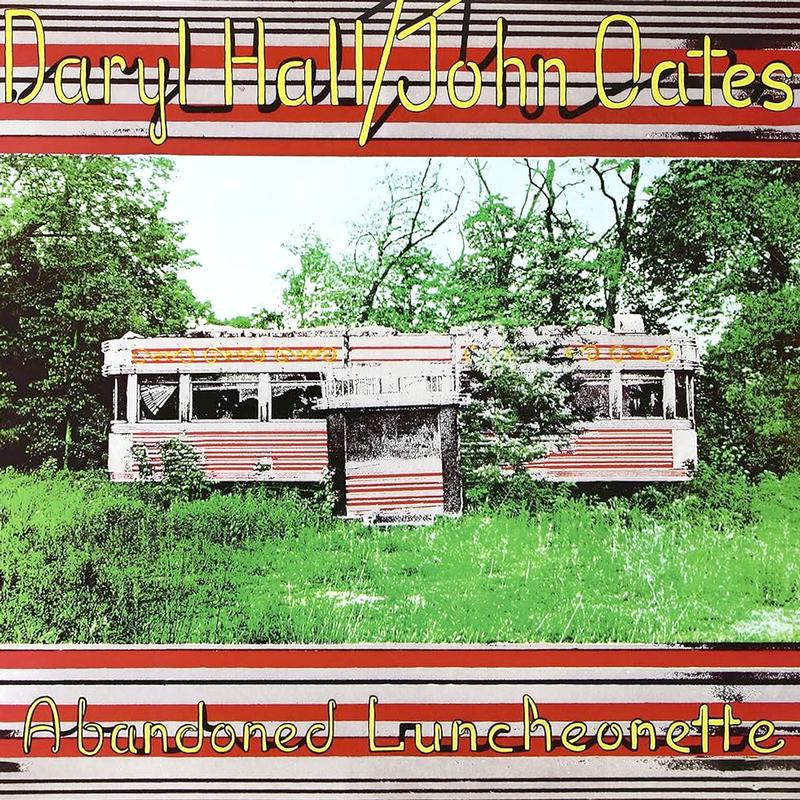
The cover has an equally specific history. Barbara Wilson photographed the retired Rosedale Diner from Pottstown, then standing near Kenilworth, Pennsylvania. Screen printing and hand coloring transformed the photograph into the familiar image. The nine-track programme extends to the long closing “Everytime I Look At You.” There is ample reason to continue beyond the hit and follow both writers through the complete album.
The Atlantic 75 edition
AAPA 050-45 presents Abandoned Luncheonette in stereo on two 180-gram LPs at 45 RPM. Ryan K. Smith cut the lacquers at Sterling Sound, and Stoughton supplies the tip-on double-pocket gatefold jacket. The checked publisher information does not identify a specific tape source for this title, so it does not support an original-master-tape promise.
The series distinguishes the first 2,000 numbered QRP copies from later unnumbered pressings made at QRP or RTI. One detail deserves attention when playing this edition: “Laughing Boy” is documented as C3 on the record, although the inner gatefold assigns it to side D. The prepared track sequence follows the disc placement, preserving a small but useful detail for the attentive collector.
You order from Michael 45 in Germany. We arrange the US import and dispatch from Hilden.
More from the series: Atlantic 75 Series
Also on SACD: Abandoned Luncheonette
Customer questions: Atlantic 75: which titles are worth buying? · Buying Analogue Productions records in Europe
Series: Atlantic 75 Series – all 75 albums, time journey and the people behind Atlantic
Musicians
Participants and documented credit status. Track references correspond to the tracklist.
- Daryl Halllead vocals, mandolin, electric piano, piano, keyboards, chorusParticipation: Album personnel
- John Oateslead vocals, acoustic guitar, wah-wah guitar, electric guitar, chorusParticipation: A1, A2, A3, B1, B2, C1, C2, D
- Christopher BondMellotron, electric guitar, acoustic guitar, synthesizer, chorusParticipation: A1, A2, A3, B1, B2, C1, D
- Bernard PurdiedrumsParticipation: A1, A3, B1, B2, C1, C2, D
- Rick Marottadrums, percussionParticipation: A2
- Steve GelfandbassParticipation: A1, A2, B1, C2, D
- Gordon EdwardsbassParticipation: A3, B2, C1
- Joe Farrelloboe, tenor saxophone, alto saxophoneParticipation: A1, A3, B1, C1
- Hugh McCrackenelectric guitarParticipation: A1, C2
- Ralph MacDonaldpercussionParticipation: A1, B1, C2
- Jerry Ricksacoustic guitarParticipation: A2, B2
- Pat RebillotorganParticipation: A3
- Pancho MoralescongasParticipation: A3
- Richard TeepianoParticipation: C1
- Gloria AgostiniharpParticipation: C1
- John Blairelectric violinParticipation: C2
- Marvin StammflugelhornParticipation: C3
- Mark HorowitzbanjoParticipation: D
- Larry PackerfiddleParticipation: D
- Arif Mardinvocals (Humanity Chorus)Participation: C1
- Donald Wannervocals (Humanity Chorus)Participation: C1
- Ronald Wannervocals (Humanity Chorus)Participation: C1
- Kathy Hohlvocals (Humanity Chorus)Participation: C1
- Walter F. Hohlvocals (Humanity Chorus)Participation: C1


Produced by Arif Mardin, who also arranged strings and horns. Recorded by Gene Paul. Humanity Chorus on C1; all eight members listed individually. Individual instruments do not apply to every track listed for a performer.

Reviews
There are no reviews yet.