Three different histories, a shared musical identity
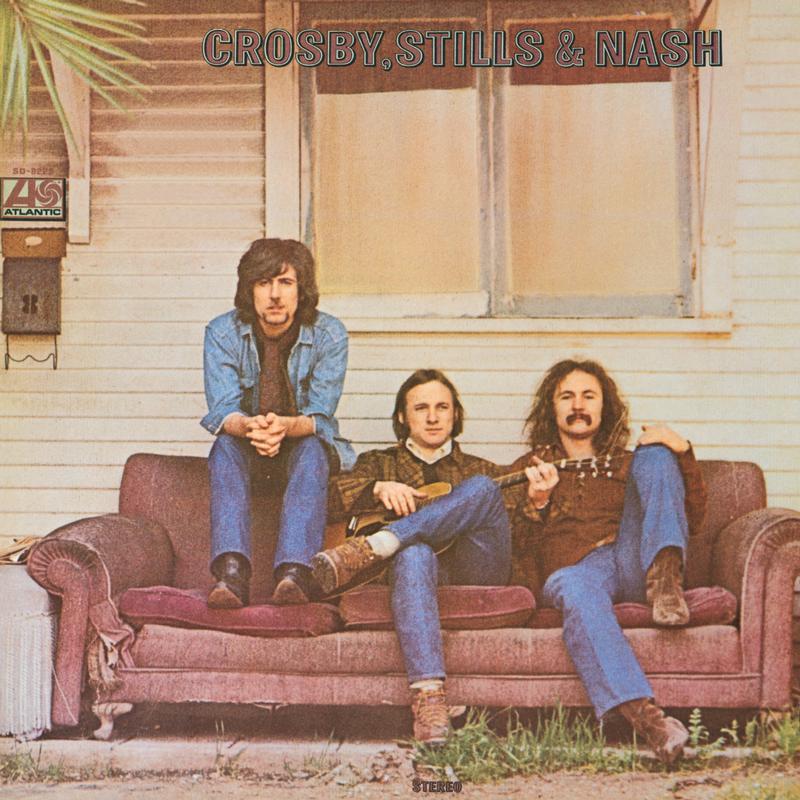
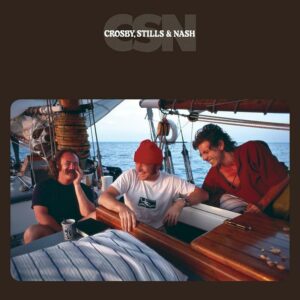
When David Crosby, Stephen Stills and Graham Nash released their debut together in 1969, each brought a different band history to the project. Crosby came from the Byrds, Stills from Buffalo Springfield and Nash from the Hollies. Their names now stood side by side on an album whose identity developed especially through the meeting of their voices. Those separate backgrounds remain interesting: American folk rock, the experience of a versatile California band and a British understanding of concise pop songwriting enter a new relationship.
The album was recorded in the spring of 1969 at Wally Heider’s Studio III in Los Angeles. Bill Halverson handled the engineering, while Crosby, Stills and Nash themselves received the production credit. That distinction matters because the three musicians were not simply performing arrangements devised elsewhere. They were determining the shape of the record. Halverson’s later accounts of the sessions offer a practical view of the work behind music that would soon become closely associated with an entire era.
The participants have told different stories about the location where they first discovered their vocal blend. The central musical starting point is less disputed: Stills’ “You Don’t Have to Cry”. A song became the opportunity to try their voices together. The finished album retains that idea of finding a relationship through music, but expands it into widely different forms, from a multipart suite to short pieces with an almost chamber-like intimacy.

The voices and the work beneath them
Alongside his singing, Stephen Stills provides a considerable share of the instrumental foundation. Guitars, bass, organ and percussion all belong to his contributions. The record should therefore not be understood simply as a performance by an established touring band with three equal names out front. Much of it develops through the relationship between shared singing and instrumental parts assembled in the studio. David Crosby and Graham Nash contribute guitars as well as voices, together with compositions that have unmistakably individual characters.
Dallas Taylor is the drummer named in the original album credits. Later credits also identify Jim Gordon on “Marrakesh Express” and Cass Elliot as an additional voice on “Pre-Road Downs”. These additions form part of the record’s documented release history and are identified as later credits in the personnel information. They should neither disappear silently nor be presented as though the concise original insert already supplied a complete account of every contribution.
“Guinnevere” and “Lady of the Island” place Crosby and Nash particularly close to the centre. Other selections require a more substantial instrumental framework. One rewarding listening approach is to notice the changing balance from song to song: who carries the melody, how another voice changes its meaning, and when an instrument enters as a response. Harmony is not a uniform coating applied to everything. It is a relationship built afresh between musicians with distinct ideas.

From Judy Collins to Wooden Ships
“Suite: Judy Blue Eyes” opens the album with a form unfolding through several connected sections. Stills’ relationship with Judy Collins lies behind the composition. The personal history and the musical construction belong together, but the suite offers far more than a biographical footnote. Its transitions are worth following closely. A new section changes the perspective on what came before, while the singers discover different roles within the course of a single piece.
Nash’s “Marrakesh Express” introduces a contrasting world. A train journey in Morocco supplied its starting point; on the record, this concise song follows immediately after the extended suite. Crosby’s “Guinnevere” then opens another space through its individual harmonic language. “You Don’t Have to Cry” and “Pre-Road Downs” complete the original first half. Those five tracks alone show how differences between the writers become one of the album’s principal strengths.
“Wooden Ships” was a collaboration between Crosby, Stills and Paul Kantner. Kantner’s songwriting contribution was explicitly recognised in later credits; it does not automatically make him an additional performing musician on the recording. The broader narrative is followed by “Lady of the Island” and “Helplessly Hoping”. “Long Time Gone”, written by Crosby in connection with the assassination of Robert F. Kennedy, introduces another subject and emotional setting. Stills’ “49 Bye-Byes” closes the programme. Personal closeness, social unease and the pleasure of singing together coexist within the same ten selections.
The debut in the Atlantic 75 Series
The edition offered here is AAPA 018-45, an Analogue Productions reissue in the Atlantic 75 Series. The stereo album occupies two 180-gram LPs at 45 RPM. Bernie Grundman is responsible for the mastering, and Analogue Productions explicitly identifies the original master tape as the source. The current publisher description specifies Quality Record Pressings and a Stoughton tip-on gatefold jacket made with textured stock.
The complete original programme is retained. Two tracks occupy side A, three side B, three side C and two side D. Bonus recordings from later expanded CDs are not included. Numbering is not promised indiscriminately for an individual copy either: information about a numbered early allocation within a series is different from a confirmed characteristic of every pressing subsequently available.
For collectors, this album offers a starting point for many further journeys: back to the musicians’ earlier bands, onwards to their solo records and to the later collaboration with Neil Young. This recording remains the work of the original trio. Its ten songs can therefore be appreciated as a complete statement in their own right: three writers and three voices making room for one another, and developing a new collective identity in the process.
You order from Michael 45 in Germany. We arrange the US import and dispatch from Hilden.
More by Crosby, Stills and Nash: CSN · Daylight Again
Artist page: The whole Crosby, Stills, Nash & Young family
Customer questions: Atlantic 75: which titles are worth buying? · Buying Analogue Productions records in Europe
Series: Atlantic 75 Series – all 75 albums, time journey and the people behind Atlantic
Musicians
Participants and documented credit status. Track references correspond to the tracklist.
- David Crosbyvocals, guitarParticipation: Album personnel; not a blanket assignment to every track
- Stephen Stillsvocals, guitar, bass, organ, percussionParticipation: Instruments except B1 and C2; vocals as credited on album
- Graham Nashvocals, guitarParticipation: Album personnel; not a blanket assignment to every track
- Dallas TaylordrumsParticipation: Album personnel; not a blanket assignment to every track
- Jim GordondrumsParticipation: A2 · supplementary credits on later releases
- Cass Elliotbacking vocalsParticipation: B3 · supplementary credits on later releases


Album credits and track assignments are distinguished.
How Michael hears this edition
Listening impression · paraphrased from the video
On his first listen, Michael highlights the abundance of detail and the soundstage while the recording retains its warmth. He is highly enthusiastic, but says the detailed pressing comparison is still to come. This first impression is therefore not presented as a conclusive win over every other edition.

Reviews
There are no reviews yet.