
An October day for five musicians
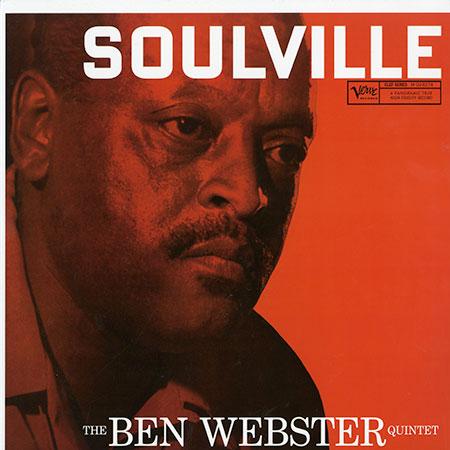
On 15 October 1957, Ben Webster, Oscar Peterson, Herb Ellis, Ray Brown and Stan Levey came together in Los Angeles for a session supervised by Norman Granz. The result was Soulville: two Webster compositions and five standards, played by a quintet whose names connect several strands of jazz history. No family tree is necessary to enjoy it. Tenor saxophone meets piano, guitar, double bass and drums: an ensemble small enough to follow each participant, yet open enough to reveal fresh relationships on returning.
Webster brought the experience of a major swing saxophonist, including his formative years with Duke Ellington’s orchestra. Peterson, Ellis and Brown already knew one another as an established trio. With Levey on drums, they formed the rhythm section for this session. The combination reflects Granz’s interest in bringing strong individual voices into a shared musical setting. Five celebrated names on a sleeve are only the beginning; what matters is what the musicians do together.
The recording date provides the secure chronological anchor. Release information variously gives 1957 and 1958, with session year and original-LP dating not always clearly separated. The music presented here belongs to that October 1957 session. The reissue offered today has a different history of its own, beginning much later. Keeping the two in view makes the record easier to place in a collection.

A quintet with room for everyone
Webster’s tenor is central, but the other four players offer more than a neutral backdrop. Peterson’s piano and Ellis’s guitar can weight harmonies differently, answer a line or introduce rhythmic emphasis. Brown and Levey support the unfolding performance without imposing a rigid division between soloist and accompaniment. Having both piano and guitar makes the relationship between fullness and restraint especially interesting to follow.
One approach is to concentrate on Webster during one piece, then make Ellis or Brown the focus of another. When is a phrase answered, and when is it allowed to stand? How does the impression of a melody change when the bass line is followed at the same time? Such questions require no technical training. They help reveal standards as particular encounters between people, rather than simply familiar titles within a repertoire.
All five musicians are documented for the original LP programme. Webster plays tenor saxophone here. Piano performances by him that appear on expanded editions are not among these seven tracks. That distinction is useful for collectors: a longer digital track listing does not automatically describe additional content on this record. Peterson is the pianist in the quintet presented here, and the accompanying personnel information retains that specific line-up.

Two originals and five familiar songs
“Soulville” and “Late Date” open the first side as Webster compositions. They provide a personal starting point before “Time on My Hands” widens the view towards the standard repertoire. The programme itself suggests something about the musician: original pieces and existing melodies need not be opposing categories. Either can become a starting point for individual expression when phrasing, rhythm and the responses of other players come together.
The second side continues through “Lover Come Back to Me”, “Where Are You”, “Makin’ Whoopee” and “Ill Wind”. Recognising a melody is only one source of pleasure. Standards also make it possible to follow how musicians organise familiar material in time: where a line is given space, where it presses forward and when an accompanist proposes another direction. The compact ensemble helps. Individual contributions remain distinguishable while their shared purpose stays in view.
The seven-track sequence deserves as much attention as the individual solos. It moves from Webster’s own pieces into music explored by numerous performers before and after him. Collectors who own several versions of these songs need not immediately arrange them in a hierarchy. The differences can be the pleasure: the same composition prompting different musical decisions. Soulville offers a clearly defined setting for that experience and a particularly engaging group of participants. Its manageable programme invites sustained attention without requiring an exhaustive knowledge of every earlier version.
The Acoustic Sounds Series mono LP
This edition, catalogue number AVER 40051, belongs to the Verve Acoustic Sounds Series. It is a 180-gram mono LP playing at 33⅓ RPM, reissued in 2024. Ryan K. Smith handled mastering at Sterling Sound; the publisher identifies the original analogue tapes as the source. Quality Record Pressings manufactures the record, and Stoughton Printing supplies the tip-on gatefold jacket.
It is therefore distinct from the separate Analogue Productions double LP at 45 RPM and from the hybrid SACD. The seven original album tracks occupy two sides, without the piano bonus performances included on expanded versions. A mastering credit from another release should not be transferred automatically either: Ryan K. Smith is the documented name for this edition. Recording and reissue remain connected without being confused—a quintet session from October 1957, presented in a specifically identified mono version for a present-day collection.
You order from Michael 45 in Germany. We arrange the US import and dispatch from Hilden.
Series: Verve – all 34 records: voices, organ and bossa nova
Musicians
Participants and documented credit status. Track references correspond to the tracklist.
- Ben Webstertenor saxophoneParticipation: All seven album tracks
- Oscar PetersonpianoParticipation: All seven album tracks
- Herb EllisguitarParticipation: All seven album tracks
- Ray Browndouble bassParticipation: All seven album tracks
- Stan LeveydrumsParticipation: All seven album tracks


Quintet on the seven original tracks. Piano bonus tracks on expanded editions are not included on this LP.

Reviews
There are no reviews yet.