Before the record acquired its royal title
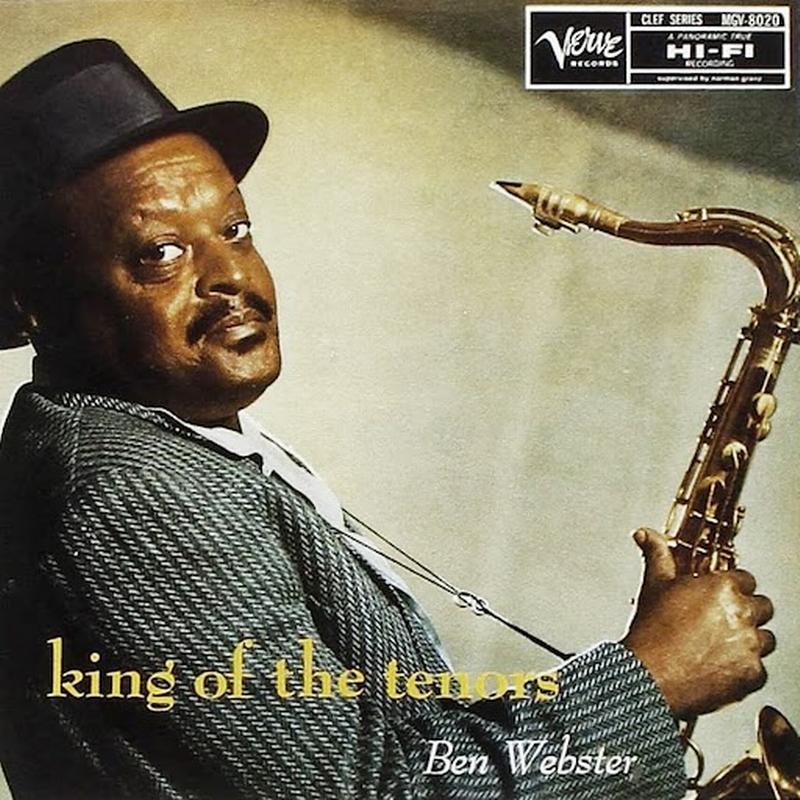
When these recordings appeared on Norgran in 1954, the album was called The Consummate Artistry of Ben Webster. It became King of the Tenors later in the Verve catalogue. The familiar title therefore points back to an earlier history: Norman Granz, his Norgran label and two recording settings from 1953.
In New York, Webster is joined by Oscar Peterson, Barney Kessel, Ray Brown and J. C. Heard. For the Los Angeles session, Harry “Sweets” Edison on trumpet and Benny Carter on alto saxophone enter the picture, while Herb Ellis takes over guitar and Alvin Stoller drums. The album consequently combines a smaller group with an ensemble expanded by two additional horns, rather than documenting one unchanged line-up.

Returning to “Cottontail”
“Cottontail” leads directly back to Webster’s time with Duke Ellington. His tenor solo was a defining part of the famous 1940 recording. Thirteen years later, he returns to the composition as a bandleader. One item in the programme thus becomes a link to an earlier chapter of his own musical life, as well as another piece for the group to play.
“Don’t Get Around Much Anymore” also comes from the Ellington repertoire. It sits alongside material including “Danny Boy,” “Tenderly” and “That’s All.” Moving between these selections provides a useful introduction to the record. What does a familiar song melody ask of a phrase, and how does that differ from a piece such as “Cottontail”? Listen to the attack of a note, the way it ends and the duration of the spaces between phrases. The programme presents different tasks rather than restricting Webster to one aspect of his playing.

Peterson remains while the personnel changes
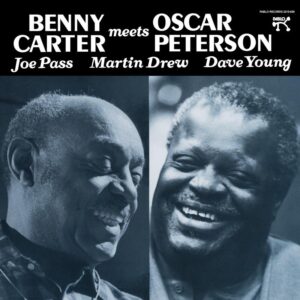
Oscar Peterson and Ray Brown connect the two sessions. Around them, the guitar, drums and number of horns change. The December 1953 Los Angeles recordings expand the available combinations: Sweets Edison’s trumpet and Benny Carter’s alto join Webster’s tenor. That gives you additional voices to follow within the ensemble and a different balance of registers.
Carter was an arranger and bandleader as well as a saxophonist. Hearing him within a small group directs attention towards the individual phrase rather than an orchestral design. Follow the relationship between a horn entry and the accompaniment, then deliberately move your attention to the piano. Peterson’s continuing presence provides a reference across both line-ups. The album can be heard as a collection of encounters: Webster in the smaller group and Webster alongside additional horns, linked by a repertoire that brings standards together with his own Ellington history.
The Verve mono LP
AVER 77261 is the 180-gram mono LP at 33⅓ RPM in the Acoustic Sounds Series. Matthew Lutthans mastered it at The Mastering Lab, with Acoustic Sounds identifying the original analogue master tape as the source. Pressing is by Quality Record Pressings, and the record comes in a Stoughton tip-on gatefold jacket. Eight tracks occupy the two sides. Verve belongs to this edition and the album’s later reissue history; the original 1954 release was on Norgran.
Michael 45 holds the record in Germany and sends it from Hilden, which removes the need for a personal import from the United States and the accompanying customs wait.
More by Ben Webster: At The Renaissance · Gentle Ben
Musicians
Documented selection of participating musicians. Personnel may vary by track; this list does not claim to be complete.
| Name | Instrument / role |
|---|---|
| Ben Webster | Tenor saxophone |
| Benny Carter | Alto saxophone |
| Harry Edison | Trumpet |
| Oscar Peterson | Piano |
| Barney Kessel | Guitar |
| Herb Ellis | Guitar |
| Ray Brown | Double bass |
| Alvin Stoller | Drums |
| J. C. Heard | Drums |
🎧 Review video: 15 Amazing New Reissues you might want in your Collection
This video is hosted by YouTube (Google). It only loads once you switch on “Functional” in the cookie settings.

Reviews
There are no reviews yet.