Art Taylor brings his band into the light
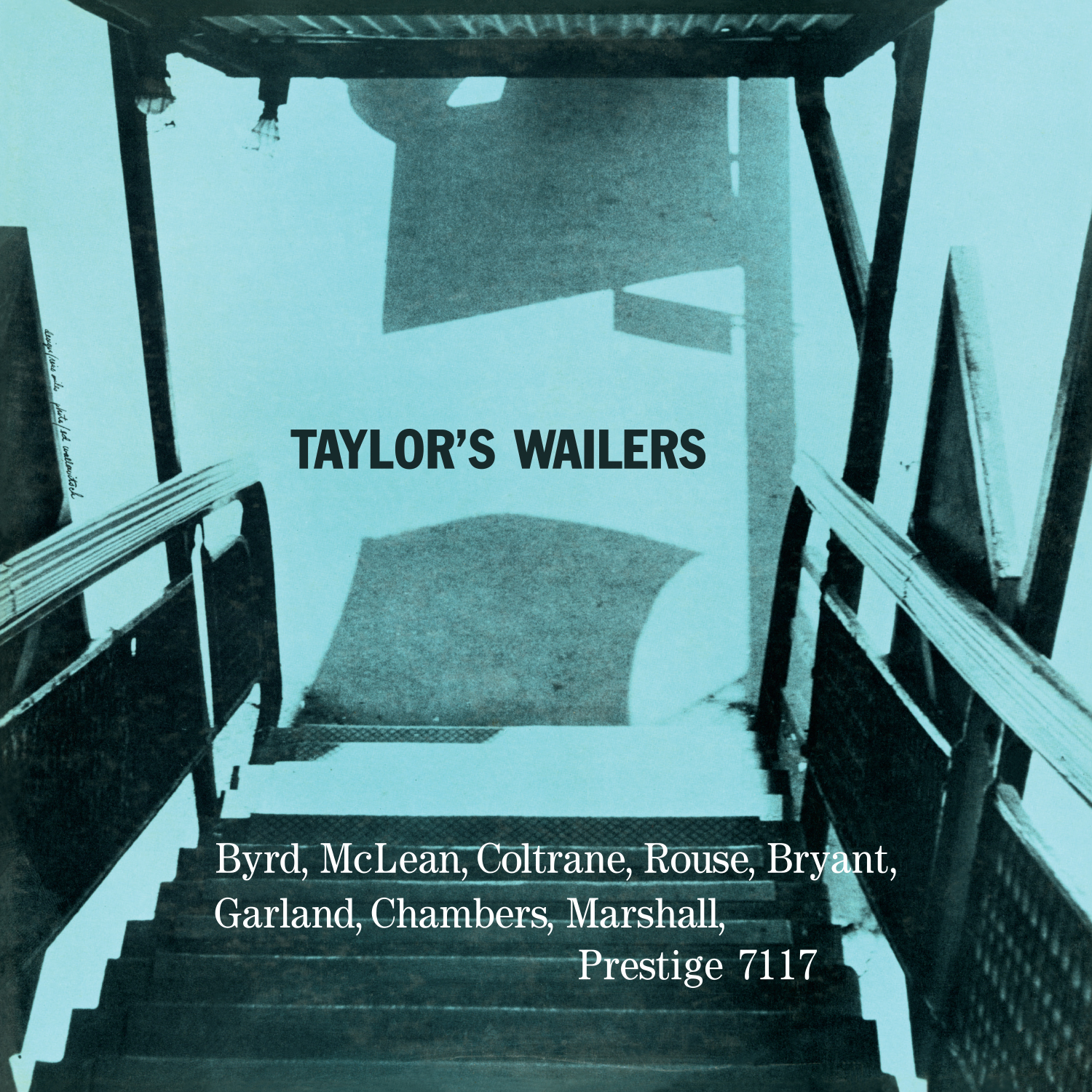
On many jazz records, Art Taylor’s name appears where you look for an ensemble’s dependable rhythmic foundation. Taylor’s Wailers places him at the head of the group in 1957. Yet his first album as leader is not simply a succession of drum showcases. It demonstrates how a drummer can shape a band through the choice of partners, repertoire and musical situations. Donald Byrd on trumpet, Jackie McLean on alto saxophone, Charlie Rouse on tenor, Ray Bryant on piano and Wendell Marshall on double bass join Taylor in the principal line-up. One additional performance features a different quartet.
There is a working band’s history behind the name. According to the publisher, Taylor formed the Wailers in 1956; Byrd and Rouse belonged to the group that made its debut at The Pad, the Greenwich Village club on Sheridan Square where Bob Reisner handled bookings. McLean was added for the recording. That background gives the album a particular interest. It is more than an arbitrary gathering of familiar names, even though Prestige often brought musicians together in changing combinations. Taylor had an opportunity to put his own conception of ensemble playing at the centre of a record.
Most of the programme was recorded on February 25, 1957, at Rudy Van Gelder’s Hackensack studio. Bob Weinstock oversaw production, and Ira Gitler wrote the liner notes. Five released performances come from that date. C.T.A., however, was recorded on March 22 with John Coltrane, Red Garland and Paul Chambers. Taylor links the two line-ups. Reading the album’s personnel should therefore not suggest nine musicians playing together in one group: the record alternates between a sextet with three horns and a quartet featuring one tenor saxophone.

Two sessions, six pieces and a clear connection
The first LP side opens with Batland, a Lee Sears composition that gives the main group almost ten minutes. Jimmy Heath’s C.T.A. follows, played by the March quartet. This change is an important part of the album. The February session’s trumpet, alto and tenor give way to Coltrane’s tenor for one track; Garland and Chambers replace Bryant and Marshall, while Taylor remains on drums. A comparison can therefore begin with the accompaniment. How does the setting change when three horn voices become one, and how does the drummer establish his place in both situations?
Exhibit A, also composed by Lee Sears, returns the first side to the sextet. The sequence is consequently not a straightforward chronological ordering of the recordings. The later quartet performance sits between two pieces from the earlier session. That is an inviting choice for listening because it places different ensemble sizes directly alongside one another. A group can create density through several simultaneous voices; a smaller one can hold the same attention by allowing more space between its participants. Neither possibility is inherently superior to the other.
Side B begins with Ray Bryant’s Cubano Chant. Contributing an original composition expands the pianist’s role beyond accompaniment. Two Thelonious Monk pieces follow: Off Minor and Well, You Needn’t. The publisher also credits Monk himself with the arrangements of those two numbers. That statement needs to be distinguished from a performing credit: Monk is not the pianist on the session. Bryant plays piano in the sextet. On an album containing several celebrated names, that precision helps keep the actual contributions in view.

Three horns and a drummer in the conversation
Byrd, McLean and Rouse bring three different instrumental colours to the principal line-up. Trumpet sits alongside alto and tenor saxophone, distinguishing this sextet from a group with a single leading horn. A theme can be introduced collectively before individual voices step out. The boundary between ensemble and soloist offers a particularly rewarding point of attention: when does a shared accent become a transition, and when does an answer from the rhythm section redirect the music? Taylor participates in that conversation even when his instrument is not carrying the melody.
Ray Bryant and Wendell Marshall complete the setting. The piano can place chords or continue a line, while the double bass supplies a connecting motion beneath the changing foreground. Their names should not disappear behind the more conspicuous horn credits. Both appear on all five sextet tracks; Garland and Chambers take over only for C.T.A.. The clarity of those assignments also makes this a useful starting point for further discoveries. Anyone interested in Bryant’s compositions or Rouse’s playing encounters a specific musical contribution rather than merely another name in a long personnel list.
The two Monk compositions give the closing stretch a character of its own. Their themes invite attention to the weighting of small motives, to pauses and to the relationship between distinctive turns and the continuing pulse. A drummer leading the band does not need to demand extra attention at every moment. Transitions, responses and the way an ensemble holds together can communicate a musical conception just as effectively. That is a rewarding perspective from which to approach Taylor’s Wailers: the debut of a leader whose instrument remains inside the action while helping to create space for his partners.
The Analogue Productions Prestige mono edition
The edition offered here is the single mono LP APRJ 7117 from Analogue Productions, playing at 33⅓ RPM. Kevin Gray is responsible for mastering and cutting, with the publisher identifying analogue masters as the source. Quality Record Pressings is the pressing plant. The six tracks follow the album sequence described above, with three titles on each side. C.T.A. retains its familiar position as the second performance on side A. A SACD layer or any additional digital format is not part of this LP edition.
The glossy tip-on jacket follows the classic Prestige presentation. Documentation for the first Analogue Productions pressing, released in 2013, also describes 200-gram vinyl, deep-groove labels and a flat edge; some copies were numbered. Later pressings appear under the same catalogue number at 180 grams. Without inspecting an individual copy, the earlier weight and numbering should not be promised as universal features of every available example. The dependable specification remains a mono LP with Kevin Gray’s mastering and a QRP pressing.
The 33 RPM division suits this particular programme. Side A moves from sextet to quartet and back again, while side B brings together Bryant’s composition and the two Monk pieces. One side change separates two readily understood halves without further interrupting the individual performances. That is a practical feature of the listening sequence as well as a matter of format. It encourages each side to be heard as a small programme with an internal relationship between the pieces, rather than simply as three unrelated selections drawn from a longer list.
For collectors, the attraction is a combination of a historic leader debut, precisely documented personnel and an uncomplicated analogue presentation. Taylor provides the thread through both sessions, while each of his partners contributes to the album’s character. Returning to it through a different instrument can be as rewarding as following the named leader from the outset. You order from Michael 45 in Germany. We arrange the US import and dispatch from Hilden.
Artist page: All titles with John Coltrane
Customer question: Buying Analogue Productions records in Europe
Series: Analogue Productions Prestige – all 50 records, musicians and session paths
Musicians
Participants and documented credit status. Track references correspond to the tracklist.
- Art TaylordrumsParticipation: All 6
- Donald ByrdtrumpetParticipation: A1, A3, B1, B2, B3
- Jackie McLeanalto saxophoneParticipation: A1, A3, B1, B2, B3
- Charlie Rousetenor saxophoneParticipation: A1, A3, B1, B2, B3
- Ray BryantpianoParticipation: A1, A3, B1, B2, B3
- Wendell Marshalldouble bassParticipation: A1, A3, B1, B2, B3
- John Coltranetenor saxophoneParticipation: A2
- Red GarlandpianoParticipation: A2
- Paul Chambersdouble bassParticipation: A2


A 2: Coltrane, Garland, Chambers and Taylor on 22 March 1957; remaining tracks: sextet on 25 February 1957. Monk is credited as arranger by the publisher, not as a performer.

Reviews
There are no reviews yet.